University: Dr. A.P.J. Abdul Kalam Technical University (AKTU)
Programme: B.Tech First Year, Semester I & II
Course Codes: AAS102A-H / AAS202A-H
Branches: CSE, EE, ECE, CE, ME, BT, CH, TX and AG
Unit: V — Sustainable Chemistry and Advanced Applications
Introduction to Sustainable Chemistry and Advanced Applications
Sustainable chemistry connects useful engineering function with prevention of waste, suitable material choices and responsible resource use. Its questions extend from a balanced chemical reaction to manufacturing, service life and eventual recovery.
A favourable ingredient or one efficient operation provides evidence about part of a system. A complete comparison retains the required product quality and service.
Electronic materials illustrate these connections through conducting polymers, organic semiconductors, light-emitting layers, solar absorbers and switching devices. Their composition and interfaces influence electrical function, while repair, collection and recovery determine whether useful value remains in circulation after use.
Adhesives, sealants, protective coatings and composites connect polymer chemistry with structural performance. Surface engineering connects preparation and deposition with wear, thermal and chemical behaviour.
Green process engineering adds solvents, catalysts, flow reactors, material balances and life-cycle assessment.
Biotechnology adds proteins, nucleic-acid payloads, formulation, biosensors and biological remediation. Textile applications connect dyes, enzymes, thermal buffering and electronic functions with recovery.
Agricultural applications connect microorganisms, crop protection, residue stabilization, contaminant transfer and energy conversion.
These Applied Chemistry Unit 5 Notes follow the complete branch routes through theory, figures, worked problems, formula conditions and answered revision.
Unit Coverage
- Green chemistry, prevention and the twelve principles.
- Atom economy, yield, E-factor and process mass intensity.
- Electronic-material substitution, transient devices and e-waste.
- Collection, dismantling, metal recovery, RoHS and WEEE concepts.
- Sustainable electronics manufacturing and circular design.
- Conducting polymers, organic semiconductors, OLEDs and photovoltaics.
- Flexible electronics, memristors and molecular or neuromorphic devices.
- Adhesives, sealants, protective coatings and FRP retrofitting.
- Self-healing concrete, wettability and surface engineering.
- PVD, CVD, thermal spraying, ceramic coatings, DLC and nanomaterials.
- Solvents, catalysts, flow chemistry and process intensification.
- Waste valorization, life-cycle assessment and carbon utilization.
- Biopharmaceutical identity, RNA payloads and formulation chemistry.
- Biosensors, bioremediation and greener synthesis comparisons.
- Natural dyes, enzyme processing, antimicrobial finishes and PCM textiles.
- E-textiles, textile recycling and circularity.
- Biofertilizers, biopesticides, composting and phytoremediation.
- Mulch-film fate, agro-residue valorization and biomass energy.
Important Terms
| Term | Meaning |
|---|---|
| Prevention | Avoiding waste or hazard at its origin |
| Functional unit | Defined service used as a comparison basis |
| Atom economy | Theoretical stoichiometric incorporation into desired product |
| Yield | Actual desired product relative to theoretical product |
| E-factor | Included waste mass per useful product mass |
| PMI | Included material input per useful product mass |
| Transient electronics | Devices designed to lose function or transform after a defined trigger or period |
| Depollution | Management of designated hazardous fractions before or during treatment |
| Recovery | Target output relative to target input |
| Purity | Target quantity relative to the selected stream total |
| Conjugation | Connected bonding arrangement supporting electronic delocalization |
| OLED | Organic light-emitting diode |
| Resistive switching | History-dependent change between resistance states |
| Adherend | Material joined through an adhesive interface |
| DLC | Diamond-like carbon, an amorphous carbon-based coating family |
| Residence time | Time associated with passage through a defined reactor model |
| Bioremediation | Biological transformation, removal or immobilization of contaminants |
| PCM | Phase-change material providing finite latent-heat buffering |
| Phytoextraction | Transfer of suitable contaminants into harvested plant biomass |
Working Conventions
Balance reactions before calculating atom economy or theoretical yield.
Declare product quality, fresh input, recycle, inventory and waste boundaries before comparing mass metrics.
Recovery, collection, purity and recycled content have different denominators. A homogeneous-material concentration must not be diluted using unrelated whole-device mass.
Written equations retain model assumptions and units. Average joint stress excludes local peaks. Wet and dry coating measurements use different bases, while PCM energy uses participating active material.
Biodegradation, dissolution and fragmentation describe different outcomes.
Numerical properties, efficiencies and environmental factors in worked problems are supplied educational values for the stated conditions.
Complete Branch Reading Guide
Each row gives the complete route, including shared chapters.
| Stream and Codes | Official Unit V Title | Complete Sections |
|---|---|---|
| CE — AAS102A / AAS202A | Adhesives, Sealants, Coatings and Composites | 18–23 |
| ME — AAS102B / AAS202B | Surface Engineering and Advanced Materials | 24–29 |
| EE / ECE — AAS102C / AAS202C | Organic Electronics and Futuristic Devices | 5 and 11–17 |
| CSE — AAS102D / AAS202D | Green Chemistry and E-waste Management | 1–10 |
| TX — AAS102E / AAS202E | Sustainable and Functional Textile Chemistry | 1–2 and 40–43 |
| BT — AAS102F / AAS202F | Biopharmaceuticals and Green Biotechnology | 1–2 and 33–39 |
| CH — AAS102G / AAS202G | Green Chemistry and Sustainable Process Engineering | 1–3 and 30–32 |
| AG — AAS102H / AAS202H | Green and Sustainable Agricultural Chemistry | 1–2 and 44–49 |
CSE reads Sections 1–10.
CH includes shared Sections 1–3 before its process-engineering chapters.
BT, TX and AG include Sections 1–2 before their dedicated applications. They do not need to add all CSE electronics chapters.
EE/ECE includes shared Section 5 on biodegradable electronics, followed by Sections 11–17.
CE and ME have independent complete routes. No hidden common block needs to be added.
1. Green Chemistry: Prevention and the Life-Cycle Boundary
Study route: CSE / CH / BT / TX / AG
Green chemistry designs chemical products and processes to reduce hazardous substances and avoid waste at its origin.
It connects useful function with efficient material use, lower hazard and reduced environmental burden. It is broader than treating pollution after generation.

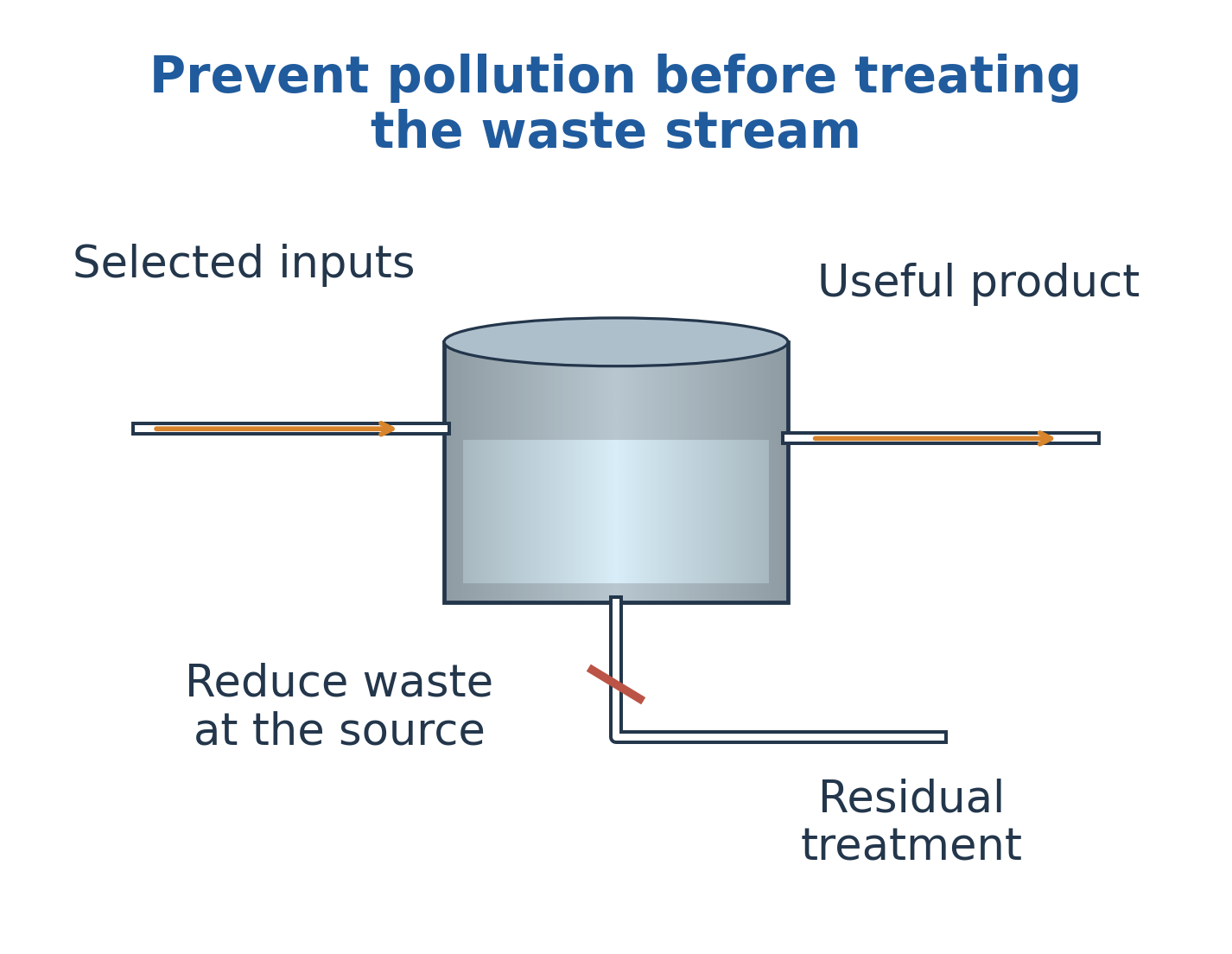
Prevention, Control and Remediation
Prevention changes the product or process so an avoidable waste stream is not created.
Control captures or treats a release during operation.
Remediation addresses contamination that already exists.
These approaches can complement one another, but they are not interchangeable.
Electronics contain conductors, semiconductors, polymers, glass, coatings, adhesives and energy-storage materials. Replacing one constituent can change processing temperature, reliability, repair and recycling.
An environmental comparison must therefore retain the required function and state its boundary.
A selective coating process can reduce overspray. A repairable module can avoid complete replacement. A safer cleaning formulation can reduce a particular hazard.
Assess each improvement together with quality, energy, waste and service life.
Worked Problem 5.1: Identify Source Prevention
Problem: A line can avoid 12 kg of waste per week through accurate dispensing or treat that waste after generation. Which directly applies prevention?
Solution: Accurate dispensing changes the process before waste exists and avoids the specified 12 kg per week.
Answer: Accurate dispensing is source prevention. Treating the generated waste is a different, potentially complementary action.
2. The Twelve Principles of Green Chemistry
Study route: CSE / CH; shared foundation for BT, TX and AG
The principles guide chemical design across material selection, reaction, processing and end-of-life fate.

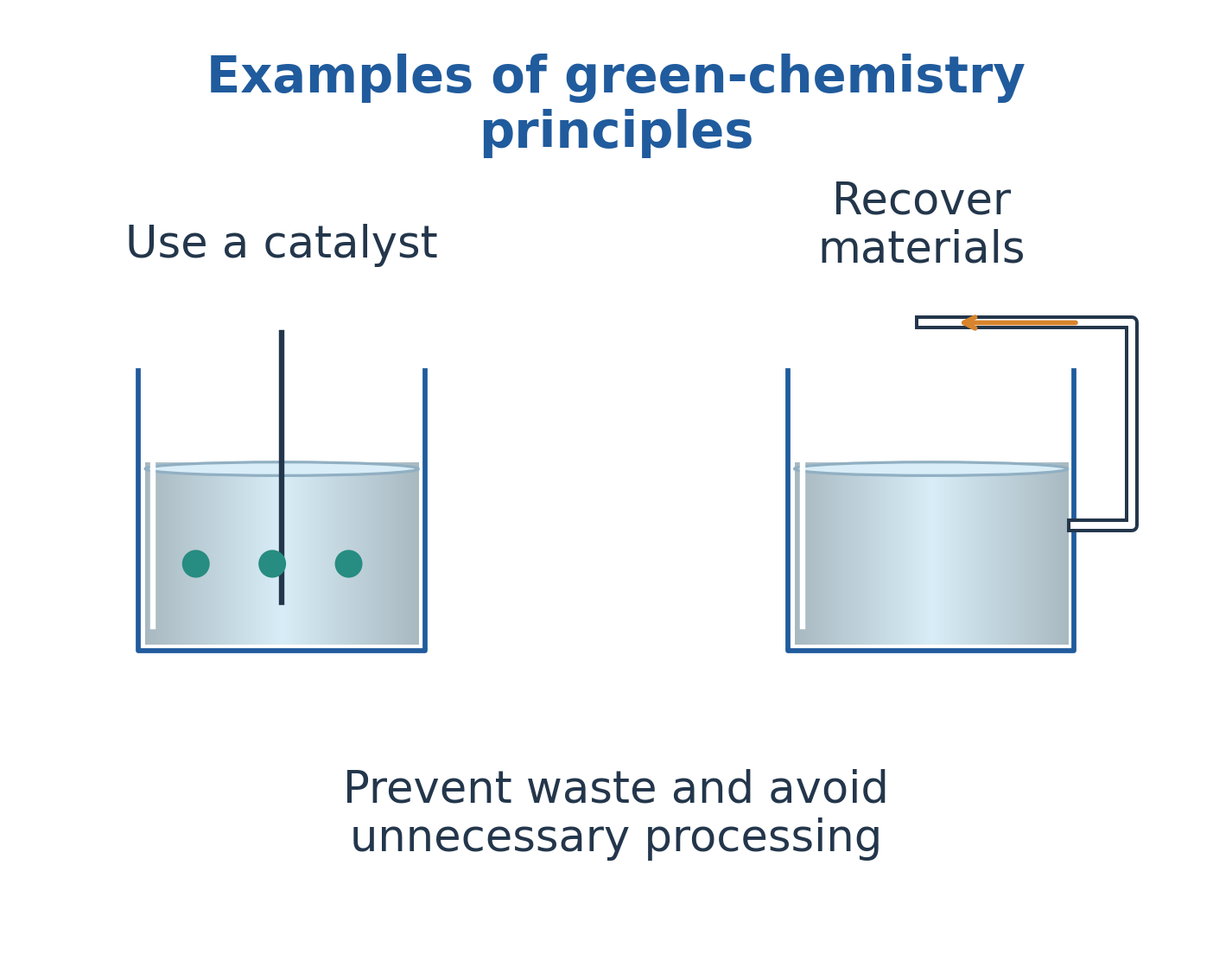
- Prevent waste: Avoid unnecessary streams instead of relying only on treatment.
- Maximize atom economy: Design reactions so more reactant atoms enter the desired product.
- Use less hazardous synthesis: Reduce hazards associated with chemical transformation.
- Design safer products: Retain useful function while reducing toxicity.
- Use safer solvents and auxiliaries: Avoid unnecessary substances and choose suitable alternatives.
- Design for energy efficiency: Reduce avoidable heating, cooling and other utility demands.
- Prefer appropriate renewable feedstocks: Evaluate the source together with processing and environmental consequences.
- Reduce unnecessary derivatives: Avoid avoidable temporary protecting groups and extra reaction steps.
- Prefer suitable catalytic routes: Improve selectivity and reduce stoichiometric waste where feasible.
- Design for appropriate degradation: Match service life with an acceptable post-use fate.
- Use real-time analysis: Detect and control conditions that could generate pollution.
- Choose inherently safer chemistry: Reduce accident potential through chemical and process design.
A process can satisfy one principle while performing poorly on another.
Renewable feedstock describes material origin. It does not alone establish safe chemistry, low energy demand or a closed resource cycle.
A catalyst requires manufacture and sometimes recovery. Monitoring prevents pollution only when it supports an effective response.
Degradation must be compatible with service and must lead to an acceptable fate profile.
3. Atom Economy, Yield, E-Factor and Process Mass Intensity
Study route: CSE / CH; comparison tool for BT
Metrics support comparison only when product definition and boundary remain consistent.
No single mass ratio includes every hazard, energy or reliability consequence.


Atom Economy
Atom economy = Desired stoichiometric product mass / Total stoichiometric reactant mass × 100
Use a balanced reaction and its coefficients.
Solvents and catalysts not consumed in that equation are not automatically included in this theoretical measure.
Yield
Yield = Actual isolated desired product / Theoretical desired product × 100
Use matching product and purity definitions.
Incomplete conversion or isolation loss can change yield without changing theoretical atom economy.
E-Factor and PMI
E-factor = Included waste mass / Useful product mass
PMI = Total included material input / Useful product mass
For a closed common boundary where input leaves only as product or waste:
E-factor = PMI − 1
This relationship requires compatible treatment of inventory, water, internal recycle and other included streams.
| Metric | Meaning |
|---|---|
| Atom economy | Theoretical stoichiometric incorporation |
| Yield | Actual desired product relative to theoretical product |
| E-factor | Waste mass per product mass |
| PMI | Input mass per product mass |
Worked Problem 5.2: Atom Economy
Problem: A balanced reaction consumes 160 g of stoichiometric reactants to form 120 g of desired product and 40 g of by-product. Find atom economy.
Solution:
Atom economy = 120/160 × 100 = 75%
The theoretical ledger closes because:
120 + 40 = 160 g
Answer: Atom economy is 75%.
Worked Problem 5.3: E-Factor and PMI
Problem: A process uses 120 kg of total input and produces 30 kg of desired product with no inventory change. Find waste, E-factor and PMI.
Solution:
Waste = 120 − 30 = 90 kg
E-factor = 90/30 = 3
PMI = 120/30 = 4
Answer: Waste is 90 kg, E-factor is 3, and PMI is 4.
The identity PMI = E-factor + 1 holds because the stated boundaries align.
4. Environmentally Friendlier Electronic Materials
Study route: CSE
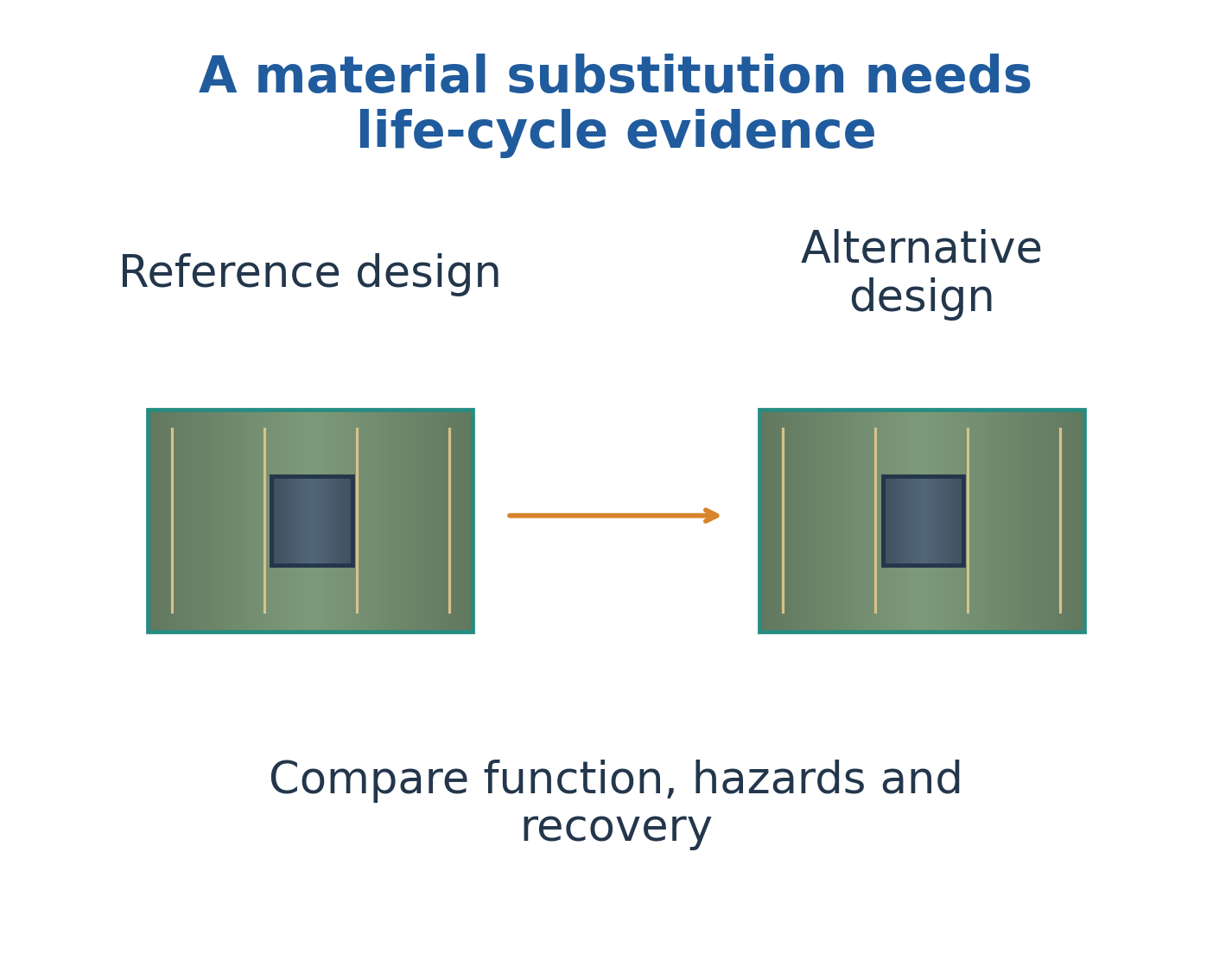
An environmentally friendlier material delivers a relevant improvement while meeting its required function.
Composition, quantity, manufacture, durability and end-of-life fate all affect the comparison.
The phrase is relative rather than a guarantee that every stage is harmless.

Conductors and Solders
Copper and aluminium provide useful conduction and can be recovered where collection and processing exist.
Recycled content can reduce primary-material demand, but purity and application requirements remain important.
Lead-free solders can reduce reliance on lead in relevant assemblies.
Tin-based alloy choices affect melting behaviour, joint properties and process conditions.
Lead-free does not mean free from every hazard or certify complete-product compliance.
A lower-hazard ingredient is useful, but early device failure can require additional manufacture and waste.
Worked Problem 5.4: Retain Function During Substitution
Problem: A coating serves five years. A lower-hazard alternative fails after one year. Does lower binder hazard alone establish a better complete device?
Solution: Both alternatives must deliver the required insulation service. The proposed alternative currently fails that service requirement.
Answer: No complete advantage is established without adequate reliability and a broader comparison.
5. Biodegradable and Transient Electronics
Study route: CSE / EE / ECE
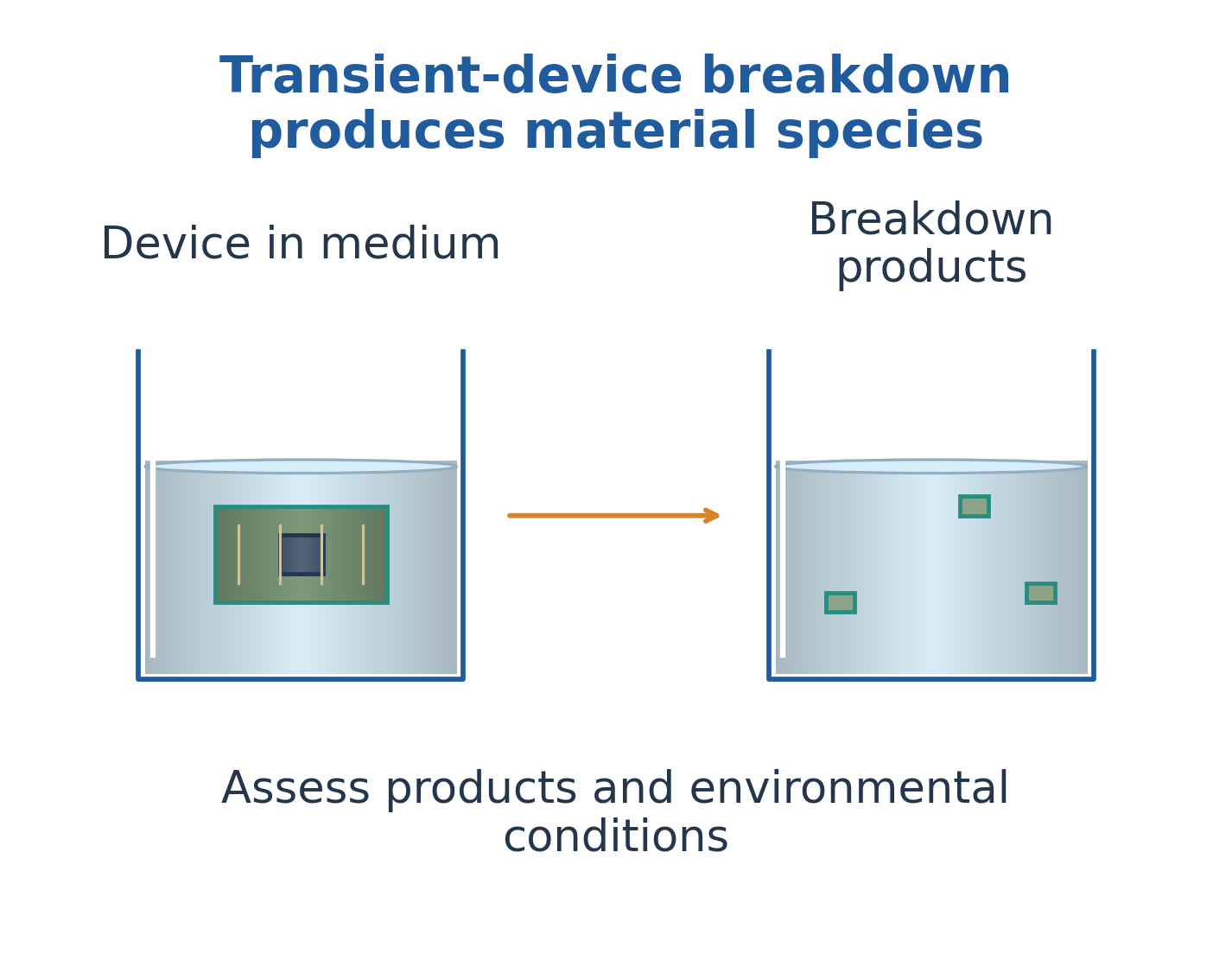
Biodegradable electronics use materials or components capable of biological transformation under specified conditions.
Transient electronics are designed to lose function or transform after a defined time or trigger.
A device can dissolve without being fully biodegradable.


Architecture and Fate
Cellulose-based supports and selected degradable polymers can provide substrates.
Conductors, chips, batteries and protective layers can have very different fates.
Degradation products and their concentration in the receiving environment matter as much as visible disappearance.
The device must remain stable during intended service. Encapsulation, thickness and environmental access can influence when transformation begins.
Dissolution disperses material into a medium.
Fragmentation creates smaller pieces.
Biological transformation is different, while complete mineralization is a stronger claim.
Specify environment, timescale, products and measurement method.
Temporary environmental sensors and selected biomedical devices motivate this field. Biodegradability does not justify uncontrolled disposal into soil or water.
Worked Problem 5.5: Solid Mass Loss
Problem: A specimen decreases from 5.0 g to 1.5 g of remaining solid. Find solid mass loss.
Solution:
Mass decrease = 5.0 − 1.5 = 3.5 g
Fraction lost = 3.5/5.0 = 0.70
Answer: Solid mass loss is 70%. The mechanism remains unproven because missing solid can still exist in another phase.
6. E-Waste Generation, Hazards and Exposure Pathways
Study route: CSE
E-waste consists of discarded electrical and electronic equipment and relevant assemblies within the defined waste boundary.
Computers, phones, displays, appliances and smart devices have different compositions and treatment needs.
Stored equipment, purchases, generated waste and collected waste need not describe the same cohort.
State period and boundary before comparing figures.


E-waste can contain hazardous constituents and stored energy.
Intact managed equipment, open burning and dusty breaking represent different exposure conditions.
Selected equipment can contain lead, mercury, cadmium, certain chromium compounds or problematic additives.
Chemical form and concentration matter. Not every device contains every constituent.
Uncontrolled heating can release contaminated particles and hazardous mixtures.
Worked Problem 5.6: Collection Fraction
Problem: An institution generates 1200 kg of waste equipment and collects 900 kg in the same year. Find collection fraction and uncollected mass.
Solution:
Collection = 900/1200 × 100 = 75%
Uncollected mass = 1200 − 900 = 300 kg
Answer: Collection is 75%, with 300 kg outside the collected stream.
7. Collection, Reuse, Dismantling and Separation
Study route: CSE
A managed system begins before size reduction.
Collection should preserve equipment identity and condition so reuse potential and special treatment needs can be recognized.
Repair and refurbishment preserve function only when condition, support and performance meet the intended service.
Testing and appropriate information or data handling are part of suitable redeployment.

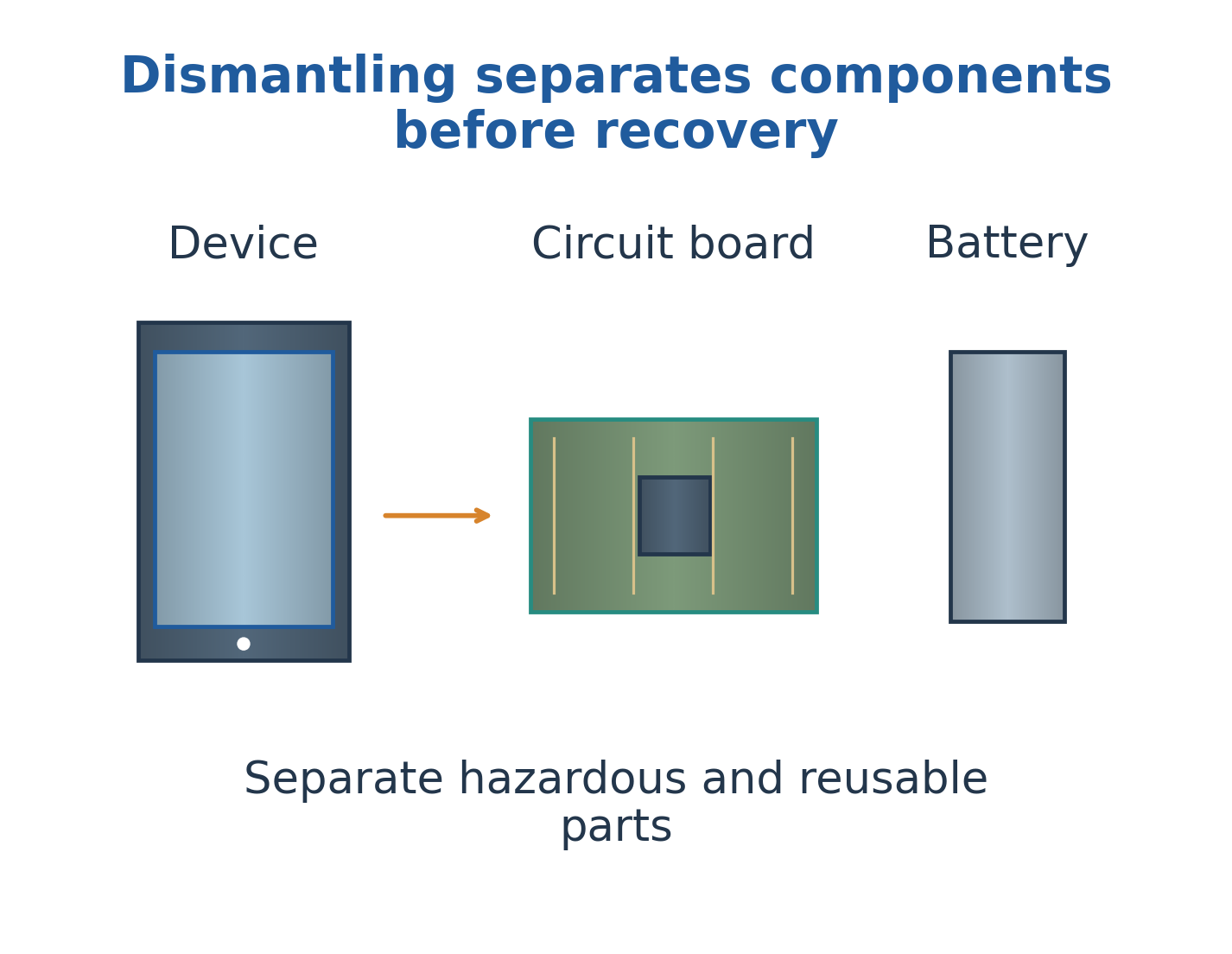

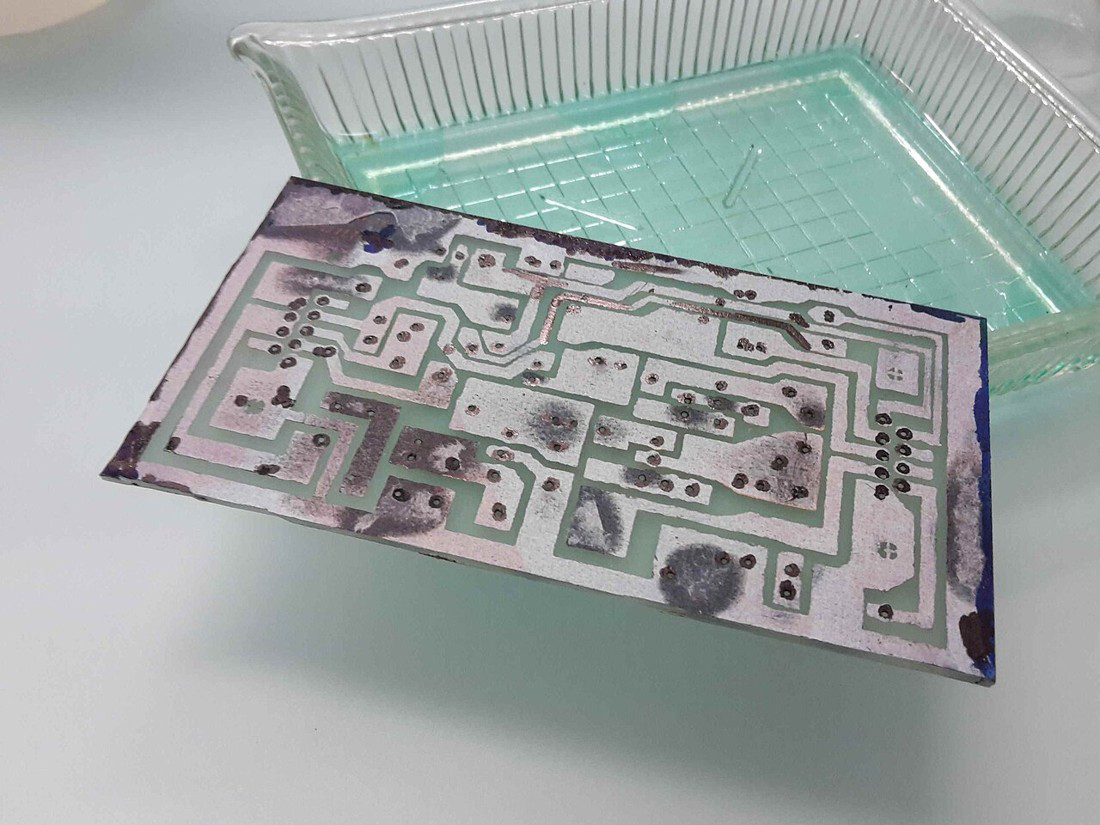
Depollution removes or manages designated hazardous substances, mixtures or components.
Dismantling separates assemblies to preserve modules, isolate special streams and improve later recovery.
Neither means final metal refining.
Mechanical treatment can liberate joined materials and sort them using physical differences.
Size reduction requires suitable depollution, dust control and equipment. A shredder alone is not a complete recycling system.
Worked Problem 5.7: Dismantling Balance
Problem: A 100 kg stream yields 10 kg of special fractions, 65 kg of useful separated material and 15 kg of residue. Find unaccounted mass.
Solution:
Accounted mass = 10 + 65 + 15 = 90 kg
Unaccounted mass = 100 − 90 = 10 kg
Answer: 10 kg is unaccounted for. Identify retained stock, losses or missing measurements rather than reporting complete recovery.
8. Valuable-Metal Recovery and Material Balances
Study route: CSE
Copper, aluminium, steel and smaller quantities of precious or other useful metals can contribute value to electronic waste.
Feed grade, contamination, recoverability and required product quality determine the route.
Precious-metal content alone does not establish economic or environmental suitability.

Pyrometallurgy
High-temperature treatment can collect selected metals into a metal or intermediate phase, followed by refining.
Energy, feed preparation, emissions and slag or other residues matter.
It does not recover every element automatically.
Hydrometallurgy
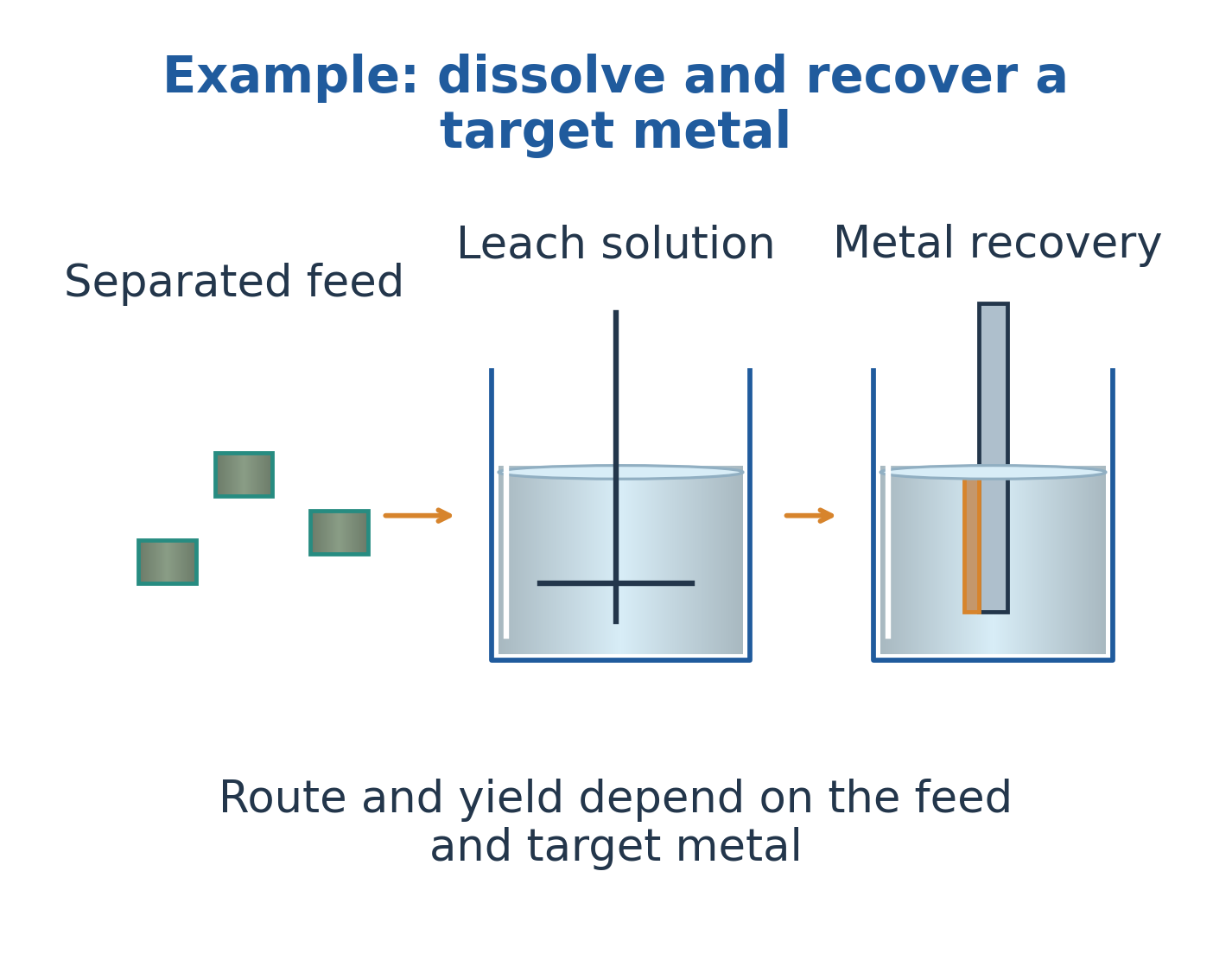
Controlled solution chemistry transfers selected metals into liquid, followed by separation and recovery.
Reagent consumption, selectivity, water, purification and residual solids require management.
For feed mass F, target mass fraction x and recovery r:
Initial target inventory = Fx
Recovered target = Fxr
Recovery concerns target mass, while purity concerns its fraction in the recovered stream.
Worked Problem 5.8: Sequential Recovery
Problem: Feed contains 40 kg of copper. Stage 1 recovers 90%, and Stage 2 recovers 80% of its inlet target. Find final target.
Solution:
Stage 1 = 40 × 0.90 = 36 kg
Stage 2 = 36 × 0.80 = 28.8 kg
Overall recovery = 0.90 × 0.80 = 72%
Answer: Final copper is 28.8 kg, with 72% overall recovery.
9. RoHS and WEEE: Distinct Electronic-Product Responsibilities
Study route: CSE
RoHS restricts specified hazardous substances in electrical and electronic equipment within its scope.
The ten restricted entries are lead, mercury, cadmium, hexavalent chromium, PBB, PBDE, DEHP, BBP, DBP and DIBP.
The commonly prescribed maximum concentrations in homogeneous materials are 0.1% by weight for these entries except cadmium, which is 0.01%.
Actual product assessment must consider applicable scope, exemptions and dates.


A homogeneous material has uniform composition throughout or cannot be mechanically separated into different materials in the relevant sense.
A restricted-substance fraction in solder or insulation cannot be diluted mathematically by total computer mass.
Total chromium is not automatically the same measurement as hexavalent chromium.
Documentation, material identification and suitable testing support assessment.
WEEE addresses end-of-life equipment through separate collection, suitable treatment, recovery, recycling and producer responsibilities.
A compliant composition does not prove that a discarded product has been collected or recycled.
| Framework | Main Distinction |
|---|---|
| RoHS | Restricted substances in relevant product materials |
| WEEE | Separate collection and end-of-life management |
Worked Problem 5.9: Correct Material Denominator
Problem: A 2 g insulation piece contains 0.003 g of lead. The device weighs 1000 g. Compare insulation concentration with a supplied 0.1% limit.
Solution:
Concentration = 0.003/2 × 100 = 0.15%
Use insulation mass rather than whole-device mass.
Answer: 0.15% exceeds the supplied 0.1% comparison limit.
10. Sustainable Electronics Manufacturing and Circular Design
Study route: CSE
Sustainable manufacturing delivers reliable function while reducing material, energy, water and environmental burdens across production.
A single efficient machine does not represent the full line, which includes utilities, yield losses, cleaning and packaging.
Energy spent on rejected units still belongs to the batch. Dividing by accepted devices reveals the effect of poor yield.

A linear model extracts, manufactures, uses and discards.
A circular model aims to retain useful function, components and materials through managed loops.
Maintenance and repair restore function.
Reuse and refurbishment prepare equipment for another suitable service period.
Remanufacturing follows a defined industrial process to the required specification.
Recycling recovers material when continued product or component service is unsuitable.
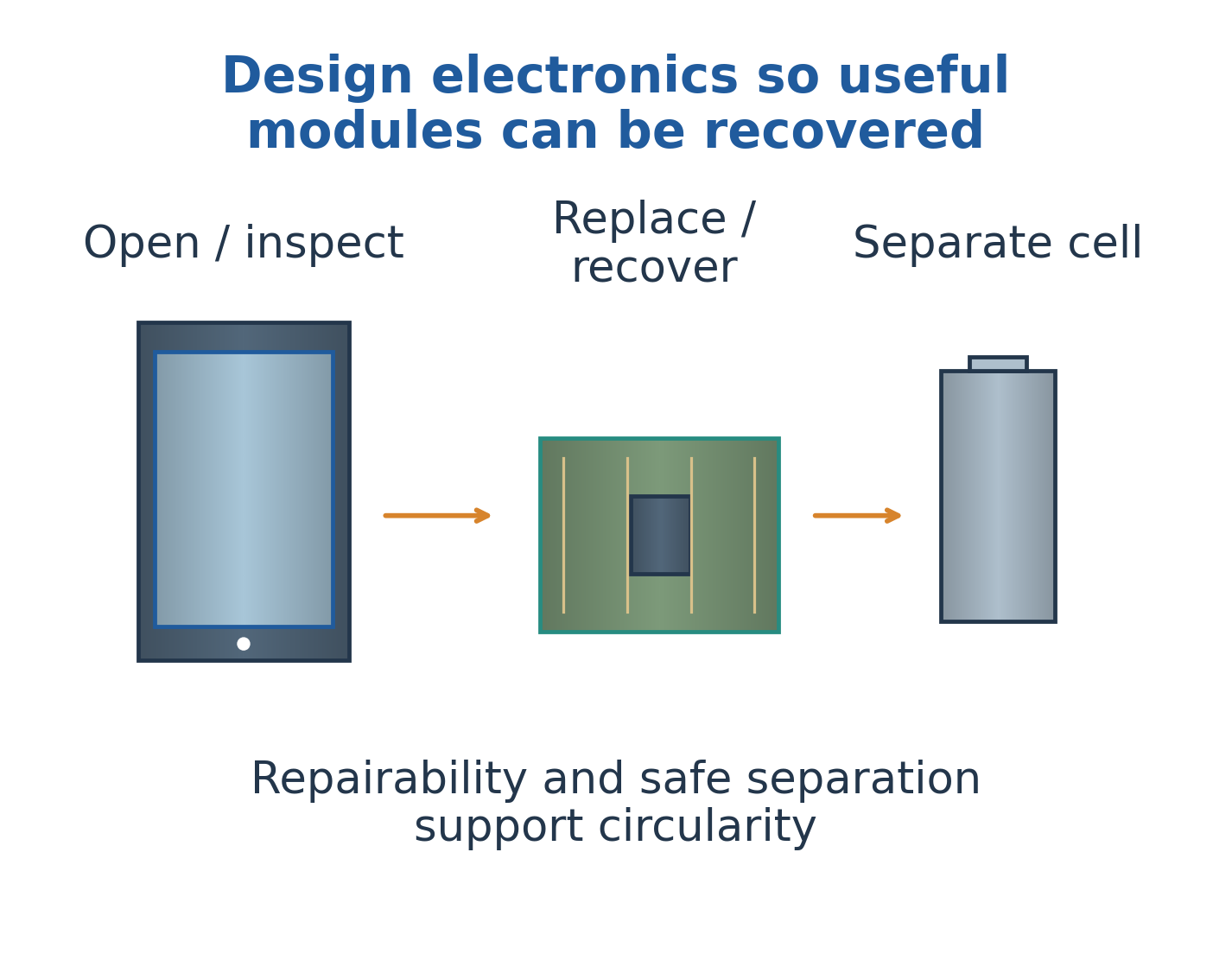
Circular design includes accessible parts, replaceable components, compatible material choices and realistic recovery infrastructure.
Collection, separation, metal recovery and final product grade are different outcomes. A high-grade small output can still capture little of the original target inventory.
Worked Problem 5.10: Repair Versus Replacement
Problem: For the same three-year service, repair adds 10 kg CO₂e and uses 30 kWh/year. Replacement adds 80 kg CO₂e and uses 20 kWh/year. Use 0.5 kg CO₂e/kWh.
Solution:
Repair = 10 + 3 × 30 × 0.5 = 55 kg CO₂e
Replacement = 80 + 3 × 20 × 0.5 = 110 kg CO₂e
Answer: Repair gives 55 kg CO₂e, compared with 110 kg CO₂e for replacement under the supplied boundary.
11. Conducting Polymers: Polyaniline, Polythiophene and PEDOT:PSS
Study route: EE / ECE
Conjugated polymers contain connected pi-electron systems that can support transport when molecular structure, doping and morphology permit.
Polyaniline, polythiophene derivatives and PEDOT:PSS provide different combinations of conductivity, processability and stability.

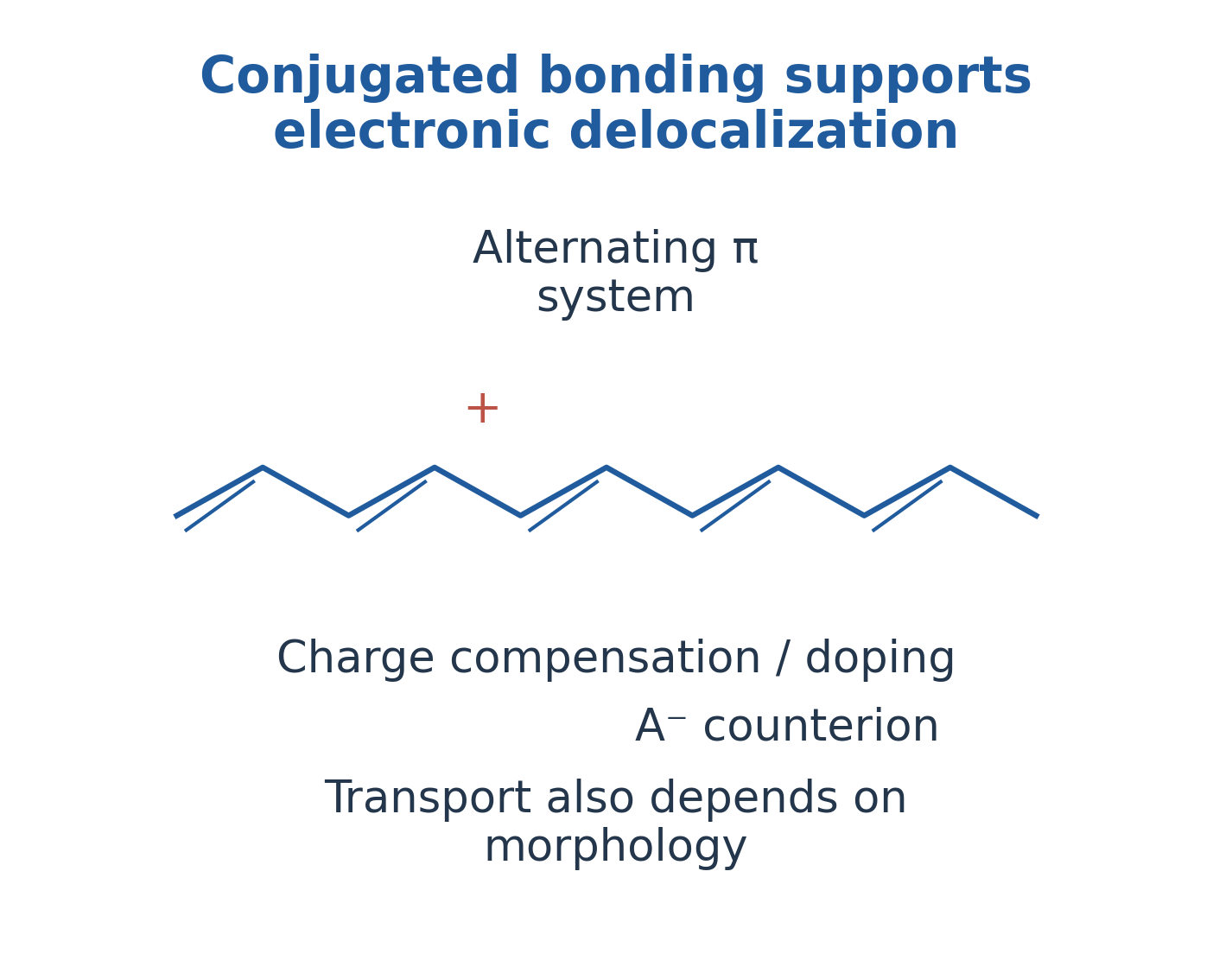
Doping can involve oxidation, reduction or protonation with charge compensation.
It is not identical to substituting a donor atom into crystalline silicon.
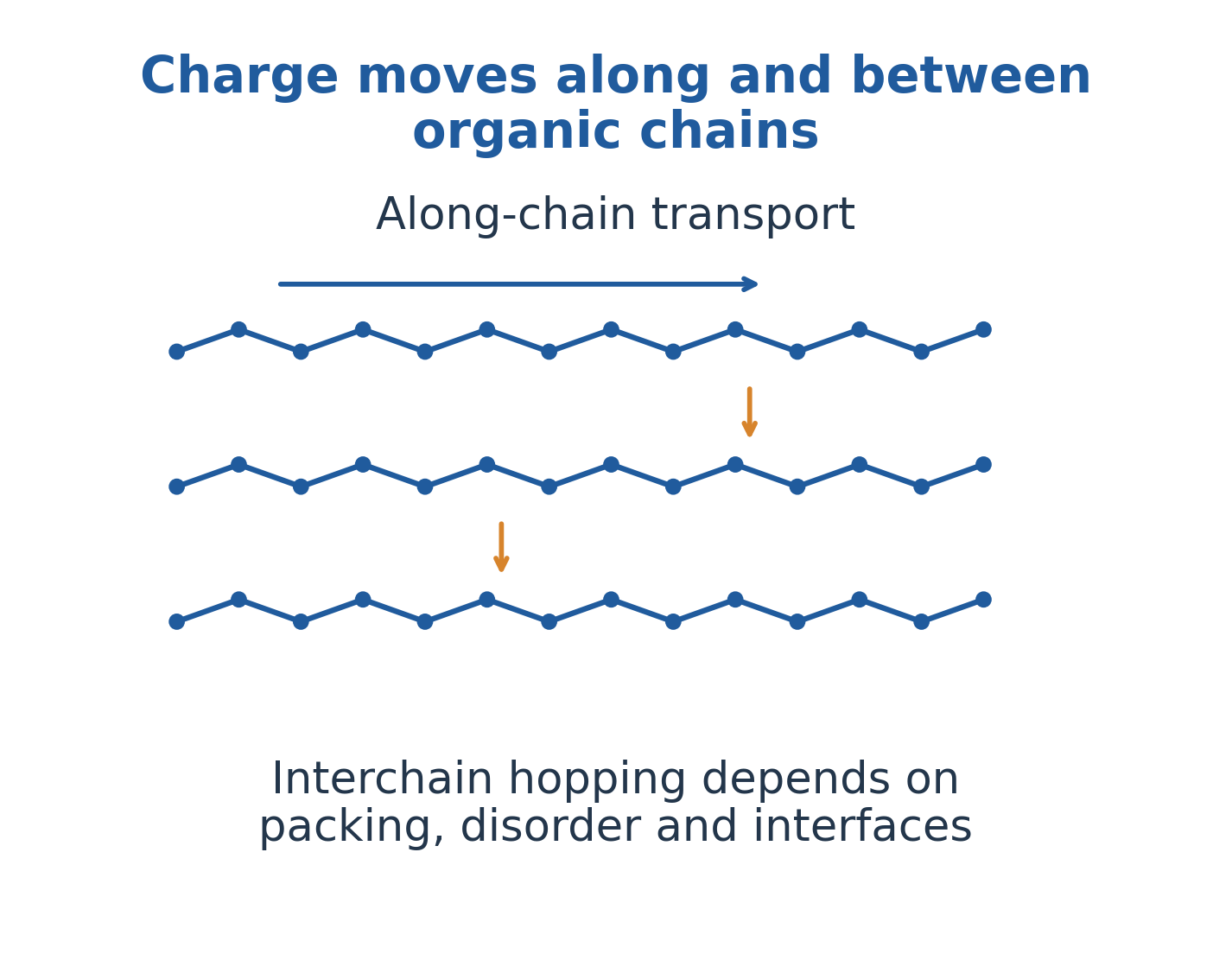
Conductivity also depends on chain order, interchain pathways and formulation.
| System | Chemical Distinction |
|---|---|
| Polyaniline | Protonation-sensitive and redox-sensitive states |
| Polythiophene | Conjugated sulfur-containing backbone |
| PEDOT:PSS | Conducting component with a polyelectrolyte formulation |
Worked Problem 5.11: Doped Organic Film
Problem: Does protonation of polyaniline mean donor atoms have substituted into a silicon crystal?
Solution: Organic doping can involve protonation or redox changes with counterions. Silicon substitutional doping is a different mechanism.
Answer: No. Chain structure, interchain transport and morphology also affect organic-film conductivity.
12. Organic Semiconductors and Charge Transport
Study route: EE / ECE
Organic semiconductors transport charge through molecular and intermolecular states.
They can support flexible, solution-processed devices.
Excitons, mobility, oxygen and moisture response, and contact energetics differ from conventional inorganic materials.


PEDOT:PSS performance changes with additives and treatment.
A transparent conducting film must balance sheet resistance, transmission, roughness and stability.
For a uniform rectangular sheet:
R = RₛL/W
Contact resistance, anisotropy and nonuniform thickness can complicate measurement.
Increasing conductivity does not automatically improve transparency, stretchability or every interface.
Worked Problem 5.12: Sheet Resistance
Problem: A uniform film has sheet resistance 50 Ω/square, length 10 mm and width 2 mm. Find ideal resistance.
Solution:
R = 50 × 10/2 = 250 Ω
Answer: Ideal resistance is 250 Ω, excluding contacts, anisotropy and nonuniformity.
13. OLED Chemistry: Injection, Recombination and Light Emission
Study route: EE / ECE
An OLED contains electrodes and organic layers that inject, transport and recombine charges to produce light.
Holes and electrons form excited states, and suitable emitters release photons.
Layer energetics, radiative efficiency, quenching and encapsulation influence performance.


An OLED emits directly, unlike an LCD that modulates a separate light source.
Different emitters and architectures trade colour, efficiency and lifetime.
The photon relation is:
E = hc/λ
Using electronvolts and nanometres:
E(eV) ≈ 1240/λ(nm)
This relates photon energy and wavelength rather than complete electrical efficiency.
Worked Problem 5.13: Photon Energy
Problem: Find photon energy for 620 nm OLED emission using hc = 1240 eV·nm.
Solution:
E = 1240/620 = 2.0 eV
Answer: Photon energy is 2.0 eV.
14. Organic Photovoltaics and Perovskite Solar Cells
Study route: EE / ECE
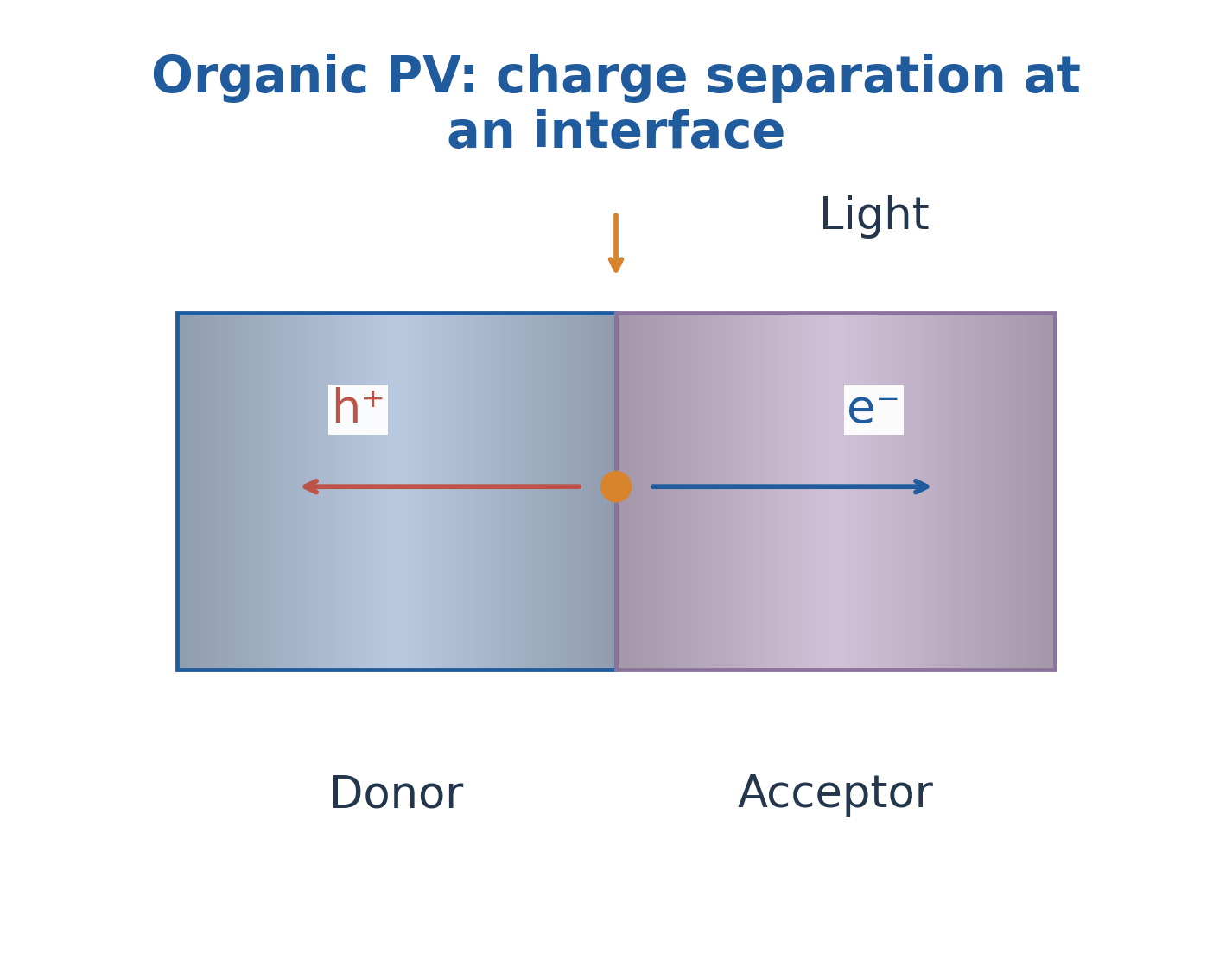
Organic photovoltaics absorb light to create excited states that must separate into collectable charges.
Donor-acceptor interfaces help dissociation.
Morphology must support both charge generation and transport.



Perovskite absorbers have a characteristic crystal framework with tunable composition.
Many metal-halide systems raise stability and, where lead is present, containment concerns.
Perovskite describes a structural family rather than one universally lead-free chemical.
Efficiency = Maximum electrical output / Incident optical power
Stability must be measured under stated light, heat and moisture conditions.
Flexible absorbers also need suitable electrodes, substrates, interconnects and encapsulation.
Worked Problem 5.14: Solar Output
Problem: An organic solar cell has 12% efficiency on 0.020 m² under 1000 W/m². Find maximum electrical power.
Solution:
Incident power = 1000 × 0.020 = 20 W
Maximum power = 0.12 × 20 = 2.4 W
Answer: Maximum electrical power is 2.4 W under the supplied conditions.
15. Flexible and Stretchable Electronic Systems
Study route: EE / ECE
Flexible electronics bend while retaining function.
Stretchable electronics must also accommodate substantial extension.
A bendable material does not make every contact, interconnect or package stretchable.


Serpentine conductors, elastomeric substrates and carefully located active layers can reduce strain in fragile components.
Conducting polymers and composites require compatible morphology and interfaces.
For a simple homogeneous thin layer:
Outer strain ≈ Thickness / (2 × Bend radius)
Real multilayers have a neutral mechanical plane determined by their structure.
Repeated bending can cause cracks, delamination or contact changes.
Encapsulation must protect against oxygen and moisture while tolerating deformation.
Report response during and after a defined mechanical protocol.
Worked Problem 5.15: Bending Strain
Problem: An ideal homogeneous 50 μm film bends to a radius of 5 mm. Find outer strain.
Solution:
Thickness = 0.050 mm
Strain = 0.050/(2 × 5) = 0.005
Percentage strain = 0.5%
Answer: Estimated outer strain is 0.5%. Multilayer devices require a more specific model.
16. Memristors and Resistive-Switching Chemistry
Study route: EE / ECE
Resistive-switching devices can retain a resistance state that depends on electrical history.
Mechanisms can include ion or vacancy movement, formation and rupture of conducting paths, and interfacial changes.

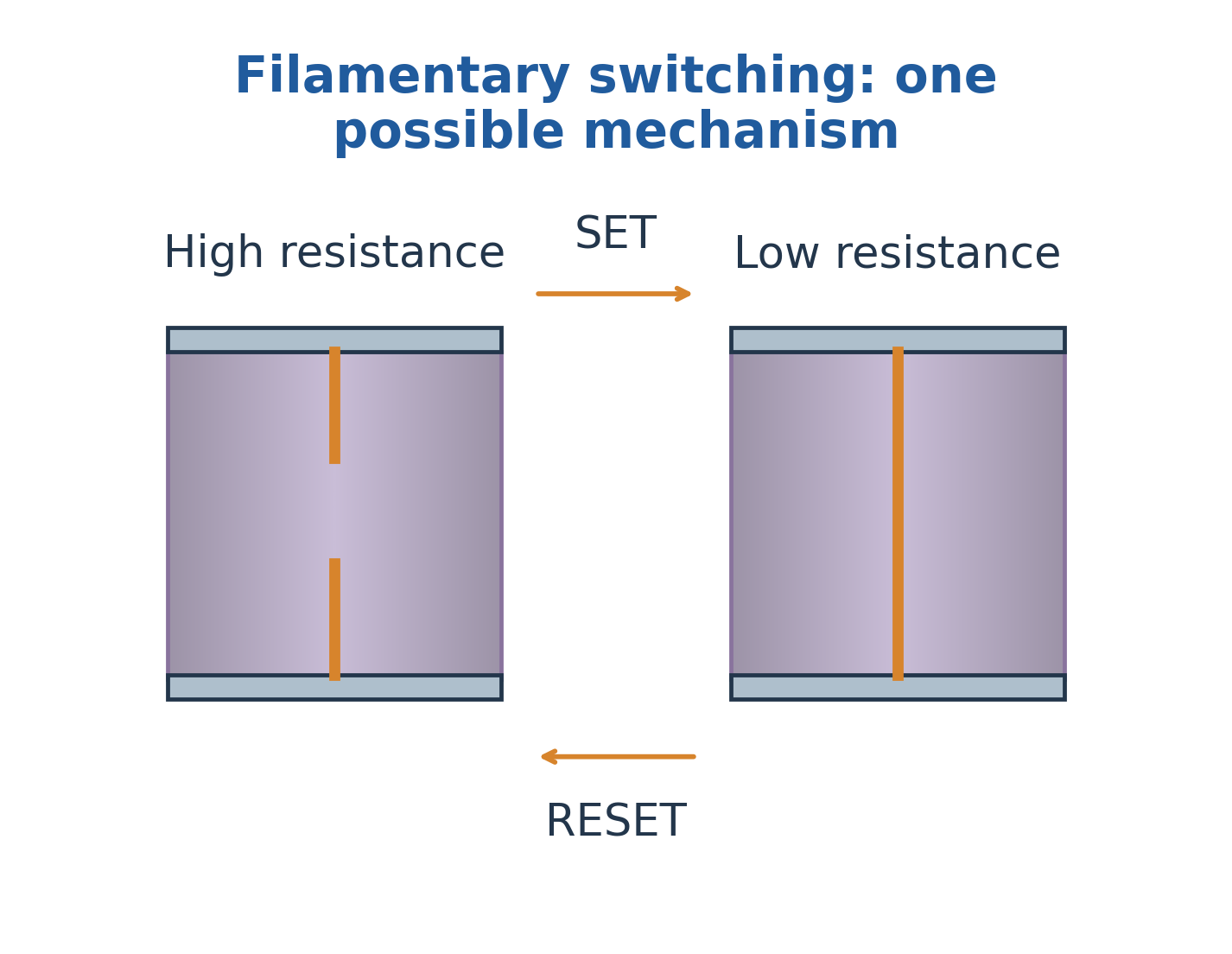
Set and reset operations change states under defined conditions.
A hysteresis loop alone does not uniquely establish a microscopic mechanism.
Endurance, retention, variation and energy per operation determine practical utility.
Worked Problem 5.16: Resistance States
Problem: A device has a 1 kΩ low state and a 100 kΩ high state. Compare ideal currents at a nondisturbing 0.10 V.
Solution:
Low-state current = 0.10/1000 = 100 μA
High-state current = 0.10/100000 = 1 μA
Current ratio = 100
Answer: Currents are 100 μA and 1 μA, assuming the read voltage does not switch the device.
17. Molecular Electronics and Neuromorphic Device Chemistry
Study route: EE / ECE
Molecular electronics uses selected molecules or assemblies as functional transport or switching elements.
Contacts and molecular orientation strongly influence measurement.
Neuromorphic devices emulate selected information-processing features such as weighted connections or adaptive response.


Chemical changes that tune conductance can represent a synaptic weight.
This does not mean the material possesses biological intelligence.
Across organic stacks, oxygen, moisture, impurities and interfacial energy barriers can dominate performance.
A high initial efficiency, bright emission or large resistance ratio does not establish long-term reliability.
Worked Problem 5.17: Neuromorphic Weight
Problem: Conductance rises from 10 μS to 15 μS after a pulse sequence. Find relative change.
Solution:
Change = (15 − 10)/10 × 100 = 50%
Answer: Conductance increases by 50%. The result does not uniquely identify switching chemistry.
18. Adhesives: Epoxy, Polyurethane and Acrylic Chemistry
Study route: CE
An adhesive transfers load through an interface between adherends.
Wetting brings uncured adhesive into contact, and curing or solidification develops cohesion.
Epoxies form networks through reaction of epoxide groups with suitable curing agents.
Polyurethanes use isocyanate-related chemistry, commonly with polyols.
Acrylic systems offer varied cure mechanisms and formulations.

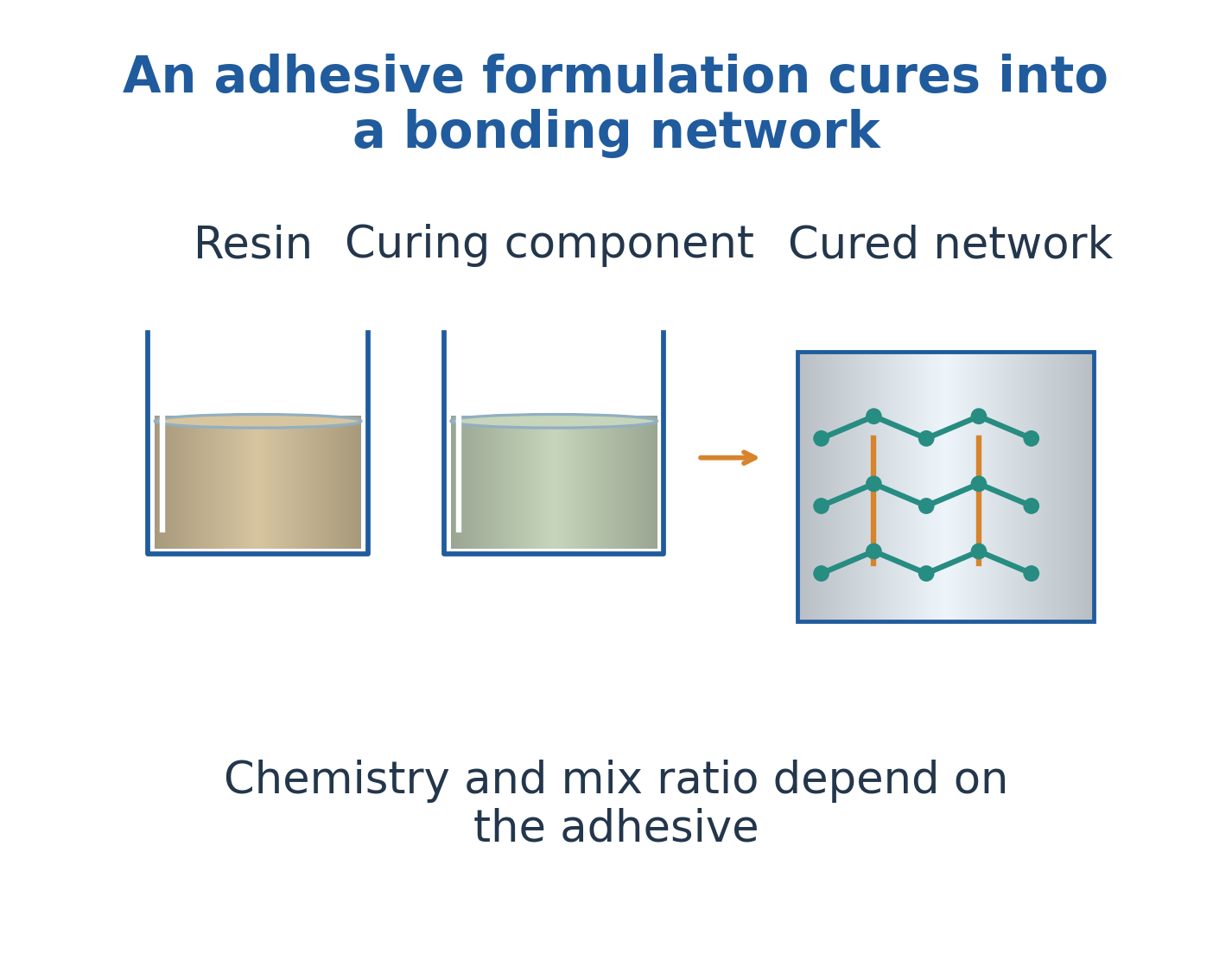
Adhesion can involve mechanical interlocking, secondary interactions and chemical bonding.
Cohesive strength inside the adhesive differs from interfacial adhesion.
| Adhesive | Representative Chemistry |
|---|---|
| Epoxy | Epoxide curing to a network |
| Polyurethane | Isocyanate-related reactions, often with polyols |
| Acrylic | Formulation-dependent acrylic cure |
Worked Problem 5.18: Resin Formulation
Problem: An epoxy system requires 25 parts hardener per 100 parts resin by mass. Find hardener for 8 kg of resin.
Solution:
Hardener = 8 × 25/100 = 2 kg
Total mix = 8 + 2 = 10 kg
Answer: Use 2 kg hardener. Its fraction is 20% of final mix, rather than 25%.
19. Adhesive Interfaces, Cure and Bond Durability
Study route: CE
Surface preparation removes contamination and weak layers and can alter roughness or chemistry.
Bond-line thickness, cure, temperature, moisture and loading mode influence durability.
A lap joint distributes shear differently from a peel-loaded edge.

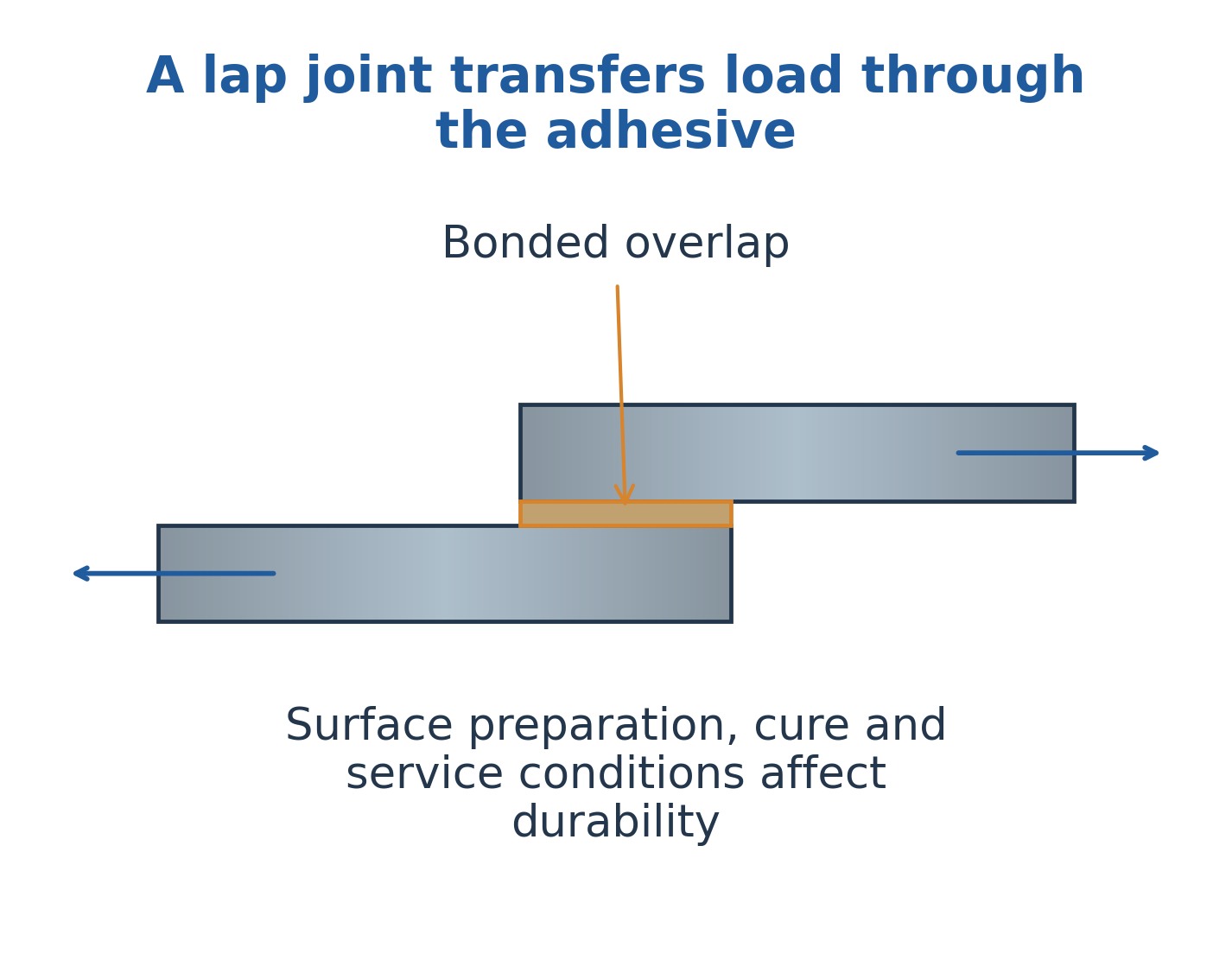
Dividing load by area supplies average stress rather than the complete local stress field.
An initially strong bond can deteriorate through water uptake, chemical attack or thermal mismatch.
State adhesive, substrate, preparation, cure and service conditions when comparing systems.
A larger area does not automatically remove stress concentrations or incompatible chemistry.
Worked Problem 5.19: Average Bond Stress
Problem: A bonded region of 2000 mm² carries 10 kN in a uniform-shear model. Find average stress.
Solution:
Load = 10000 N
Average stress = 10000/2000 = 5 N/mm²
Answer: Average stress is 5 MPa. Edge concentrations, peel and environmental degradation are excluded.
20. Sealants, Epoxy and Polyurea Protective Coatings
Study route: CE
Sealants close joints and accommodate movement while limiting ingress.
Elastic recovery, adhesion, cure shrinkage and compatibility matter.
A rigid structural adhesive and a movement-joint sealant solve different problems.

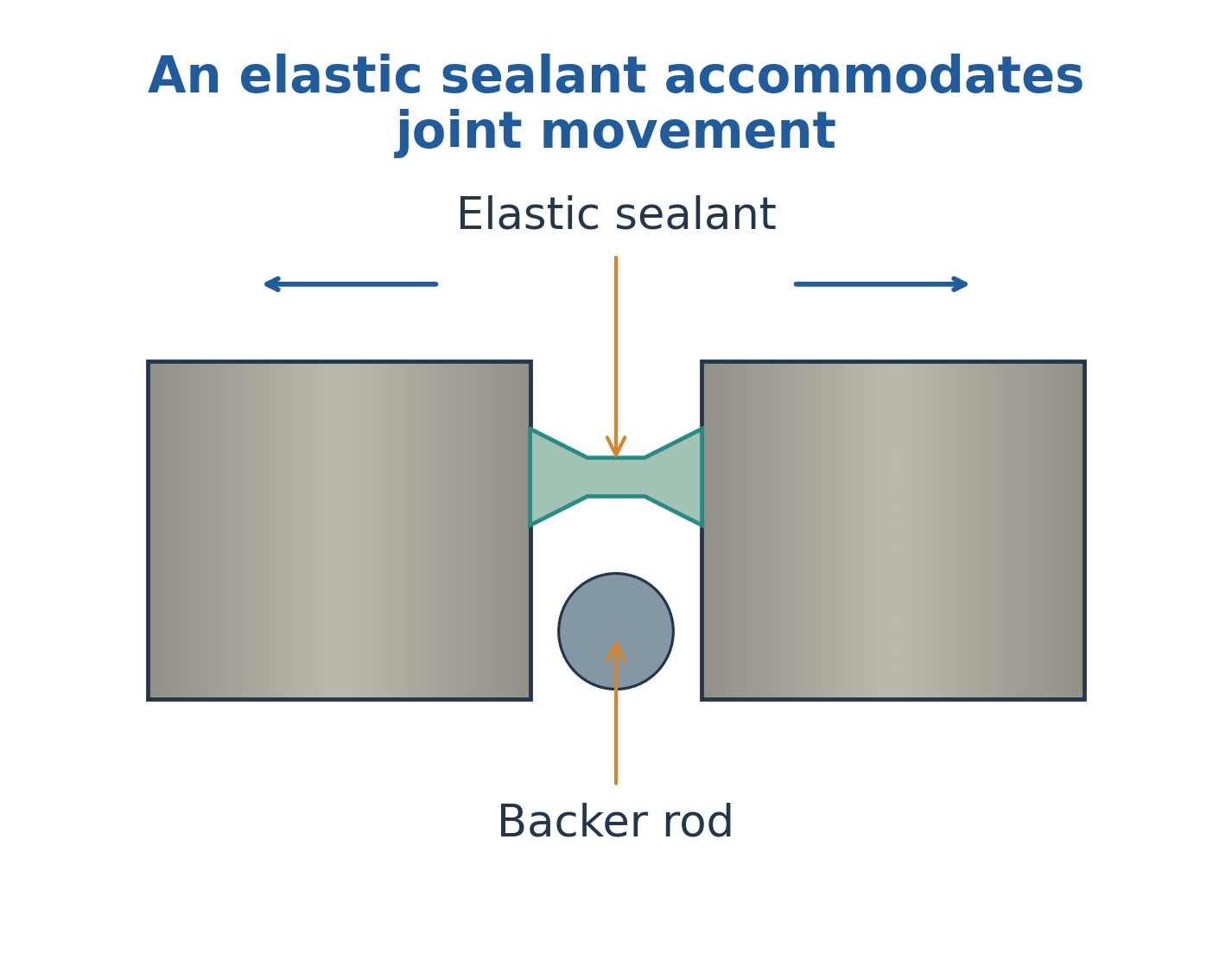
Joint geometry and backing materials help control deformation.
Epoxy and polyurea coatings create barriers or protective surfaces through network chemistry.
Pinholes, adhesion loss and cracking can bypass the barrier.
Polyurea network formation involves suitable isocyanate-amine reactions, while actual properties depend on formulation and cure.
Worked Problem 5.20: Joint Movement
Problem: A 20 mm joint widens by 3 mm. Find nominal extension relative to initial width.
Solution:
Extension = 3/20 × 100 = 15%
Answer: Nominal extension is 15%. This does not establish suitability of an arbitrary sealant.
21. Anti-Carbonation Coating Chemistry
Study route: CE
Anti-carbonation coatings reduce carbon-dioxide ingress into suitable concrete surfaces.
They must also balance water-vapour transmission, weathering and crack accommodation.
They support protection of the alkaline environment around reinforcement but do not replace assessment of existing damage.

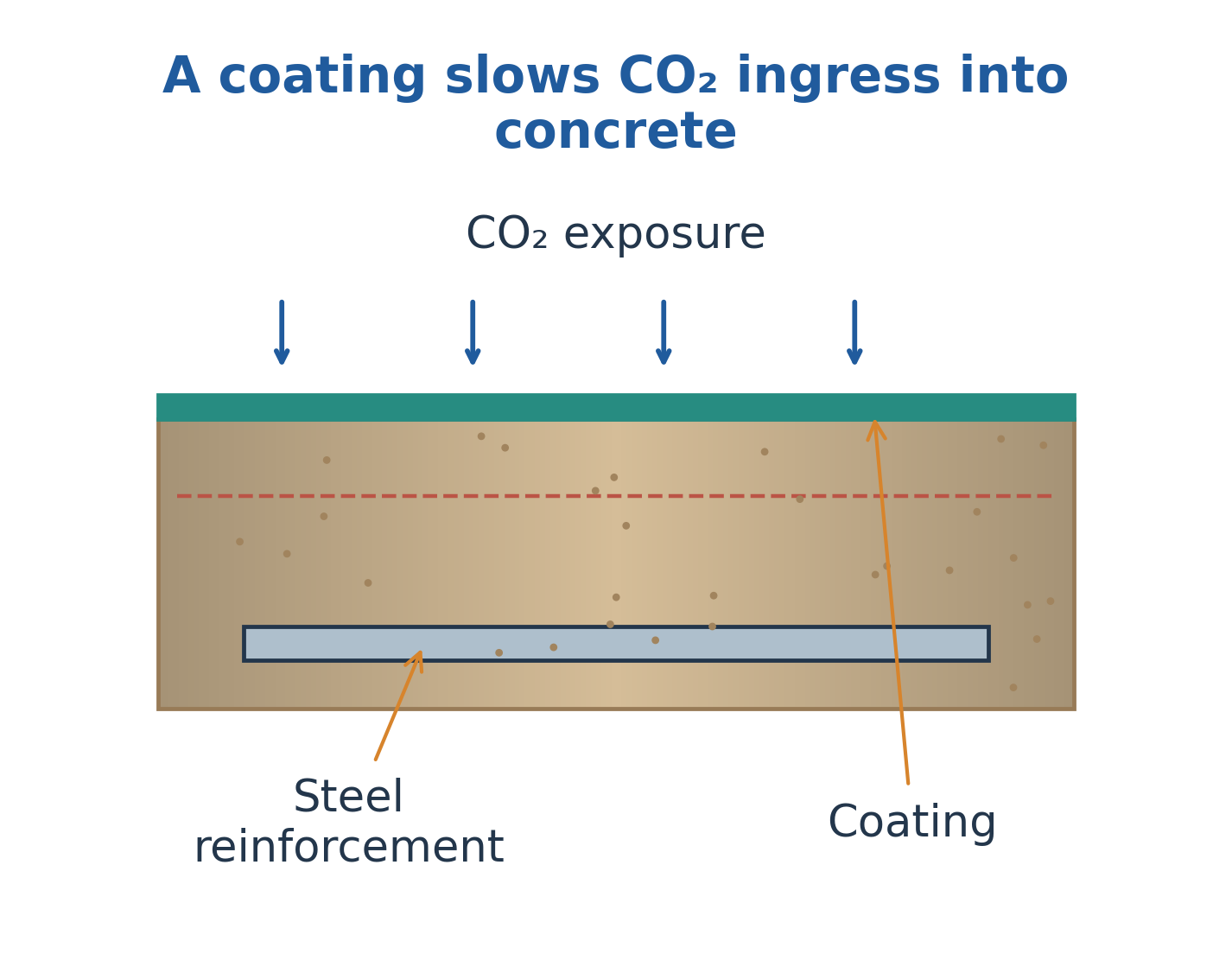
Dry-film thickness differs from wet applied thickness.
The relationship depends on solids content and application.
A visually continuous film does not prove uniform thickness or absence of defects.
Evaluate preparation, material, application and cure together.
Worked Problem 5.21: Dry-Film Thickness
Problem: A coating has 60% volume solids and a wet thickness of 200 μm. Estimate dry thickness.
Solution:
Dry thickness ≈ 0.60 × 200 = 120 μm
Answer: Estimated dry thickness is 120 μm, neglecting other volume changes.
Mass-solids percentage cannot replace volume-solids percentage without density information.
22. FRP Retrofitting and Carbon-Fibre Composites
Study route: CE
Fibre-reinforced polymers combine load-bearing fibres with a polymer matrix that transfers stress and protects reinforcement.
Carbon fibres provide high specific stiffness and strength along the fibre direction.
Glass and other fibres provide different performance and cost.


Orientation, volume fraction, matrix cure and substrate bond determine response.
Retrofitting requires assessment of anisotropy, temperature, fire and anchorage.
Composite strength cannot be inferred by simply adding fibre and resin strengths.
Worked Problem 5.22: Fibre Volume Fraction
Problem: A no-void composite has 30 cm³ of fibres and 70 cm³ of matrix. Find fibre volume fraction.
Solution:
Vf = 30/(30 + 70) = 0.30
Answer: Fibre volume fraction is 30%. It is not automatically equal to mass fraction.
23. Nanotechnology and Self-Healing Concrete
Study route: CE
Nanotechnology can modify hydration, packing, interfaces or sensing, depending on composition and dispersion.
Poor dispersion can create agglomerates rather than the intended benefit.
Self-healing concrete can use continued hydration or carbonation, capsules, or biological and mineral-precipitation approaches.

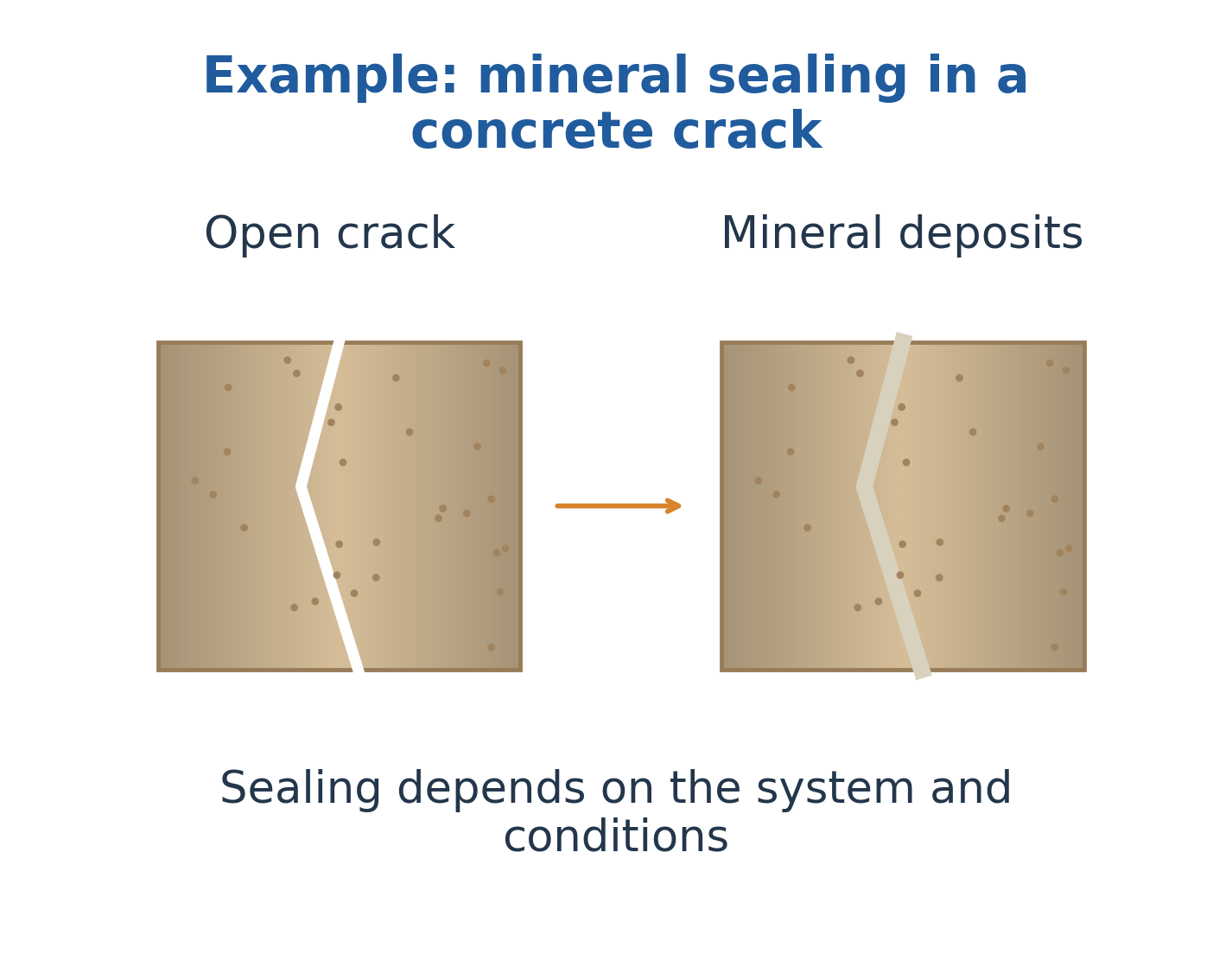
Crack width, moisture, temperature and agent availability limit performance.
A sealed surface does not automatically establish restored load capacity or corrosion protection.
State the property measured before claiming healing efficiency.
Structural adhesives, sealants, coatings and FRP should be selected according to the actual problem. They do not provide interchangeable functions.
Worked Problem 5.23: Healing Definitions
Problem: Leakage decreases from 10 to 2 mL/min under matched conditions. Find reduction.
Solution:
Reduction = (10 − 2)/10 × 100 = 80%
Answer: Leakage is reduced by 80%. This is hydraulic sealing performance, not automatically structural-strength recovery.
24. Surface Energy, Wettability and Contact Angle
Study route: ME
Surface energy arises because atoms or molecules at an interface experience a different environment from those in the bulk.
Wetting reflects solid-vapour, solid-liquid and liquid-vapour interfacial energies.
For an ideal smooth equilibrium surface:
γSV = γSL + γLV cosθ


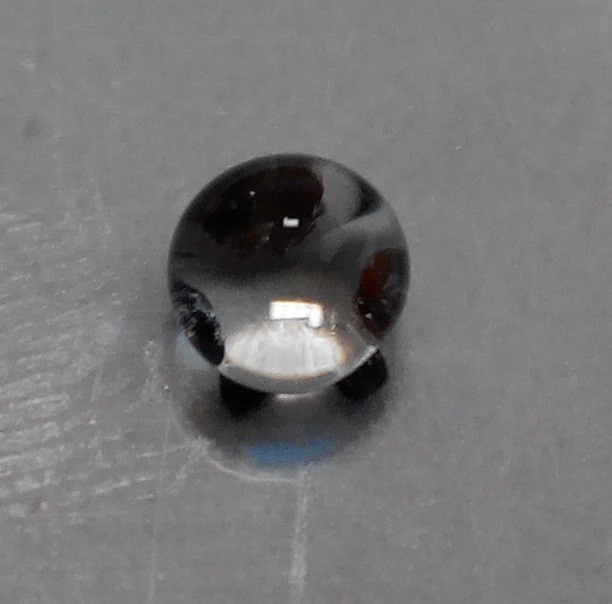
Roughness, chemical heterogeneity and contact-angle hysteresis complicate real surfaces.
Contact angle alone does not uniquely measure adhesion strength or all surface-energy components.
Worked Problem 5.24: Young Contact Angle
Problem: Given γSV − γSL = 0.036 N/m and γLV = 0.072 N/m, find the ideal angle.
Solution:
cosθ = 0.036/0.072 = 0.5
θ = 60°
Answer: The ideal angle is 60°, excluding roughness and hysteresis.
25. Physical and Chemical Vapour Deposition
Study route: ME
PVD transfers material through physical evaporation or sputtering and subsequent condensation.
CVD forms films through reactions of volatile precursors at or near a substrate.
Both require attention to cleanliness, coating stress, thickness and uniformity.


PVD is not automatically free of every interfacial chemical reaction.
CVD is not simply spraying liquid paint.
Selection depends on composition, substrate temperature tolerance, geometry, adhesion and cost.
A dense film can still fail through thermal mismatch, poor bonding or a through-defect.
Worked Problem 5.25: Coating Deposition
Problem: A coating grows at 2 μm/min for 15 minutes. Find thickness and one limitation.
Solution:
Thickness = 2 × 15 = 30 μm
Answer: Thickness is 30 μm, assuming constant uniform growth. Shadowing, depletion or temperature changes can invalidate the model.
26. Thermal Spraying: Feed, Impact and Coating Build-Up
Study route: ME
Thermal spraying accelerates heated feedstock particles toward a prepared surface.
Particles flatten and build a coating through successive deposits.
Flame, plasma and high-velocity variants differ in heating and particle dynamics.

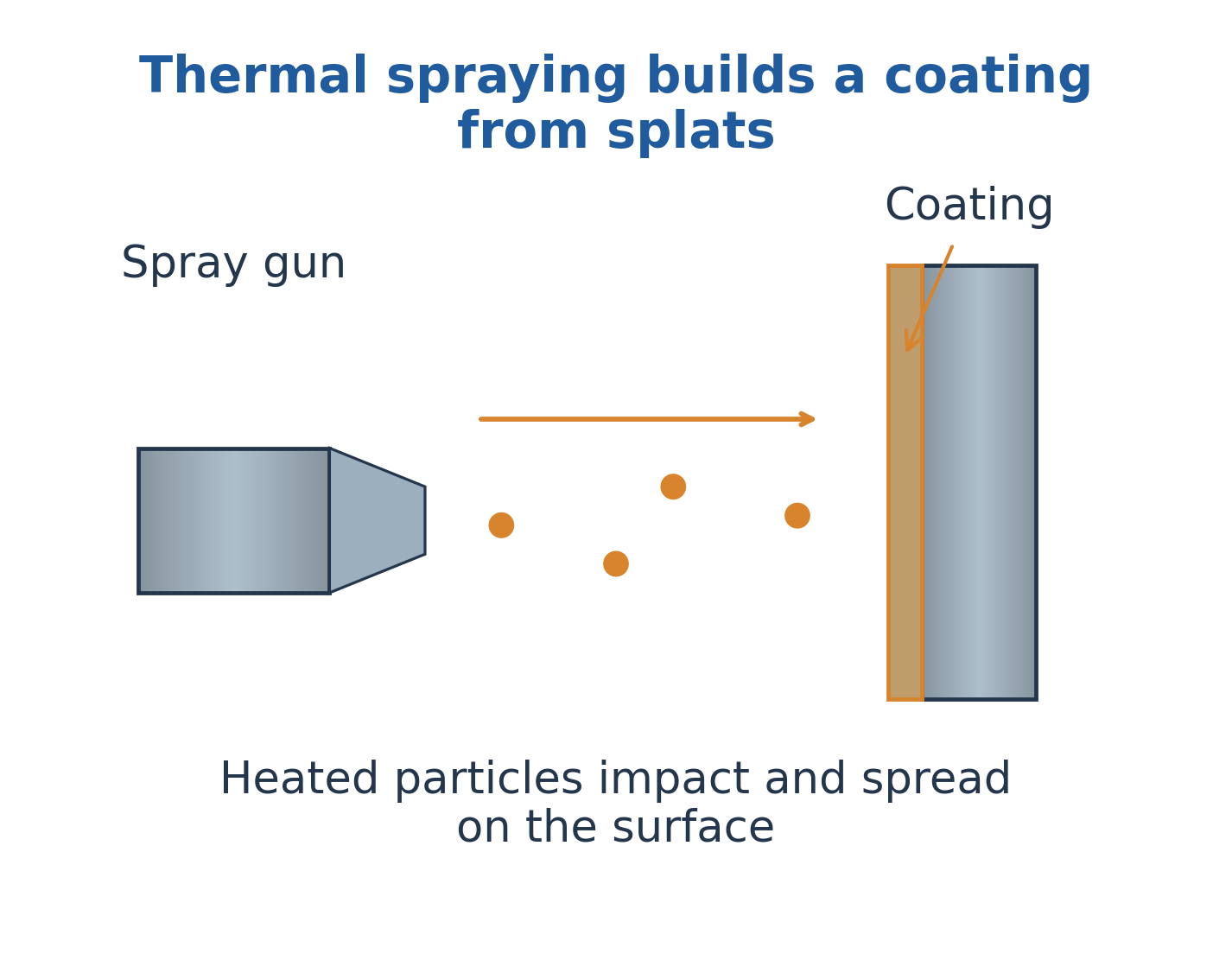
Porosity, oxide content, bond quality and residual stress depend on process and feedstock.
The substrate need not melt throughout its bulk.
Sprayed barriers differ from diffusion-grown or chemically reacted films in interfaces and defects.
Worked Problem 5.26: Deposition Efficiency
Problem: A spray process feeds 5 kg of powder and retains 3 kg in the coating. Find deposition efficiency.
Solution:
Efficiency = 3/5 × 100 = 60%
Answer: Deposition efficiency is 60%. The remaining 2 kg requires accounting, and retained mass does not prove adhesion.
27. Ceramic and Diamond-Like-Carbon Coatings
Study route: ME
Ceramic coatings can provide thermal, wear or chemical protection.
Composition and environment determine usefulness.
DLC describes amorphous carbon-based coatings containing varying sp²/sp³ bonding and sometimes hydrogen or dopants.

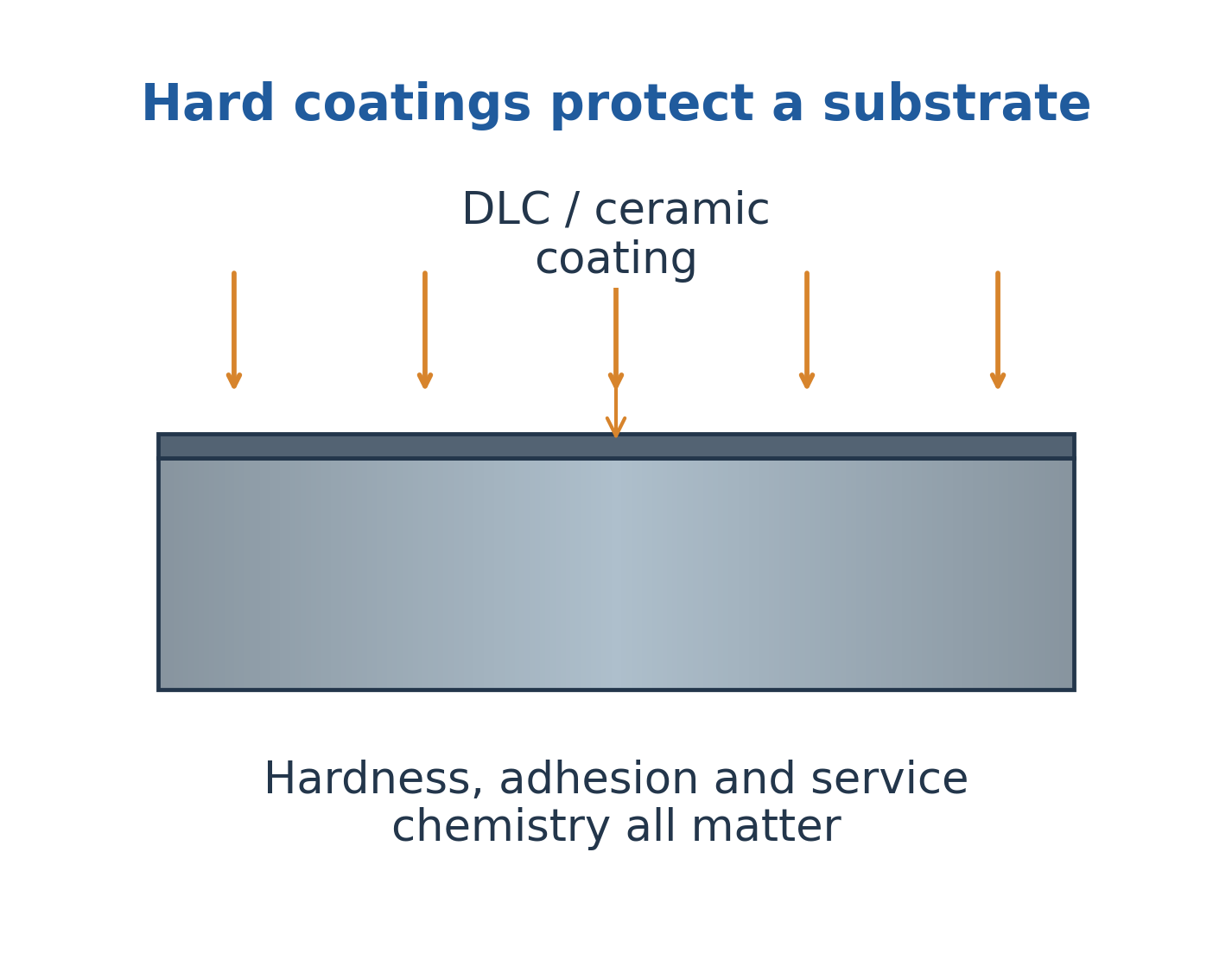
DLC can provide low friction and wear resistance under suitable conditions.
Internal stress, adhesion and temperature stability impose limits.
Abrasion, erosion, oxidation, thermal shock and delamination can require different remedies.
Improving hardness does not necessarily improve every impact or fatigue condition.
Worked Problem 5.27: DLC Identification
Problem: Is DLC necessarily a crystalline diamond coating?
Solution: DLC is an amorphous carbon-based family with variable bonding and possible hydrogen or dopants.
Answer: No. “Diamond-like” does not mean flawless crystalline diamond.
28. Nanomaterial Properties and Engineering Applications
Study route: ME
Nanomaterials have at least one relevant dimension at approximately the nanoscale.
They can show high surface-to-volume ratio, size-dependent electronic structure and altered transport or mechanical response.
For separated spheres:
Surface-to-volume ratio = 3/r


Agglomeration, porosity and coatings modify accessible area.
Size alone does not guarantee improved performance.
Stability, defects and interfaces remain important.
Worked Problem 5.28: Nanoscale Area Ratio
Problem: At equal total volume, separate spherical particle radius decreases from 100 nm to 20 nm. Find the area factor.
Solution:
Area factor = 100/20 = 5
Particle count changes by:
5³ = 125
Answer: Total area increases by five times. A fixed-number comparison would give a different result.
29. Sol-Gel, CVD Synthesis and Carbon Nanotubes
Study route: ME
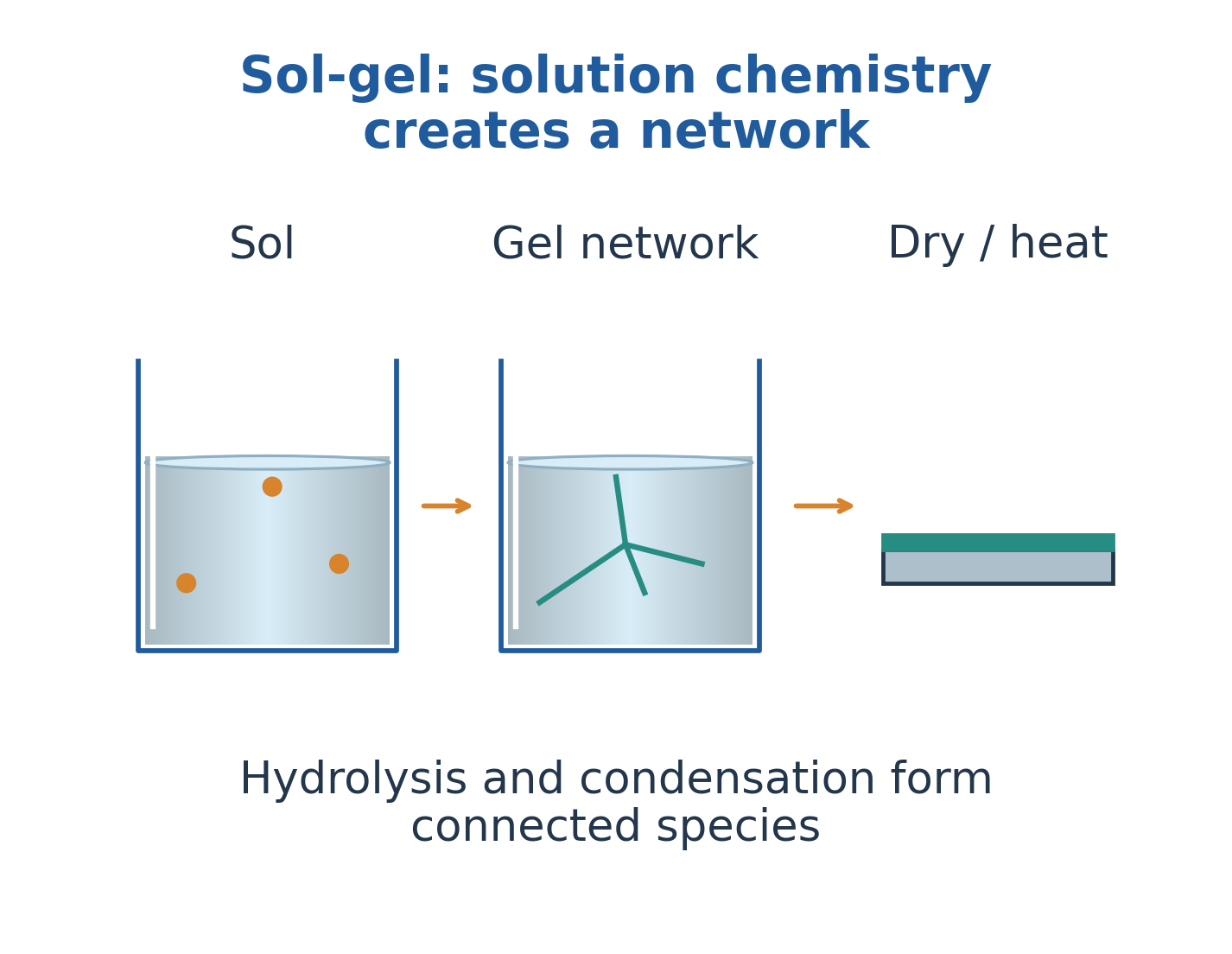
Sol-gel processing forms a network through precursor hydrolysis and condensation.
Controlled drying and optional densification follow.
Shrinkage and cracking can occur during solvent removal.

CVD can grow films or nanostructures through precursor transport and surface reactions.
CNTs contain graphitic tubular structures in single-walled or multi-walled forms.
Defects, alignment and interfacial bonding influence reinforcement, conduction and sensing.
A randomly dispersed, poorly bonded composite does not automatically achieve ideal single-tube properties.
Application answers should connect synthesis, structure, dispersion, interface and measured function.
Worked Problem 5.29: Sol-Gel Shrinkage
Problem: A gel dimension decreases from 10 mm to 8 mm. Find linear shrinkage.
Solution:
Linear shrinkage = (10 − 8)/10 × 100 = 20%
For equal contraction in all directions:
Remaining volume fraction = 0.8³ = 0.512
Answer: Linear shrinkage is 20%. Linear and volumetric shrinkage differ.
30. Green Solvents, Reagents and Catalysts
Study route: CH
Water, ionic liquids and supercritical CO₂ can serve as alternative media.
No solvent is green under every condition.
Water can create separation or effluent burdens.
Ionic liquids vary in toxicity and persistence.
Supercritical CO₂ requires pressure equipment and energy.

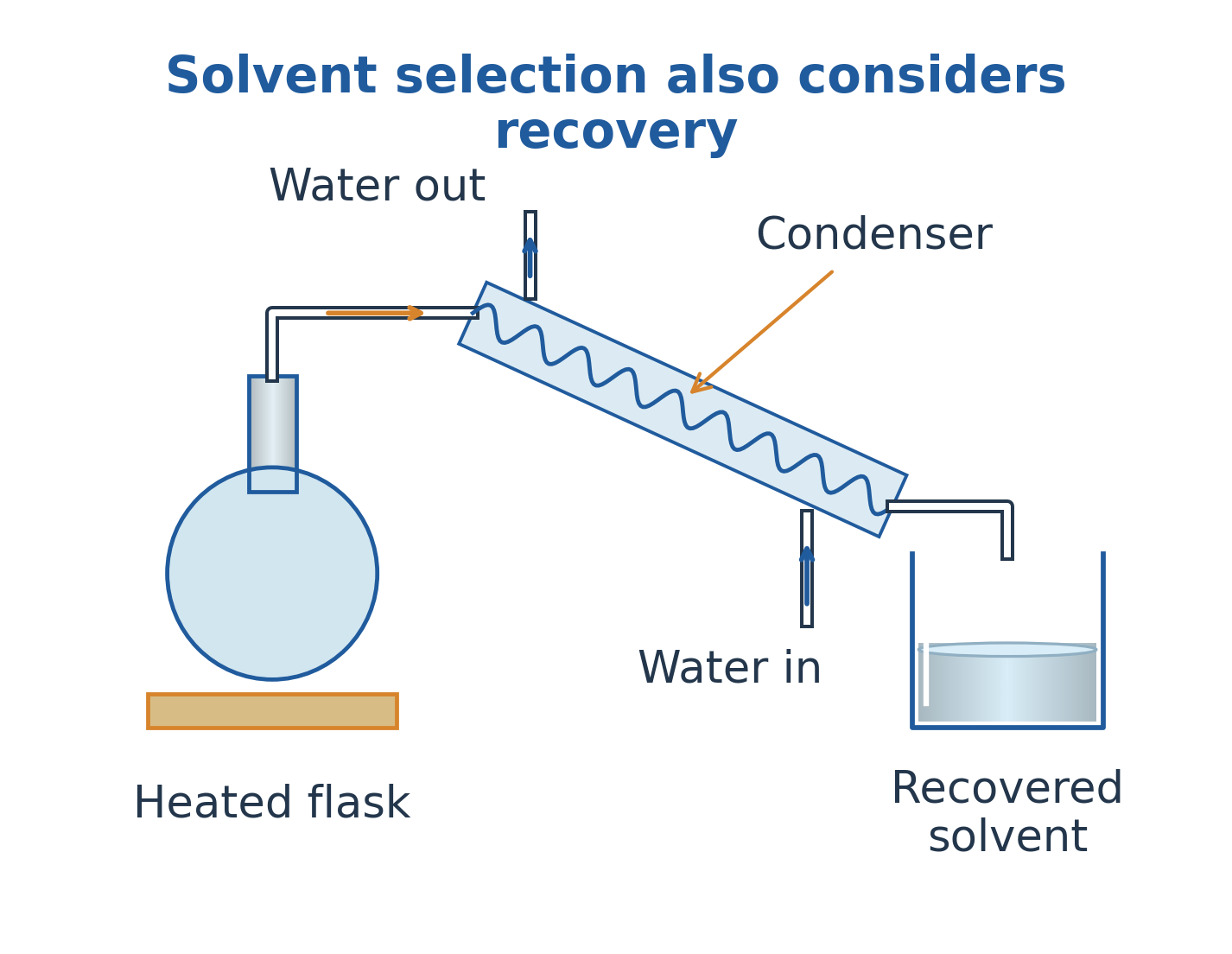
Choose solvents, reagents and catalysts by compatibility, toxicity, recovery, energy and complete waste streams.
A high-atom-economy reaction can still have poor process efficiency because of low yield, large solvent use or intensive purification.
Worked Problem 5.30: Solvent Recovery
Problem: A process needs 100 kg of circulating solvent per batch and recovers 85 kg for the next matched batch. Find fresh makeup without other inventory changes.
Solution:
Fresh makeup = 100 − 85 = 15 kg
Answer: Fresh demand is 15 kg. Circulating inventory differs from fresh demand; recovery energy and purging remain separate considerations.
31. Flow Chemistry and Process Intensification
Study route: CH
Flow chemistry moves reactants through a reactor while controlling residence time, mixing and heat transfer.
It can improve handling of selected fast, exothermic or hazardous transformations.
Pumping, fouling, control and scale introduce other considerations.

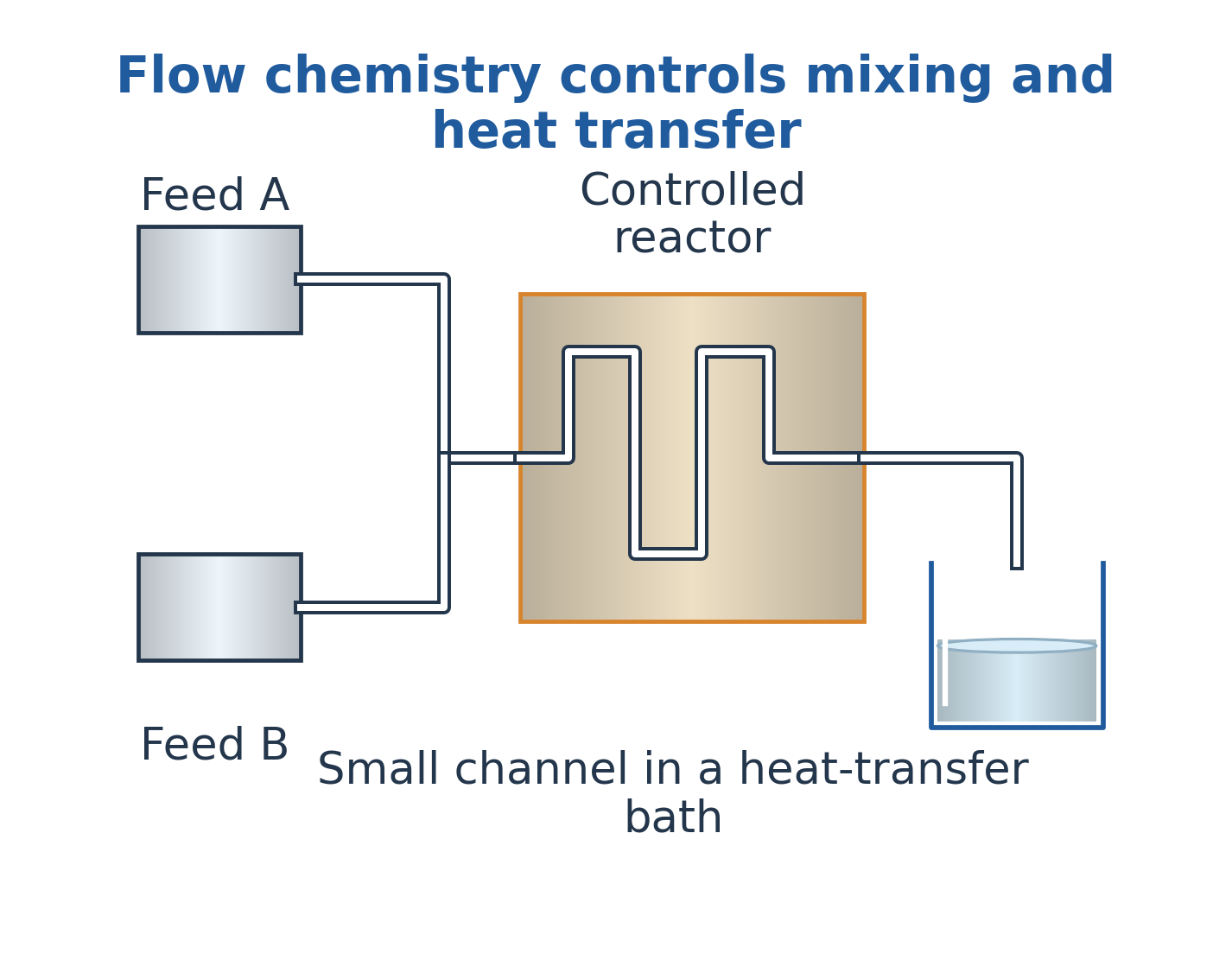
Process intensification seeks more effective equipment, energy use or integrated operations.
Smaller equipment alone does not prove lower impact.
For an ideal constant-density model:
Nominal residence time = Active reactor volume / Volumetric flow
Actual residence-time distribution can differ.
Worked Problem 5.31: Flow Residence Time
Problem: A reactor has active volume 2 L and total flow 0.25 L/min. Find nominal residence time.
Solution:
τ = 2/0.25 = 8 min
Answer: Nominal residence time is 8 minutes, subject to mixing, bypassing and dead-zone effects.
32. Waste Minimization, Valorization, LCA and Carbon Utilization
Study route: CH
Waste minimization prevents unnecessary streams.
Valorization converts a residual into a useful product with verified demand and performance.
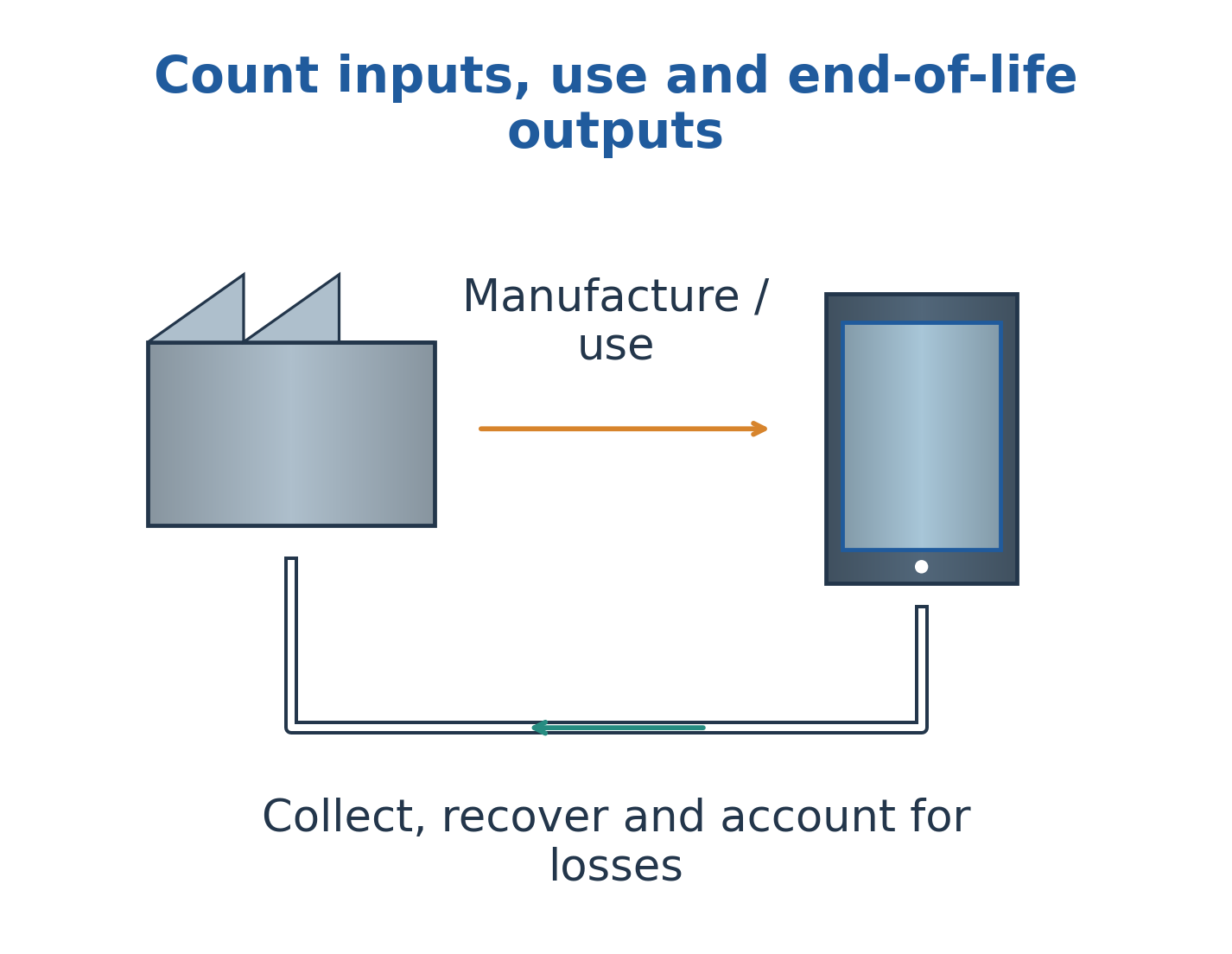
Life-cycle assessment defines a functional unit, boundary, inventory and impact evaluation.
Shifting a burden between stages or impact categories should remain visible.

Carbon capture separates CO₂.
Utilization uses or converts it.
CO₂ incorporated into a short-lived fuel can later be re-emitted.
Conversion requires energy, so utilization is not automatically permanent sequestration.
Compare equivalent product quality and function.
Balance the reaction, calculate theoretical atom economy, and then include yield, solvent, utilities, purification and waste effects.
Internal recycle and fresh input must be treated consistently.
A credible circular process identifies recovered outputs and the virgin resources they actually replace.
Worked Problem 5.32: Functional LCA Comparison
Problem: Why can comparing one kilogram of two materials be misleading?
Solution: Different masses or lifetimes can be needed to deliver the same function.
Answer: Define an equivalent functional unit, such as specified service over a stated lifetime, and compare complete systems.
Worked Problem 5.33: Carbon Utilization
Problem: A product incorporates 44 kg of CO₂ and releases all of it at end of use. Is this permanent storage?
Solution: Carbon is temporarily incorporated and later released.
Answer: No. A net climate assessment also needs energy, process emissions, displaced products and the time boundary.
33. Monoclonal Antibodies, Recombinant Proteins and Vaccines
Study route: BT
Monoclonal antibodies are defined antibody preparations produced from a controlled biological source and recognize selected molecular targets.
Recombinant proteins are expressed using engineered genetic systems.
They require appropriate folding, processing and purification.

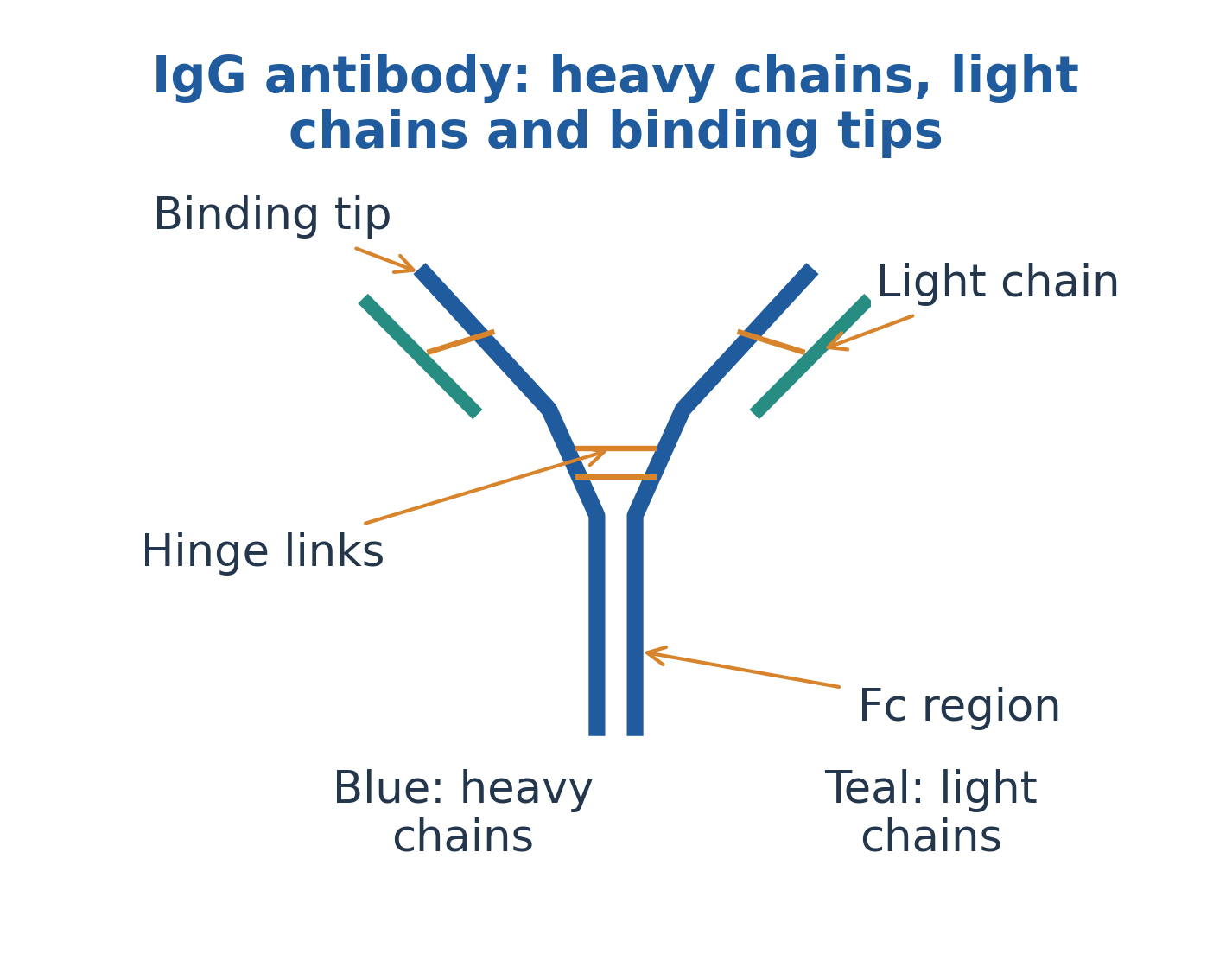
Vaccines present or encode antigenic information through suitable formulations.
They are not all chemically identical.
Stability, delivery and purity are central chemical challenges.
Protein identity includes more than a labelled concentration.
Worked Problem 5.34: Protein Recovery
Problem: Purification starts with 10 g of target protein and recovers 8 g. Find recovery and state whether purity is known.
Solution:
Recovery = 8/10 × 100 = 80%
Total recovered-stream mass is not supplied.
Answer: Recovery is 80%, while purity is unknown.
34. Nucleic-Acid Therapeutics: siRNA and mRNA
Study route: BT
mRNA carries an informational sequence that can be translated into a protein.
siRNA guides sequence-dependent RNA-interference machinery toward suitable RNA targets.
They are not interchangeable payloads.

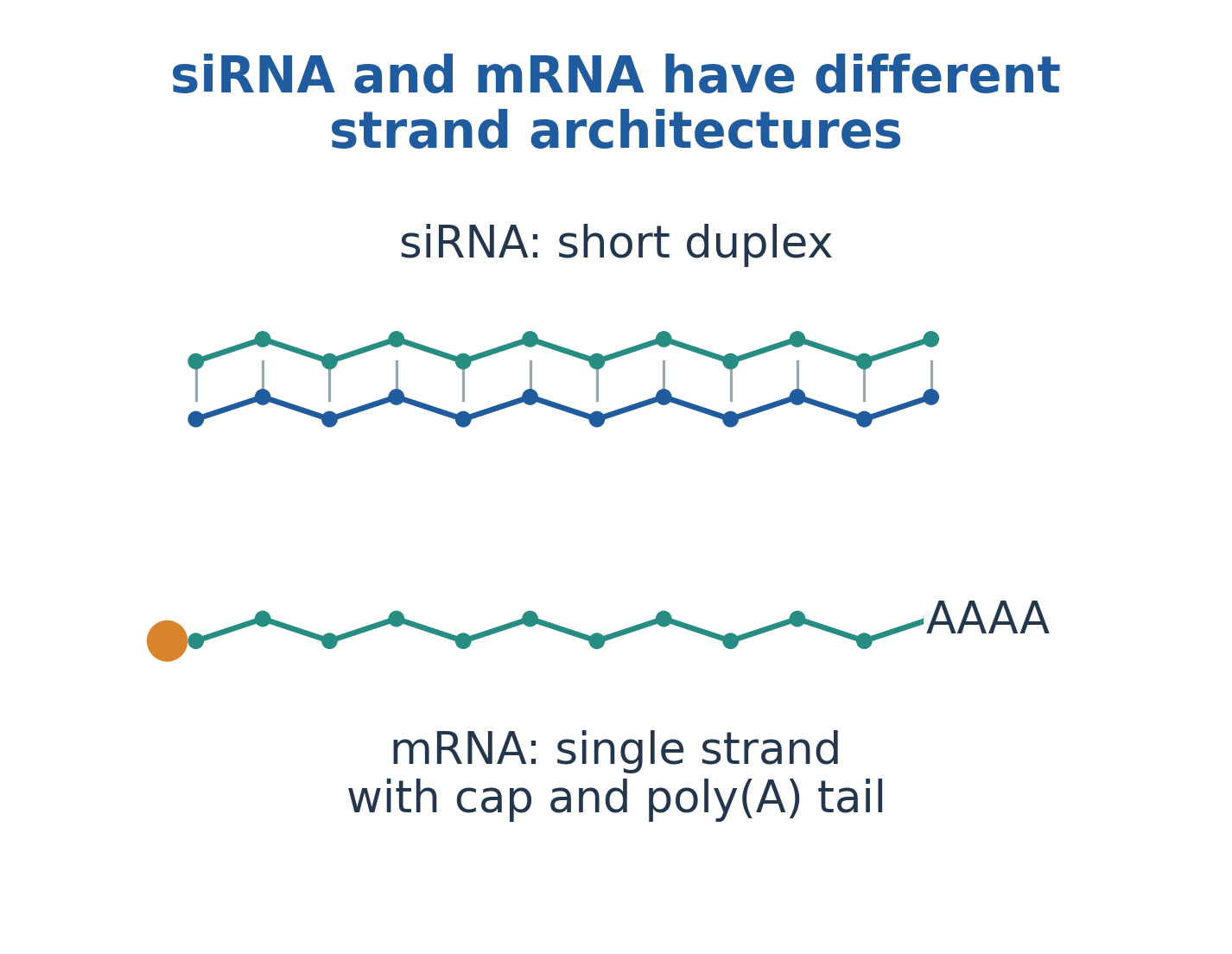
Sequence, length, modifications and integrity affect stability and function.
Nucleic acids face degradation and delivery barriers.
Formulations can protect payload and support uptake, while release and intracellular access remain necessary.
A lipid nanoparticle is a delivery architecture rather than proof of identical chemistry across products.
Control identity, integrity, impurities, formulation and stability.
Worked Problem 5.35: mRNA Versus siRNA
Problem: Which payload supplies a translation message, and which uses RNA-interference machinery?
Solution: mRNA supplies the message; siRNA guides suitable interference machinery.
Answer: mRNA supports translation, while siRNA supports sequence-guided interference.
35. Biosimilars and Drug Formulation Chemistry
Study route: BT
Biosimilars are highly similar to an authorized biological reference product within a defined regulatory framework.
They are not adequately described as ordinary small-molecule generics.

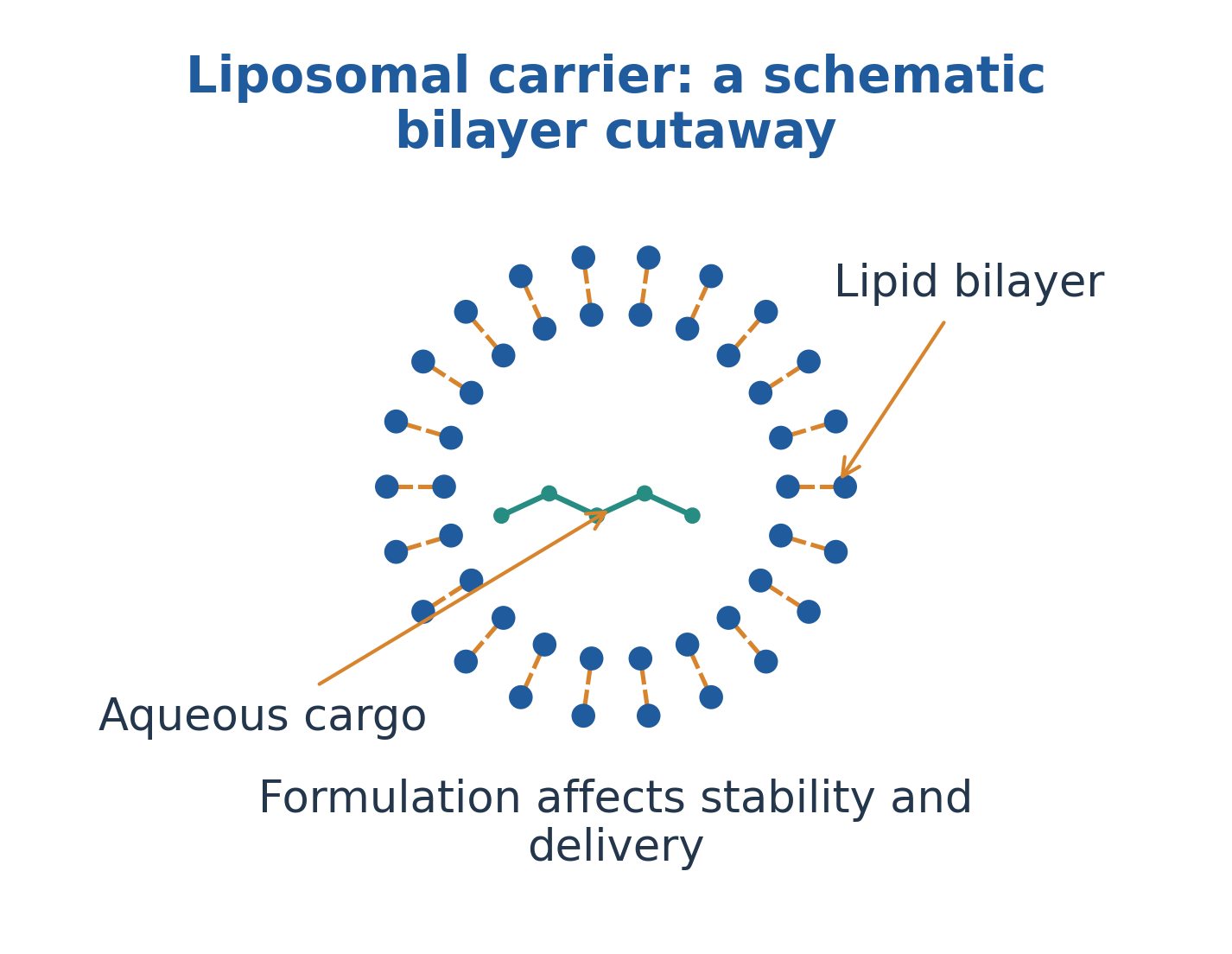
Formulation controls pH, ionic strength, aggregation, oxidation and interfaces using suitable excipients and packaging.
Amino-acid sequence alone does not describe every protein-quality attribute.
Higher-order structure and modifications also matter.
Connect activity with identity, potency, stability and impurity control.
Worked Problem 5.36: Formulation Dilution
Problem: A 20 mL solution contains 5 mg/mL of model protein. It is diluted to 50 mL without loss. Find final concentration.
Solution:
Initial mass = 20 × 5 = 100 mg
Final concentration = 100/50 = 2 mg/mL
Answer: Concentration is 2 mg/mL. The mass balance does not establish retained activity or absence of aggregation.
36. Enzyme Biosensors and Immunosensors
Study route: BT
An enzyme biosensor couples biological conversion with an electrical or optical transducer.
A glucose-oxidase system can monitor a reaction-associated species.
An immunosensor uses antibody-antigen recognition with a signal-generation scheme.

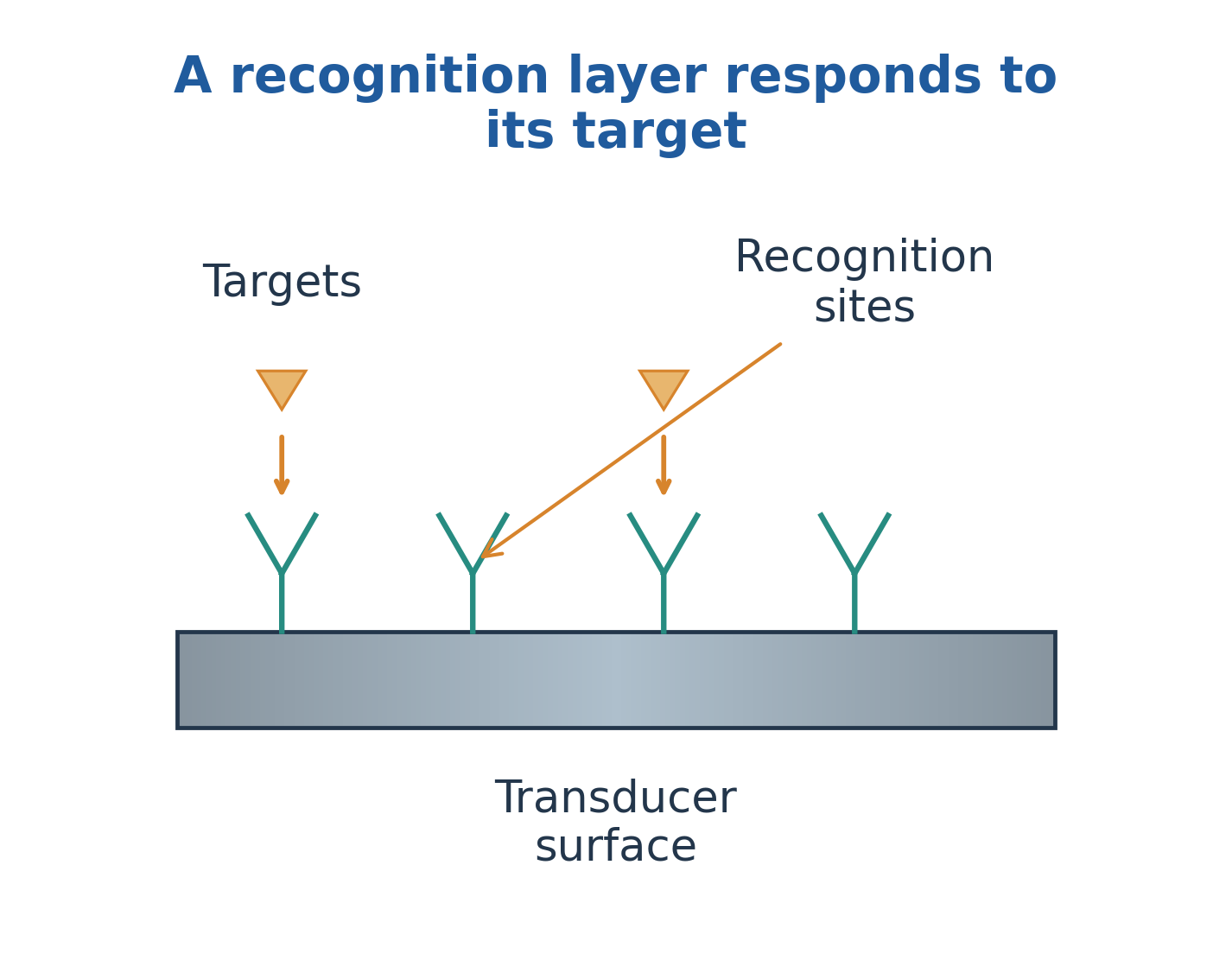


Recognition, transduction, calibration and interference control are separate elements.
Binding without readout is not a complete sensor.
Laboratory calibration does not establish clinical performance.
Immobilization and storage can change active recognition-site availability.
Worked Problem 5.37: Biosensor Calibration
Problem: A sensor model is I = 2 + 4c, with current in μA and concentration in mM. Find c when I = 14.
Solution:
c = (14 − 2)/4 = 3 mM
Answer: The model gives 3 mM. Subtract the intercept before dividing by sensitivity.
37. Bioremediation: Transformation, Immobilization and Limitations
Study route: BT
Bioremediation uses biological processes to transform, remove or immobilize contaminants.
Suitable organic compounds can undergo biodegradation.
Metals cannot be destroyed as elements and can instead be transformed or sequestered.

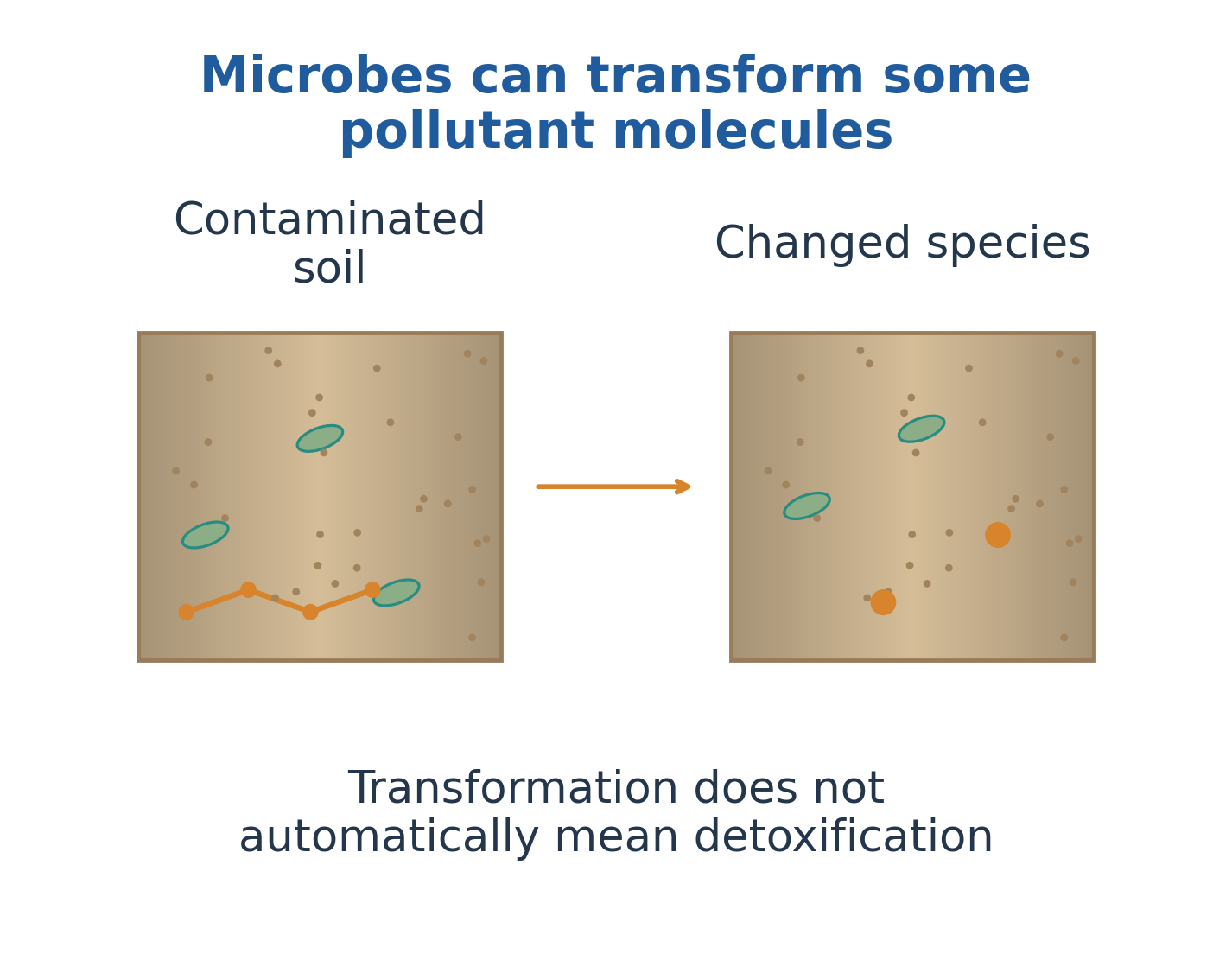
Oxygen, nutrients, toxicity and bioavailability limit performance.
A lower dissolved concentration can reflect transfer to biomass or solids.
Include all relevant phases in the material balance.
Worked Problem 5.38: Bioremediation Endpoint
Problem: Dissolved metal decreases while metal appears in harvested biomass. Has the element been destroyed?
Solution: The metal has transferred or changed chemical form.
Answer: No. Include biomass and other phases in the balance and manage contaminated harvest appropriately.
38. Paracetamol: Conventional and Greener Synthesis Comparison
Study route: BT
A representative route acetylates p-aminophenol with acetic anhydride to produce paracetamol and acetic acid.
The amino group becomes an amide, while the phenolic group remains in the target product.
C₆H₇NO + C₄H₆O₃ → C₈H₉NO₂ + C₂H₄O₂

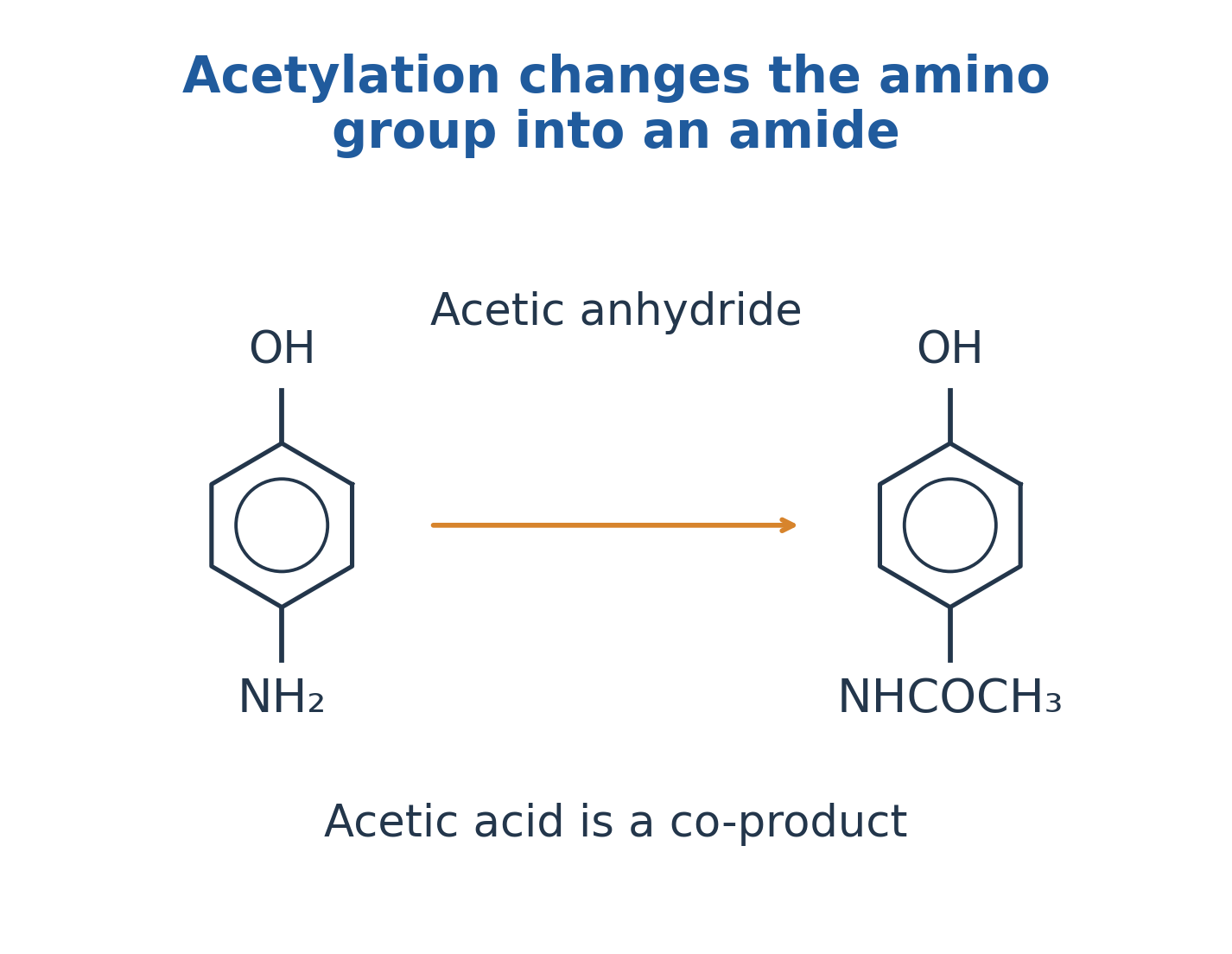
The limiting reagent determines theoretical product amount.
Isolated yield compares recovered product with theoretical product.
A greener version can use appropriate aqueous or reduced-solvent conditions, avoid unnecessary auxiliaries, improve selectivity and integrate recovery.
Compare the same product quality on the same boundary.
Changing medium alone does not establish superiority at every stage.
Purification, energy and impurity removal can dominate the practical inventory.
Worked Problem 5.39: Paracetamol Yield
Problem: A 0.10 mol limiting reagent ideally produces one mole of paracetamol per mole. Use molar mass 151.16 g/mol and isolated mass 12.0 g. Find yield.
Solution:
Theoretical product = 0.10 × 151.16 = 15.116 g
Yield = 12.0/15.116 × 100 = 79.4%
Answer: Isolated yield is approximately 79.4%. This does not include solvent, hazard or energy.
39. Green Biotechnology and Its Societal Environmental Impact
Study route: BT
Biocatalysis can provide selectivity under relatively mild conditions.
Fermentation can supply products through renewable feedstocks.
Benefits depend on feed cultivation, utilities, reaction performance, purification and waste management.
Biological origin does not automatically make a product nonhazardous or its manufacture carbon neutral.

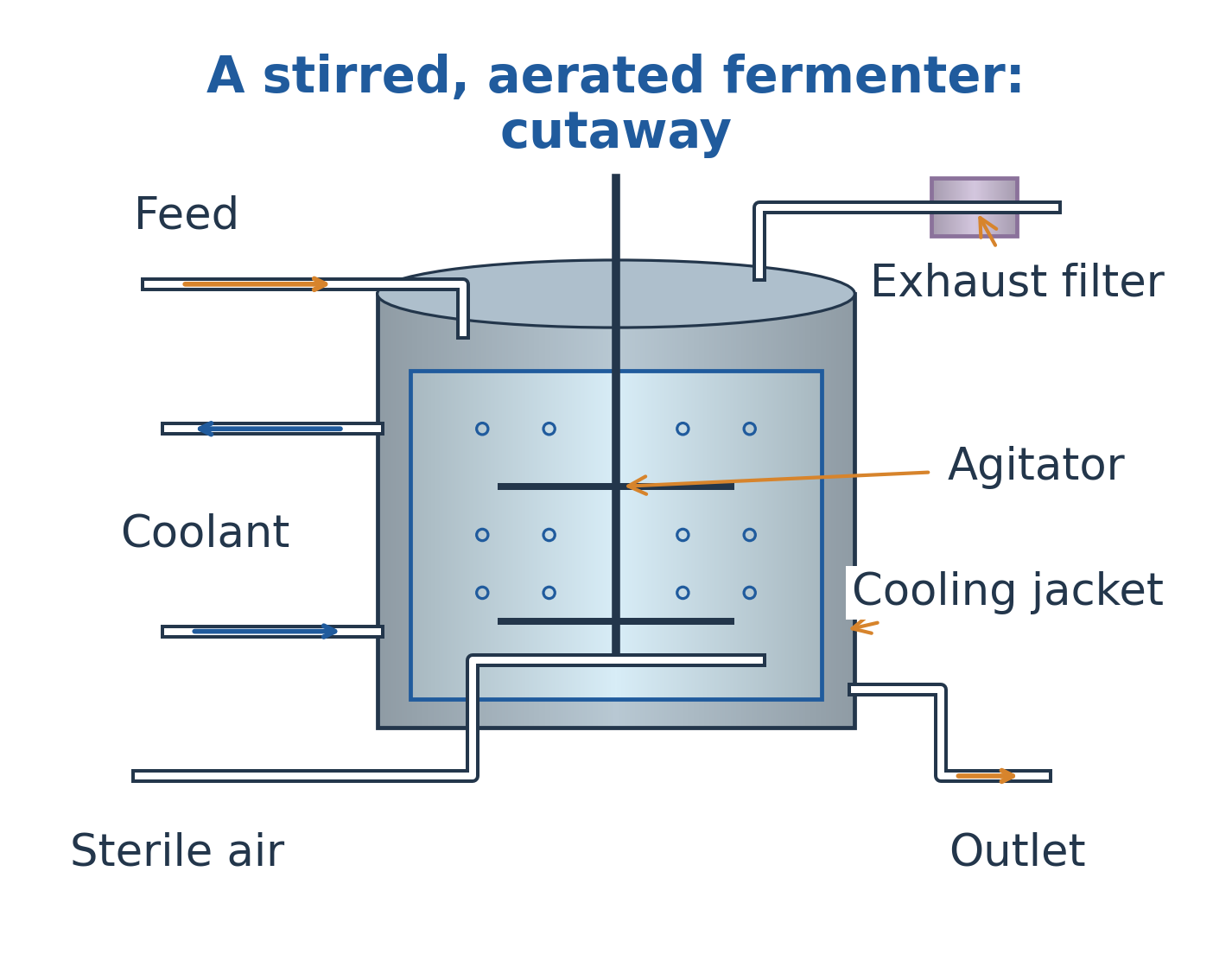
Environmental and societal assessment includes clean water, resources, emissions, worker exposure, access and residues.
A selective enzyme step can reduce by-products while downstream processing remains water-intensive or energy-intensive.
Bioremediation needs a verified endpoint because incomplete transformation can leave intermediates.
Explain benefit through a measured change and complete boundary.
Worked Problem 5.40: Route Waste Comparison
Problem: Two routes make 10 kg of the same-quality product and generate 40 kg and 25 kg of declared waste. Find E-factors.
Solution:
Route 1 E-factor = 40/10 = 4.0
Route 2 E-factor = 25/10 = 2.5
Answer: E-factors are 4.0 and 2.5. The second produces less waste on this boundary, while hazards and utilities still require assessment.
40. Environmental Issues, Natural Dyes and Green Textile Processing
Study route: TX
Green textile processing seeks reduced hazard, water, energy and waste while meeting fabric performance.
Natural dyes can be renewable but vary in composition, fastness and extraction demand.
Mordants and auxiliaries contribute to impact.

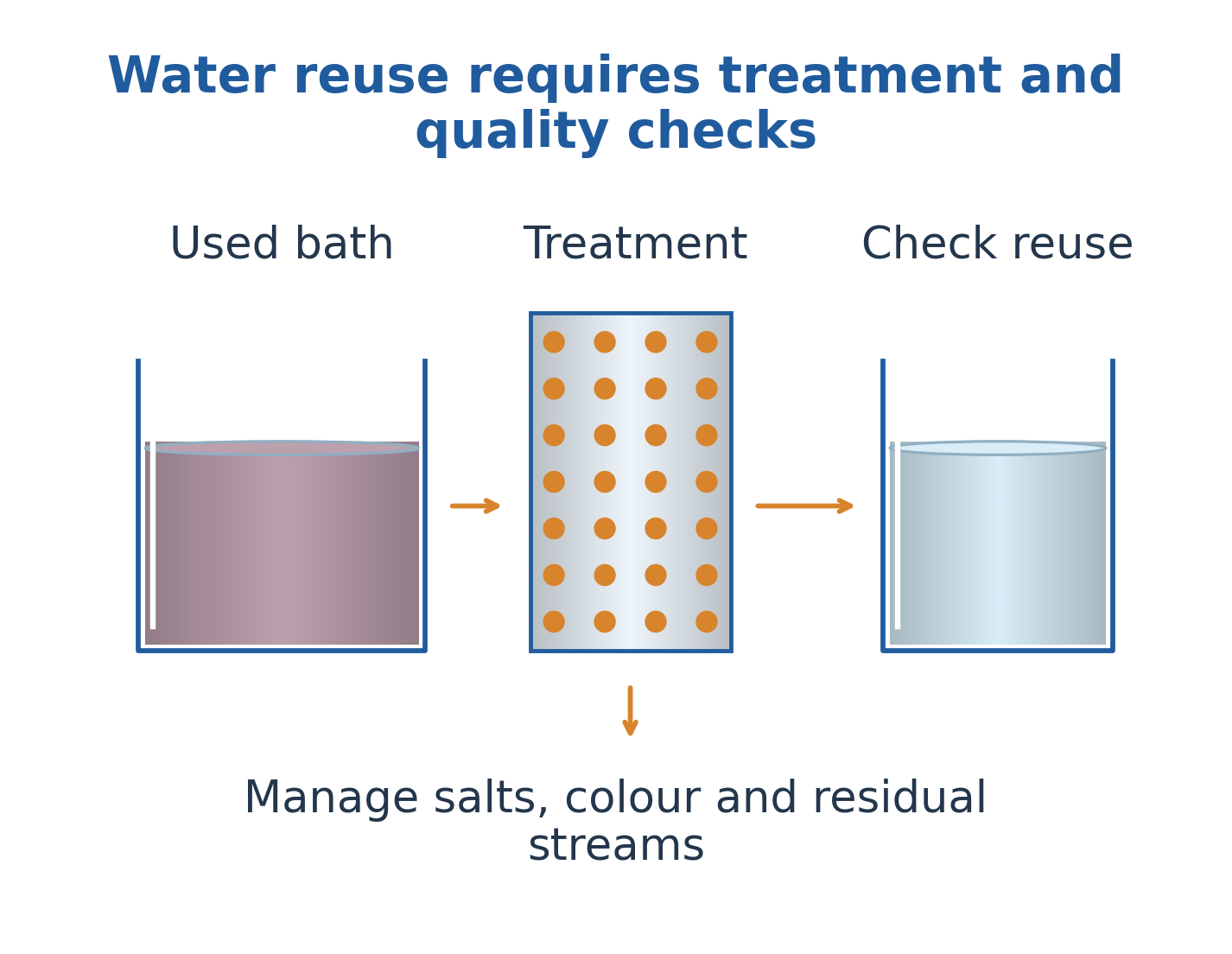

Biodegradability depends on structure and receiving conditions rather than only natural origin.
Visible colour loss can produce colourless intermediates rather than fully mineralized products.
Compare equivalent colour performance, fastness and service.
Worked Problem 5.41: Dye Origin
Problem: Does a natural dye automatically have lower total environmental impact than a synthetic alternative?
Solution: Compare extraction or synthesis, yield, mordants, auxiliaries, fastness, water, energy and degradation products.
Answer: No. Origin alone does not settle the comparison.
41. Enzyme Textile Processes and Antimicrobial Finishes
Study route: TX
Amylases can remove suitable starch size.
Cellulases modify cellulose surfaces for selected effects.
Proteases act on suitable protein substrates.

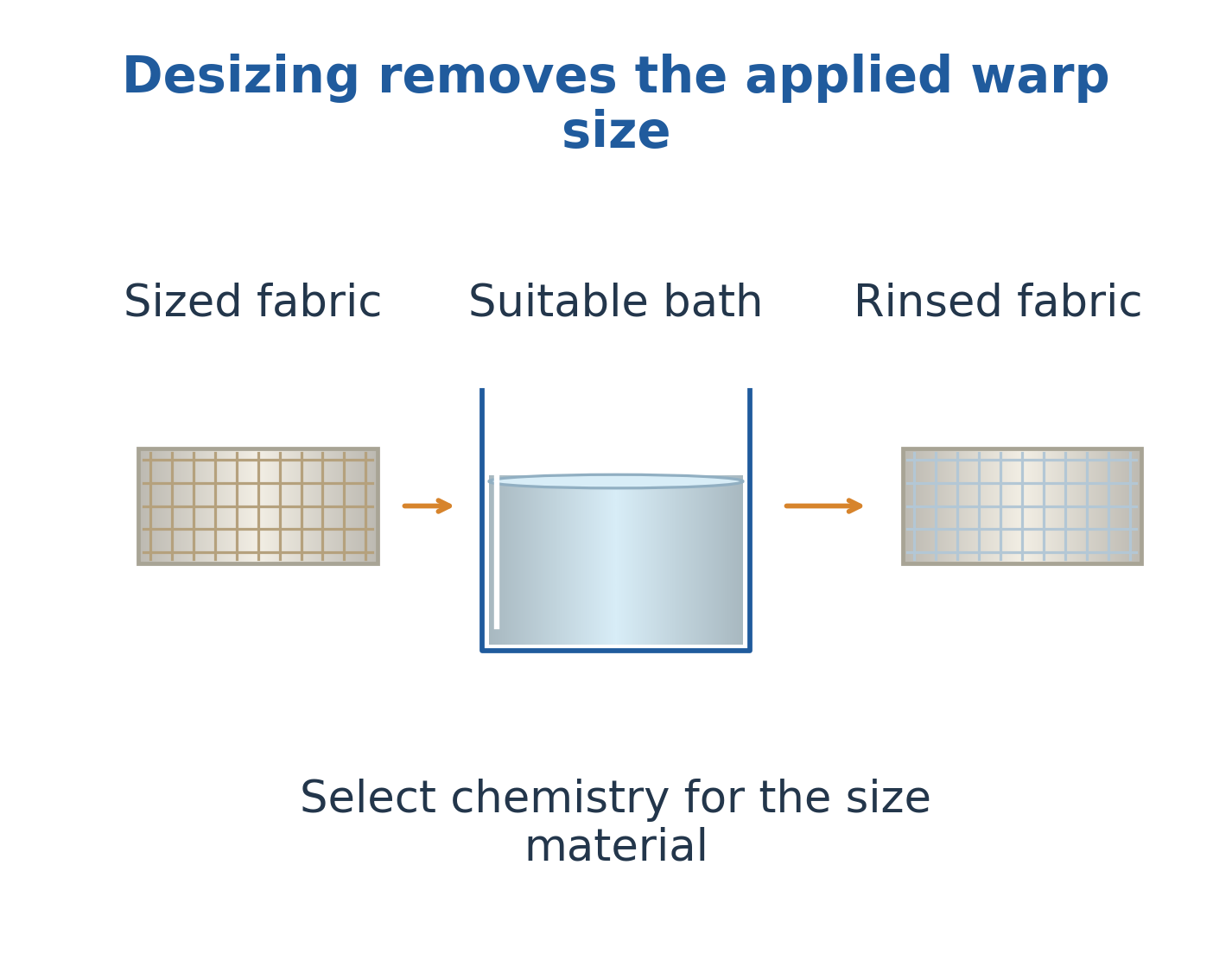
Specificity can enable milder processing but can also damage the fibre if the wrong enzyme or conditions are used.
Control temperature, pH, activity, time and inactivation or rinsing.
Compare equivalent finishing performance, including enzyme manufacture and wastewater.
Silver nanoparticles, chitosan and ZnO antimicrobial finishes differ in mechanism, durability and release.
Balance initial activity with wash stability, exposure and effluent management.
Worked Problem 5.42: Choose an Enzyme
Problem: Which enzyme removes suitable starch size: amylase, cellulase or protease?
Solution: Amylase acts on suitable starch. Cellulase acts on cellulose, while protease acts on suitable proteins.
Answer: Amylase is the intended choice.
42. Phase-Change Materials and Thermoregulating Textiles
Study route: TX
PCMs absorb or release latent heat during a transition over a useful temperature interval.
Encapsulation retains material within the textile but adds shell mass and can affect breathability and durability.

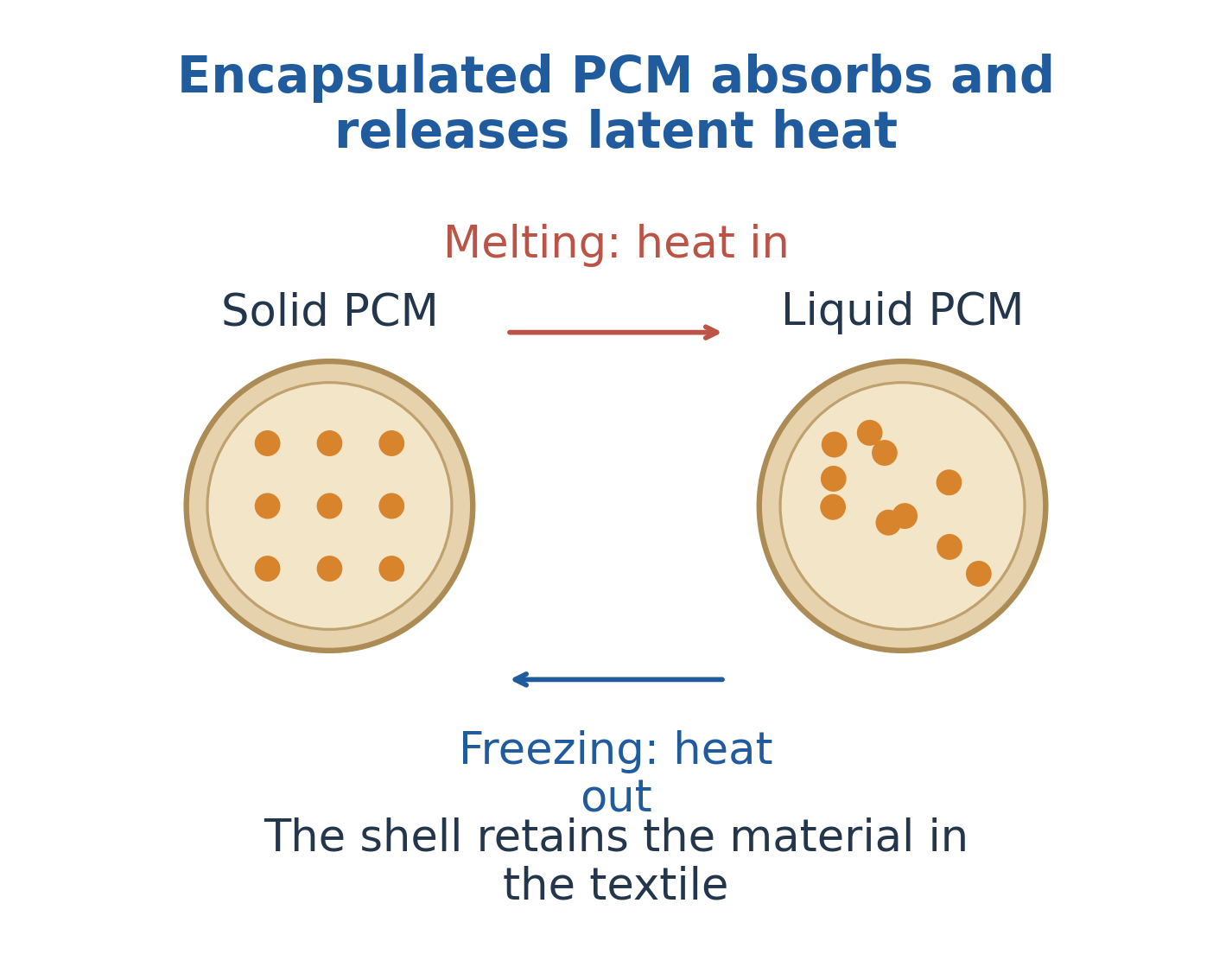
Latent heat stored = Participating PCM mass × Latent heat
Sensible heating is additional.
The textile does not cool continuously without a route to release stored heat.
Capsule mass and active PCM mass need not be identical.
Worked Problem 5.43: PCM Heat Storage
Problem: A textile contains 20 g of active PCM with latent heat 150 J/g. Find ideal latent storage.
Solution:
Storage = 20 × 150 = 3000 J = 3 kJ
Answer: Ideal latent storage is 3 kJ for complete participation.
43. E-Textiles, Recycling and Textile Circular Economy
Study route: TX
E-textiles combine fibres or fabrics with conductors, sensors, power or communication components.
Conducting polymers, coated yarns, metallic filaments and printed inks differ in bending, washing and contact behaviour.
Electrical function, comfort and maintenance must be considered together.

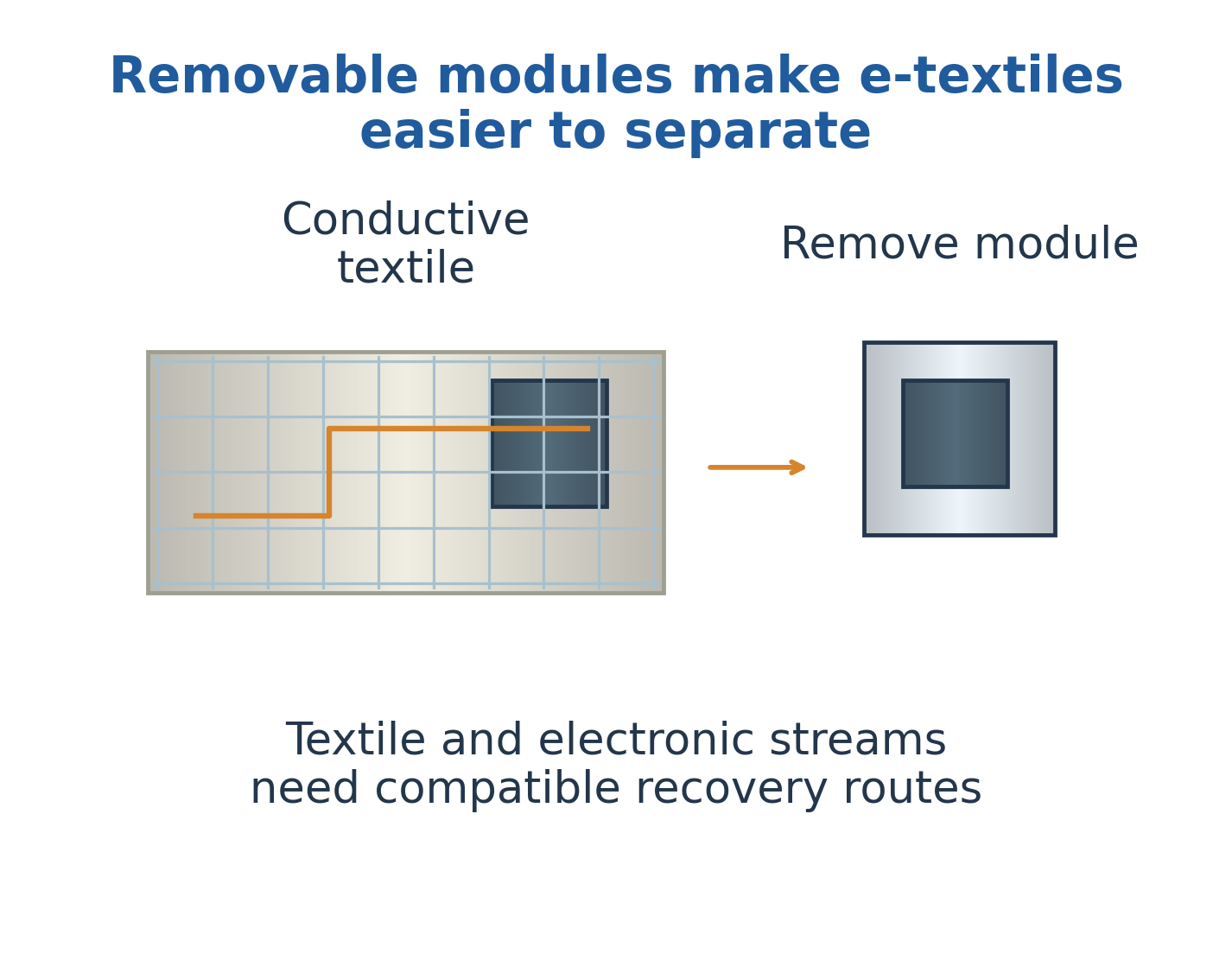
Textile recycling can use reuse, mechanical processing or chemical recovery according to fibre type, blends, dyes and contamination.
Mechanical recycling can shorten fibres.
Chemical recovery can recover building blocks while using reagents and energy.
Circular design preserves useful function and supports actual collection and processing.
Technically recyclable fabric is not necessarily recycled in practice.
Worked Problem 5.44: Textile Recycling Balance
Problem: From 100 kg of collected fabric, 80 kg is suitable feed. Seventy-five percent of that becomes usable fibre. Find overall yield.
Solution:
Usable output = 80 × 0.75 = 60 kg
Overall yield = 60/100 × 100 = 60%
Answer: Overall yield is 60%, with 40 kg of rejects and processing losses on the stated closed basis.
44. Green Agricultural Chemistry and Biofertilizers
Study route: AG
Biofertilizers use living microorganisms that support nutrient availability or related plant-soil processes.
Rhizobium forms nitrogen-fixing associations with suitable legumes.
Azotobacter includes free-living nitrogen-fixing organisms.


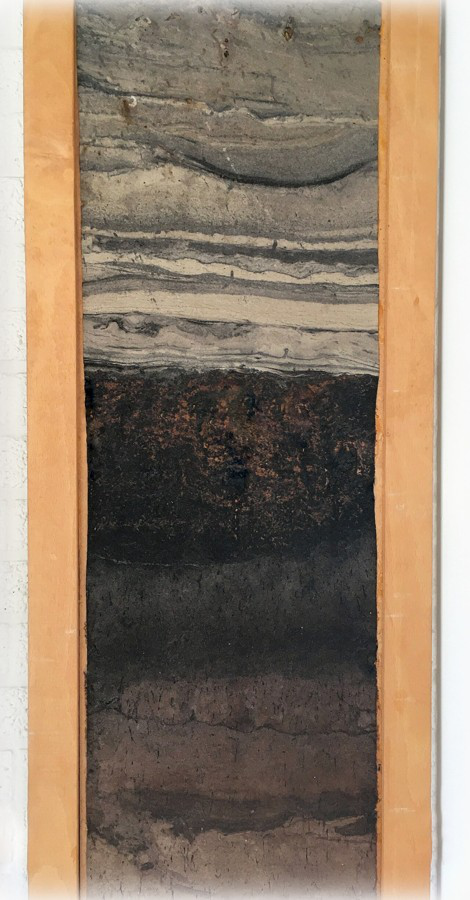
Effectiveness depends on viable inoculum, host compatibility, environment and management.
Biofertilizers do not provide unlimited nutrients independently of the surrounding system.
Worked Problem 5.45: Biofertilizer Roles
Problem: Distinguish Rhizobium and Azotobacter in introductory nitrogen-fixation applications.
Solution: Rhizobium forms suitable legume associations. Azotobacter includes free-living nitrogen-fixing organisms.
Answer: Their association and ecological roles differ, while viability and compatible conditions govern both.
45. Biopesticides: Neem and Bacillus thuringiensis
Study route: AG
Neem-derived preparations contain active constituents, including azadirachtin-related chemistry in suitable products.
They can influence insect feeding, development or behaviour.
Composition and stability depend on preparation.
Natural origin does not remove concentration, target, exposure or non-target considerations.


Bt products use appropriate biological materials and insecticidal proteins.
For susceptible insects and suitable proteins, ingestion, activation and gut interactions can lead to toxic effects.
Strain, formulation, target and conditions matter.
Distinguish microbial preparations, purified chemical pesticides and crops expressing insecticidal proteins.
Worked Problem 5.46: Biopesticide Specificity
Problem: Does a Bt-based preparation control every insect species equally?
Solution: Activity depends on biological material, protein, susceptible target, ingestion and conditions.
Answer: No. Target specificity and resistance management matter.
46. Composting and Vermicomposting Chemistry
Study route: AG
Composting biologically stabilizes organic residues under managed conditions.
Aeration, moisture and carbon-to-nitrogen balance influence performance.
Temperature changes reflect microbial activity and can support hygienization in a validated process.
A warm pile alone does not prove complete treatment.

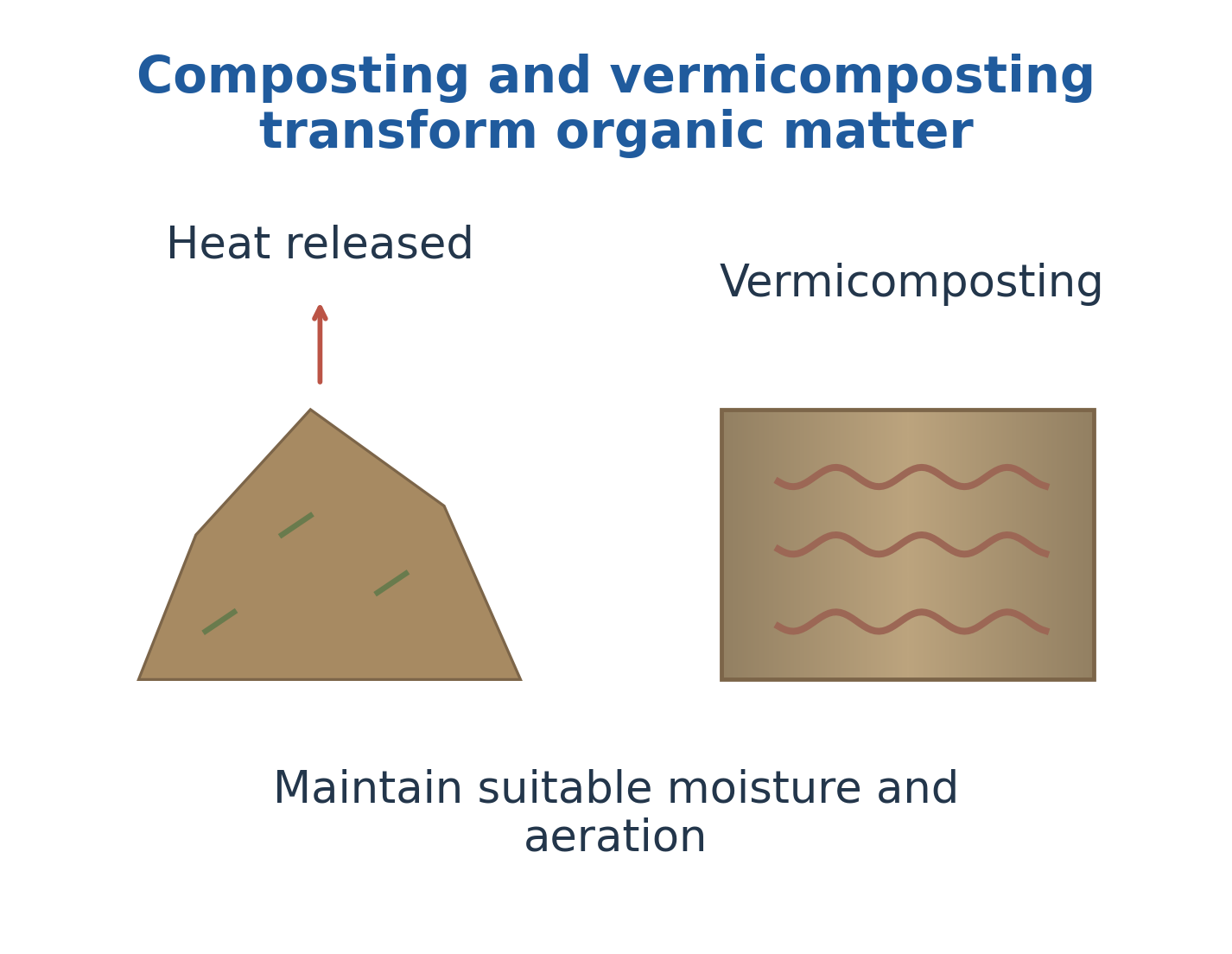
Vermicomposting uses earthworms and associated microbial activity under compatible conditions.
Excess heat or toxic feed can impair it.
Mature compost differs from undecomposed waste.
Salts, metals, pathogens and unstable organic matter need assessment before soil application.
Worked Problem 5.47: Compost Moisture
Problem: A 100 kg wet mixture contains 60 kg of water. Add 20 kg of completely dry amendment without losses. Find wet-basis moisture.
Solution:
Water remains = 60 kg
New total mass = 120 kg
Moisture = 60/120 × 100 = 50%
Answer: New wet-basis moisture is 50%, excluding decomposition and evaporation.
47. Phytoremediation and Contaminated Biomass
Study route: AG
Phytoremediation uses plants and associated processes to take up, stabilize, transform or influence contaminants.
Phytoextraction transfers suitable elements to harvested biomass.
Phytostabilization reduces mobility.
Rhizosphere processes can support degradation of selected organic pollutants.

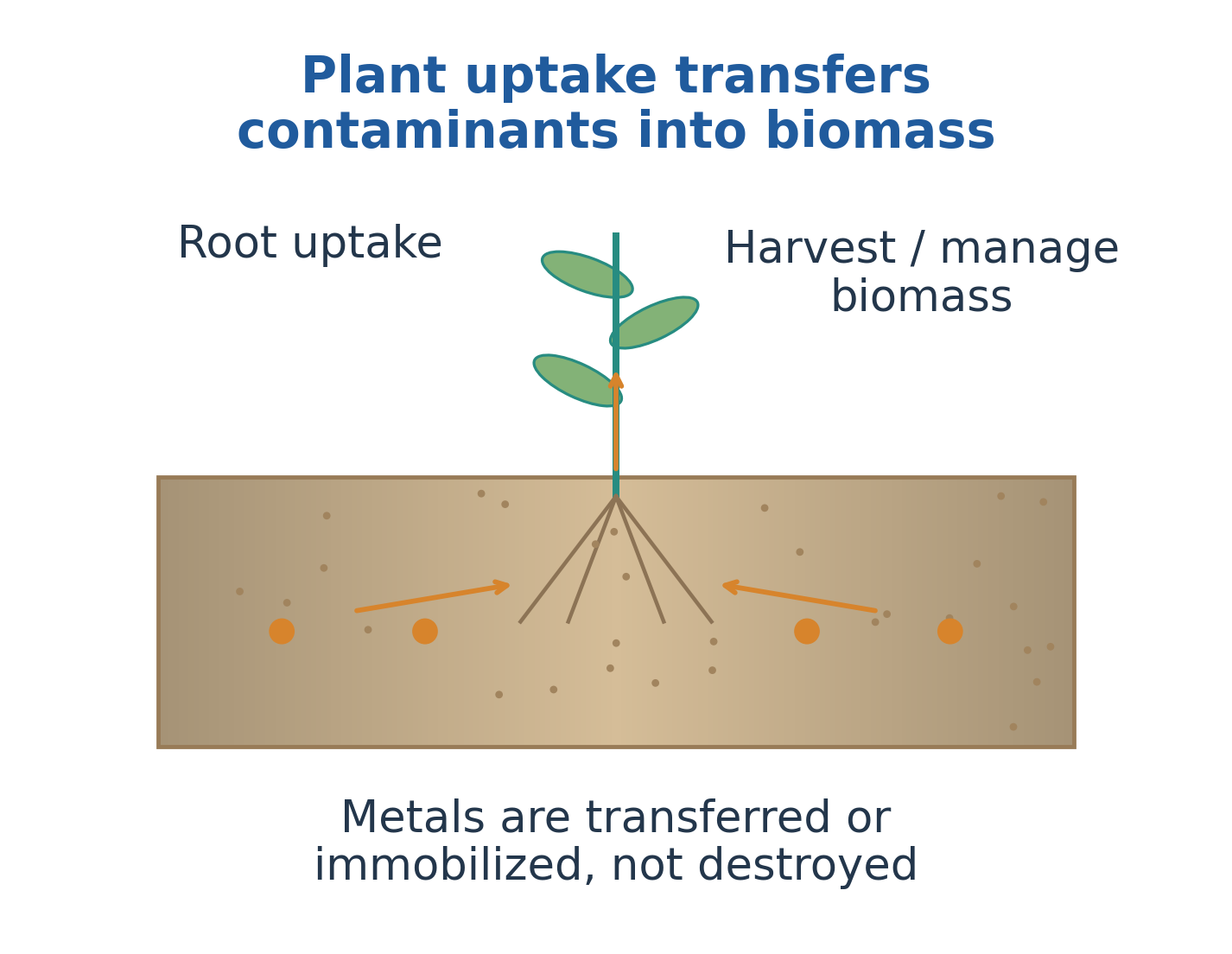
Harvested contaminated biomass needs appropriate handling.
Plant uptake does not destroy metal atoms.
Rooting depth, growth and bioavailability can limit removal.
Worked Problem 5.48: Phytoextraction Inventory
Problem: Harvested dry biomass is 1000 kg containing 50 mg contaminant per kg. Find transferred contaminant.
Solution:
Contaminant = 1000 × 50 = 50000 mg
Contaminant = 50 g
Answer: The harvest contains 50 g contaminant. Uptake transfers the inventory rather than destroying metal atoms.
48. Biodegradable Mulch Films and Agro-Waste Valorization
Study route: AG
Biodegradable mulch films aim to provide crop-management function and then degrade under specified conditions.
Fragmentation is not complete biodegradation.
Laboratory compostability does not prove rapid breakdown in every field.


Agro-waste can provide compost, fibres, platform chemicals, biochar or energy.
Composition, contamination, moisture and logistics determine viable routes.
A new output needs a useful function and realistic user.
Moving waste to another stockpile does not establish valorization.
Residue removal can affect soil organic matter and nutrient return.
Worked Problem 5.49: Mulch Degradation
Problem: A film fragments into smaller pieces in soil. Does that prove complete biodegradation?
Solution: Fragmentation describes physical breakdown. Biological conversion and residual-material assessment require separate evidence.
Answer: No. Verify an appropriate conversion endpoint under defined conditions.
Verifying Mulch Degradation
Identify polymer, additives and required crop-service period.
Separate physical fragmentation, molecular degradation and biological mineralization.
Use defined controls, conversion endpoints and residual assessment.
Interpret measured carbon dioxide against a blank and the test-carbon basis.
Physical disappearance alone does not prove complete conversion or harmless products.
49. Renewable Energy from Agro-Biomass
Study route: AG
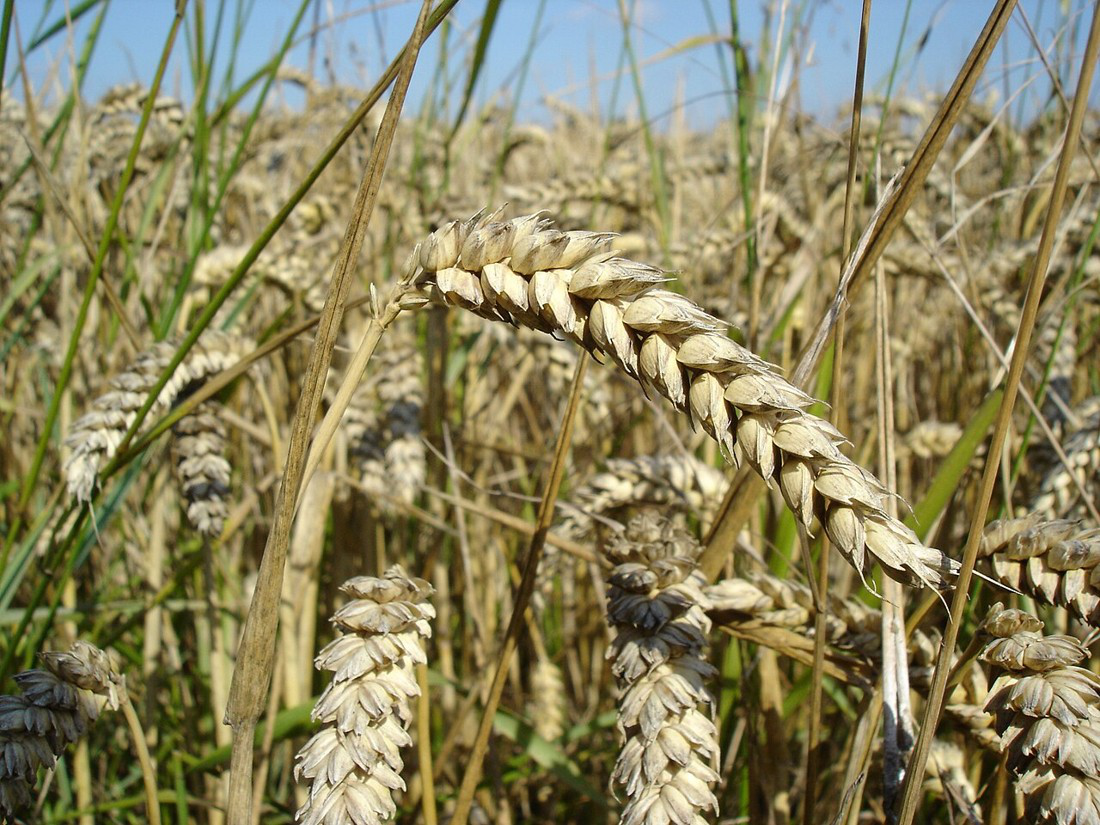
Anaerobic digestion converts suitable organic matter to methane-containing biogas and digestate.
Fermentation converts accessible sugars into products such as ethanol and carbon dioxide through suitable organisms.
Lignocellulosic residues can need pretreatment and hydrolysis to improve sugar access.


Combustion releases heat through oxidation.
Pyrolysis heats under absent or limited oxygen to produce char, liquids and gas.
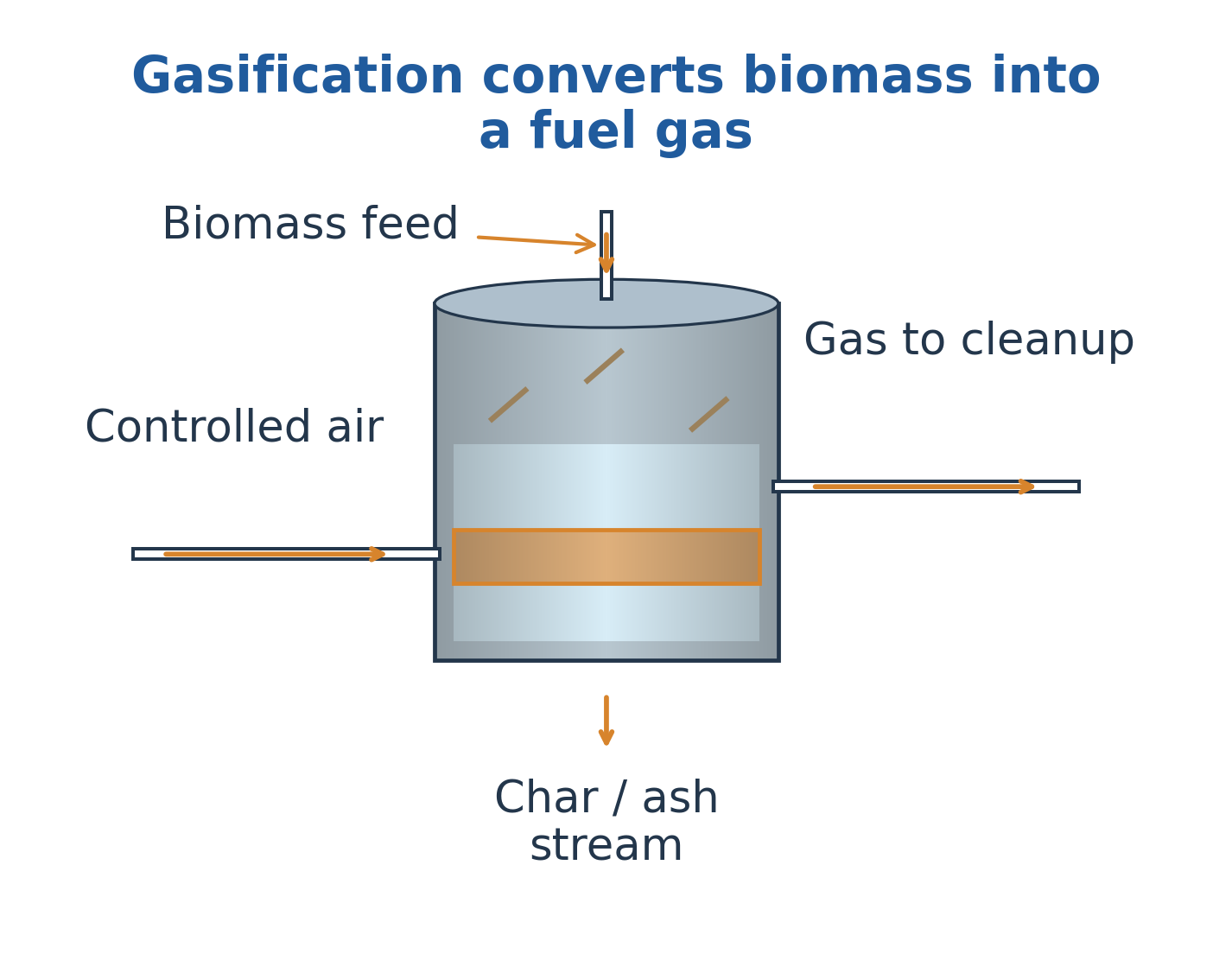
Gasification uses controlled partial oxidation to produce fuel gas.
These are different pathways rather than alternative names for burning.
Moisture consumes energy during heating and evaporation.
Ash and contaminants affect conversion.
Include useful output, preprocessing, emissions and competing soil or material uses.
| Route | Main Transformation |
|---|---|
| Anaerobic digestion | Microbial conversion to biogas and digestate |
| Fermentation | Suitable sugars to biological products |
| Combustion | Oxidation releasing heat |
| Pyrolysis | Heating with absent or limited oxygen |
| Gasification | Controlled partial oxidation to fuel gas |
Worked Problem 5.50: Biomass Useful Energy
Problem: A dry residue inventory is 50 kg with calorific value 16 MJ/kg and conversion efficiency 25%. Find useful energy.
Solution:
Input energy = 50 × 16 = 800 MJ
Useful output = 0.25 × 800 = 200 MJ
Answer: Useful energy is 200 MJ, before additional accounting for preprocessing, moisture and competing uses.
Formulas and Model Conditions
| Topic | Relation and Condition |
|---|---|
| Atom economy | Desired stoichiometric product mass / Stoichiometric reactant mass × 100 |
| Yield | Isolated desired product / Theoretical product × 100 |
| E-factor | Included waste mass / Useful product mass |
| PMI | Included input mass / Useful product mass |
| Boundary identity | PMI = E-factor + 1 only for compatible complete boundaries |
| Mass balance | Inputs = Outputs + Inventory increase |
| Recovery | Target output / Target input |
| Purity | Target mass / Total selected output mass |
| Target inventory | Feed mass × Target fraction |
| Sequential recovery | Product of compatible stage-recovery fractions |
| Average adhesive stress | Load / Bonded area |
| Dry coating thickness | Wet thickness × Volume-solids fraction |
| Young relation | γSV − γSL = γLV cosθ |
| Sheet resistance | R = RₛL/W for a uniform rectangular sheet |
| Photon energy | E = hc/λ |
| Optical conversion | E(eV) ≈ 1240/λ(nm) |
| Solar efficiency | Maximum electrical power / Incident optical power |
| Bending strain | Outer strain ≈ t/(2R) under the thin homogeneous-layer model |
| Flow residence time | Active reactor volume / Volumetric flow |
| PCM energy | Participating active mass × Latent heat |
| Biomass useful energy | Feed mass × Calorific value × Stated efficiency |
Constants
h = 6.626 × 10^-34 J·s
c = 2.998 × 10^8 m/s
hc ≈ 1240 eV·nm
Use rounded constants supplied in each exercise.
Unit Conversions
| Quantity | Conversion |
|---|---|
| Electrical energy | 1 kWh = 3.6 MJ |
| Power | 1 kW = 1 kJ/s |
| Stress | 1 N/mm² = 1 MPa |
| Force | 1 kN = 1000 N |
| Mass concentration | 1% = 10000 ppm on the same mass basis |
| Mass concentration | 0.01% = 100 ppm on the same mass basis |
| Length | 1 μm = 10^-6 m |
| Volume | 1 L = 10^-3 m³ |
Before Using a Formula
Balance the chemical equation before calculating atom economy or theoretical yield.
Define fresh input, internal recycle, inventory and waste consistently.
Distinguish recovered target from total recovered-stream mass.
Use the relevant homogeneous-material mass for substance concentration.
Keep wet and dry coating bases separate.
State functional unit, degradation conditions and performance-test conditions.
Answered Revision: All Study Routes
CSE: Does Collection Equal Metal Recovery?
No.
Collection, reuse preparation, physical separation and metallurgical recovery are distinct stages.
Report target inventory, capture, final recovery and grade.
Keep special fractions and residual streams visible.
EE/ECE: Is Organic Doping the Same as Silicon Doping?
No.
Organic systems can use redox changes or protonation with counterions.
Transport also depends on morphology and contacts.
Conducting polymers, semiconductors, emitters and switching layers perform different roles.
CE: Does Crack Closure Prove Restored Strength?
No.
Surface sealing, reduced leakage and structural recovery are different outcomes.
Crack geometry, chemistry, moisture and time matter.
Assess the required function and existing damage.
ME: Does a Hard Coating Guarantee Longer Life?
No.
Adhesion, stress, substrate support, defects and service conditions determine failure.
A coating can resist one wear mechanism while worsening another response.
Relate deposition and preparation to actual damage.
CH: Does High Atom Economy Prove a Green Process?
No.
Atom economy is theoretical and stoichiometric.
Yield, solvent, utilities, hazards, purification and inventory boundaries still matter.
Compare equivalent product quality using multiple measures.
BT: Are mRNA and siRNA Interchangeable?
No.
mRNA supplies a translation message.
siRNA uses sequence-guided interference machinery.
Identity, integrity, delivery and formulation influence performance.
Biological origin does not eliminate purification or stability requirements.
TX: Does a PCM Cool Continuously?
No.
Latent-heat capacity is finite.
Stored heat must be released before the buffering cycle repeats.
Active mass, encapsulation, transition range and service conditions determine useful response.
AG: Can Plants Destroy Metal Pollutants?
No.
Plants can transfer, immobilize or alter chemical forms.
Contaminated biomass requires management.
A falling dissolved concentration does not prove complete removal from every phase.