Course Code: BP105T
Unit II Overview
Cultivation, Collection, Processing and Storage of Drugs of Natural Origin. Quality begins with a correctly identified plant and continues through propagation, harvest, processing and storage. This unit connects agricultural methods with secondary-metabolite production and sustainable supply.
Topics Covered – Syllabus Coverage
| Required topic | Coverage |
|---|---|
| Cultivation methods and propagation | 2.1-2.4 |
| WHO GAP, GCP and GACP principles | 2.5-2.6 |
| Factors affecting cultivation | 2.7-2.8 |
| Collection and harvesting factors | 2.9-2.10 |
| Processing and drying | 2.11-2.12 |
| Packaging, storage and transport | 2.13-2.14 |
| Plant hormones and applications | 2.15-2.17 |
| Polyploidy, mutation and hybridisation | 2.18-2.20 |
| In-situ and ex-situ conservation | 2.21-2.22 |
| Value addition and eco-pharmacognosy | 2.23-2.24 |
| Kutki and Chirata conservation | 2.25-2.26 |
| Revision and examination practice | 2.27 |
Learning outcomes
- Explain sexual and vegetative propagation and select a suitable method.
- Relate plant identity, environmental conditions and field management to drug quality.
- Describe good cultivation and collection practices with records and traceability.
- Explain collection, drying, packaging and storage without loss of identity or quality.
- Compare plant hormones and methods of genetic improvement.
- Distinguish habitat conservation from conservation outside the habitat.
- Apply sustainable supply principles to Kutki and Chirata.
Essential terms
| Term | Meaning |
|---|---|
| Propagule | Material used to start a new plant |
| Chemotype | Chemically distinct variant within a species |
| GACP | Good Agricultural and Collection Practices |
| Garbling | Removal of unwanted matter from a crude drug |
| Germplasm | Genetic material conserved for future use |
| Polyploidy | More than two complete chromosome sets |
| Value addition | Improvement in usable quality and market value |
The guiding question
How can the correct medicinal material be produced consistently while protecting its constituents, habitat and future supply?
2.1 Cultivation: purpose and basic sequence
Cultivation is the planned growing of a plant under managed conditions to obtain the required medicinal material. It includes selection of planting stock, establishment, field care and harvest.
Collection is obtaining plant material from a cultivated crop or a wild population.
A cultivated plant is not automatically a quality drug: identity, medicinal part, maturity and processing must also be correct.
Why cultivate medicinal plants?
- Establish an authenticated source instead of relying on mixed wild material.
- Select productive, suitable chemotypes and obtain more uniform batches.
- Manage nutrition, irrigation, disease and harvest timing.
- Plan quantities, facilitate traceability and reduce pressure on wild populations.
- Make field trials and quality comparisons possible under defined conditions.
Limitations
Cultivation needs land, appropriate climate, planting material, labour and a dependable market. Some species establish slowly or require specialised habitats. A high-biomass crop may have poor constituent concentration. Monoculture can increase pest problems and narrow genetic diversity. Cultivation should therefore be assessed for both agricultural performance and medicinal quality.
Stepwise production plan
- Step 1: define the authenticated species, plant part and quality specification.
- Step 2: select a suitable site and propagules.
- Step 3: raise and establish the crop.
- Step 4: manage the field and document inputs.
- Step 5: harvest at the justified stage.
- Step 6: process, dry, pack and store the material.
- Step 7: verify identity and quality before supply.
Key distinction: Cultivation produces the plant. Controlled harvest and processing produce the usable crude drug. Quality must be maintained across the entire sequence.
2.2 Sexual propagation: seeds and seedlings
Sexual propagation uses seed formed after fertilisation. It introduces genetic variation and is useful for breeding, conservation and crops that produce viable seed. Seed-derived plants may differ in growth and chemical composition, so the source and quality of the seed lot matter.
Selection of seed
Use authenticated mother plants, suitable provenance and a healthy, sufficiently mature seed lot. Check physical purity, germination, signs of insect attack and storage history. A seed label should identify the species and lot; an informal common name alone does not establish identity.
Nursery sequence
- Step 1: prepare a clean, suitably drained seed bed or nursery medium.
- Step 2: apply a species-appropriate dormancy treatment if needed.
- Step 3: sow at an appropriate depth and spacing.
- Step 4: maintain moisture without waterlogging and protect emerging seedlings.
- Step 5: thin or transplant after sufficient establishment.
- Step 6: harden seedlings gradually before field transfer.
Dormancy and germination
Physical dormancy may involve an impermeable seed coat; controlled scarification can improve water entry. Physiological dormancy may require a suitable temperature period, light regime or other validated treatment.
Stratification is treatment with controlled moist temperature conditions; it is not the same as simply keeping seeds dry in a refrigerator. Treatments are species-specific and excessive treatment can damage embryos.
Advantages and limitations
Seed propagation can be economical, preserve diversity and generate large numbers of plants. Limitations include variable offspring, dormancy, uneven germination, poor seed viability and delayed harvest.
Clonal uniformity should not be assumed in a seed-grown medicinal crop. Conversely, a conservation nursery should not eliminate useful diversity merely to make all plants look alike.
2.3 Vegetative propagation
Vegetative propagation produces plants from stems, roots, leaves or other vegetative structures. New plants are usually clones of the mother plant, although mutations and mixed planting stock can still cause variation. This method can preserve a selected chemotype and help multiply plants with poor seed production.
Methods and uses
| Method | Principle and example |
|---|---|
| Stem cutting | A stem segment develops adventitious roots; used in many aromatic herbs |
| Layering | Roots form on a shoot while it remains attached to the parent |
| Division | A clump or rooted shoot system is separated into viable units |
| Rhizome division | Bud-bearing underground stem pieces are planted; ginger is a familiar example |
| Bulbs and corms | Specialised storage organs produce new shoots; saffron is propagated by corms |
| Grafting or budding | A scion or bud joins a compatible rootstock; useful in selected woody crops |
Stem-cutting procedure
Select a healthy mother plant, take a suitable cutting with viable nodes, remove unnecessary lower leaves and avoid drying the tissue. Insert the basal end into a clean rooting medium with correct orientation. Manage humidity, light and moisture until roots establish. A rooting regulator may be used under a validated protocol; more regulator is not necessarily better.
Layering and division
In simple layering, a flexible shoot is brought into contact with moist rooting medium. In air layering, a selected stem region is treated and enclosed in moist rooting material while remaining attached to the parent.
Separate the rooted portion only after adequate root development. Rhizome division must retain healthy buds and avoid rotting planting stock.
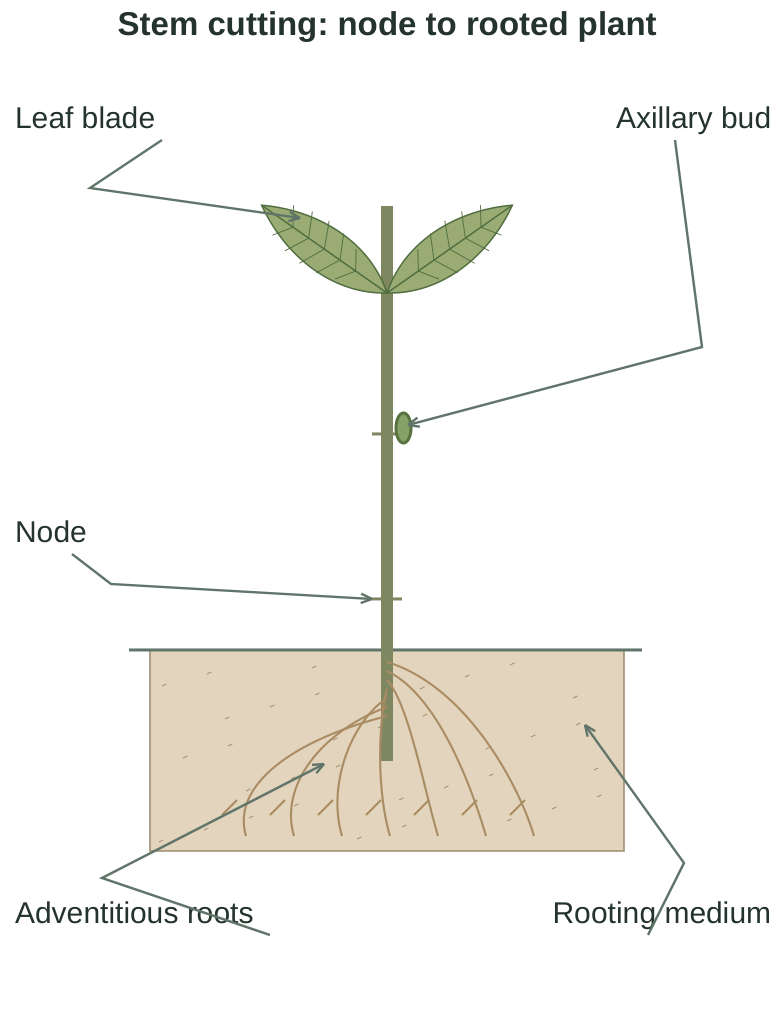
Diagram labels: Leaf blade; axillary bud; node; adventitious roots; rooting medium.
Limitations
Clonal propagation can spread systemic pathogens and reproduce the weaknesses of one genotype. It may require more skilled labour and careful handling than seed sowing. For conservation, maintain several authenticated accessions rather than multiplying only one clone.
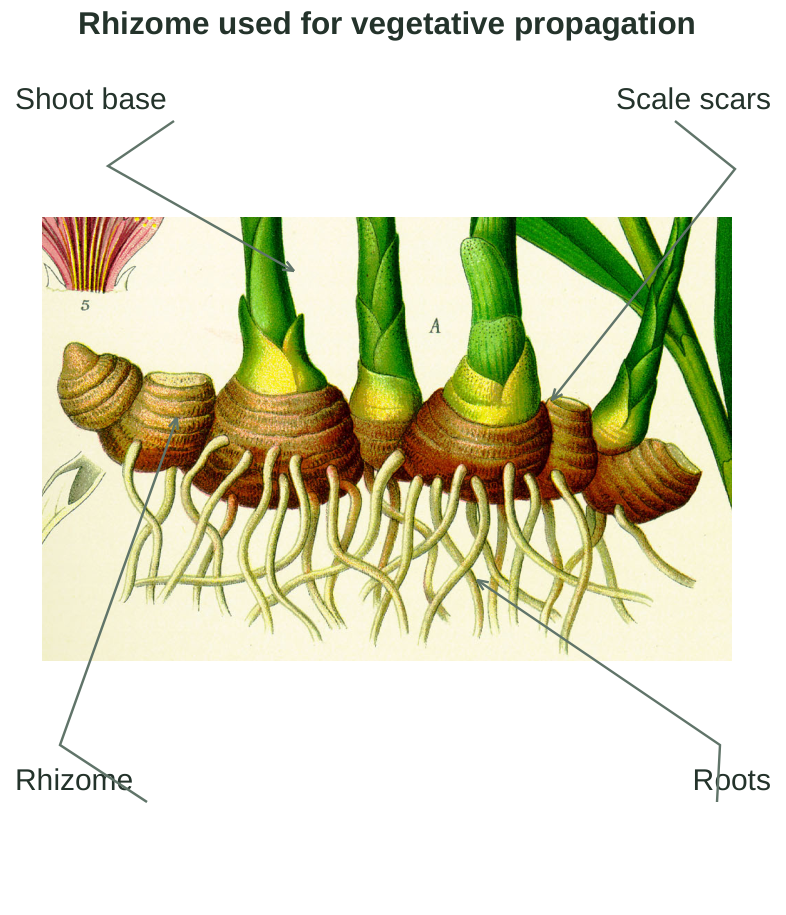
Diagram labels: Shoot base; scale scars; rhizome; roots.
2.4 Micropropagation and establishment
Micropropagation is multiplication of plants through controlled in-vitro culture. An authenticated explant is introduced into an aseptic system, shoots are multiplied, roots are induced when appropriate and plantlets are acclimatised.
The route may use pre-existing buds or regenerated tissues. Direct multiplication through buds generally reduces the variation risk associated with prolonged callus culture.
Applications
- Rapid multiplication of valuable or slow-propagating stock.
- Maintenance and distribution of selected genotypes.
- Support for conservation and disease-management programmes.
- Production of planting material when ordinary propagules are scarce.
Important controls
Authentication comes before multiplication. Aseptic handling reduces contamination; it does not itself prove that a plant is virus-free. Disease-free stock needs appropriate selection and testing.
Record the explant source, culture history and number of subcultures. Check for off-types and, where relevant, compare the chemical profile of regenerated plants with the intended stock.
Acclimatisation
In-vitro plantlets grow under unusual humidity, nutrition and light conditions. Before field planting, gradually adjust humidity and light and allow functional roots and leaves to establish. Moving delicate plantlets directly into full sun and dry air can cause high mortality.
From nursery to field
Prepare the land, arrange drainage and choose spacing for the species and medicinal part. Transplant at a stage and season that reduce stress. Avoid burying shoots too deeply or damaging roots.
Establish irrigation and replacement plans, monitor survival and retain nursery-to-field lot records. Uniform field establishment improves management but does not remove the need for later chemical quality checks.
Remember: Micropropagation produces planting material. Cell cultures used to produce metabolites are another application of plant biotechnology; the two outcomes should not be confused.
2.5 GAP, GCP and GACP
Good Agricultural Practices (GAP) concern responsible crop production.
In this unit, Good Collection Practices (GCP) concern responsible collection of medicinal plant materials, especially from wild sources.
Good Agricultural and Collection Practices (GACP) combine the two routes within the quality and sustainability framework for medicinal plants.
Here GCP does not mean Good Clinical Practice.
Core logic
Quality starts with the correct source, continues through controlled handling and remains linked to a documented origin. Practical implementation must fit the species, site and applicable requirements. One universal sowing schedule, harvest date or drying temperature cannot suit every medicinal plant.
Field and collection responsibilities
| Area | Practical control |
|---|---|
| Identity | Establish species and intended medicinal part |
| Personnel | Train workers in identification and hygienic handling |
| Site | Assess suitability and contamination risks |
| Inputs | Select and record suitable planting stock and agricultural inputs |
| Harvest | Define maturity, method and safeguards against mixing |
| Handling | Prevent contamination and unnecessary delay |
| Records | Connect the source, dates, operations and final batch |
| Sustainability | Protect habitats and future regeneration |
Cultivation versus wild collection
Cultivation permits planned management, but contaminated irrigation, unsuitable inputs or poor harvest practices can still harm quality. Wild collection may preserve traditional livelihoods and supply habitat-specific plants, but misidentification, destructive harvesting and irregular batches are major concerns.
Neither source route is acceptable merely because it is described as natural.
Practical decision
Before collecting material, ask whether the plant can be reliably identified, whether collection is permitted, which organ is needed and whether sufficient regeneration will remain. A batch from an uncertain source should be investigated rather than mixed with authenticated material.
2.6 Documentation, hygiene and traceability
Traceability is the ability to connect a batch with its source and handling history. It allows a supplier to investigate defects, distinguish separate lots and identify affected material. A final label without supporting records cannot reconstruct events that were never documented.
Minimum useful batch record
- Scientific identity and medicinal plant part.
- Seed or planting-stock source, or the wild-collection location.
- Grower or collector identification and relevant permissions.
- Cultivation inputs, unusual events and harvest date.
- Processing steps, drying conditions and packaging details.
- Batch number, quantities, storage location and movement history.
- Results and disposition of relevant identity and quality checks.
Hygiene and equipment
Keep tools and contact surfaces clean and suitable for the material. Separate dirty incoming material from cleaned and dried stock. Prevent access by animals and protect the crop from soil, dirty water and waste.
Workers should follow hygienic handling practices, and equipment used for chemically treated crops should not contaminate medicinal material.
Example: investigating mould
If mould is found in a stored leaf batch, investigate field moisture, time between harvest and drying, drying completeness, cooling before packing, packaging damage and warehouse humidity.
The problem cannot be attributed to the plant species alone. Quarantine the suspect lot and document the decision; mixing it with good material only spreads the defect.
Traceability chain
Assign an identifier at the nursery, field or collection stage and retain links when lots are divided or combined. Record the quantities entering and leaving each operation.
For example, field lot F-01 may become dried batches D-01A and D-01B. A controlled combination should retain both parent identities instead of creating an untraceable new lot.
Recall: Good records answer four questions: what material, from where, handled how, and supplied in which batch?
2.7 Environmental factors influencing cultivation
Environmental conditions affect plant establishment, biomass and the composition of the medicinal part. The best growing conditions depend on the species, genotype and target product. High growth and high constituent concentration do not always occur under identical conditions.
Climate and light
Temperature influences germination, enzyme activity, growth and flowering. Extremes may damage tissues and alter metabolism.
Light intensity and photoperiod influence photosynthesis and development; shade requirements are species-specific. A shaded understory herb should not be managed like a sun-loving aromatic crop.
Water and humidity
Rainfall distribution and irrigation determine water availability. Drought may restrict growth even when some stress-related constituents increase. Waterlogging reduces root aeration and may promote disease.
Humid conditions can favour crop growth in some species but also increase fungal risks. Irrigation water must be suitable and should not introduce contaminants.
Soil
Texture controls water retention, drainage and aeration. Structure and organic matter influence rooting and nutrient supply. Soil pH affects nutrient availability, but a single pH value should not be prescribed for all medicinal plants.
Assess previous land use, salinity and potential contamination; land near industrial waste or polluted runoff requires special scrutiny.
Altitude and location
Altitude changes temperature, radiation and growing season. A species associated with cool mountain habitats may not perform well in a hot lowland field.
Provenance and local adaptation influence survival and chemical traits. Record the location rather than assuming that any plant with the same common name will be equivalent.
Interaction of factors
Soil, water, light and temperature act together. Increasing irrigation may help a dry crop but worsen a poorly drained one. A successful cultivation recommendation should explain the relevant conditions, not only name a fertiliser or hormone.
2.8 Agronomic factors and medicinal yield
Agronomic management includes land preparation, spacing, nutrition, irrigation, weed control and pest management. Its goal is an acceptable medicinal crop, not maximum green weight alone.
Nutrition and field care
Apply nutrients according to crop needs and soil assessment. Nutrient deficiency may reduce biomass, while excessive fertilisation can change constituent profiles or leave other quality problems.
Use properly handled organic inputs and protect the crop from contamination. Control weeds that compete for resources or enter the harvested drug as foreign matter.
Pests and diseases
Use preventive measures, healthy planting stock, monitoring and integrated management. Any permitted pesticide use needs appropriate selection, application records and harvest intervals.
Washing cannot be assumed to remove all residues. Diseased tissues can alter quality even if the batch appears bulky.
Spacing and crop age
Crowded plants compete for light and nutrients and may remain humid around the canopy. Very wide spacing can waste land. Crop age and developmental stage affect the medicinal organ and chemical profile.
Plan the harvest around the desired organ and specification rather than the largest visible plant.
Calculating constituent yield
Constituent yield = dry medicinal biomass × constituent fraction.
If biomass is measured in kg and assay in percent, divide the assay value by 100. Compare the same medicinal organ and dry-weight basis.
| Hypothetical crop | Calculation |
|---|---|
| Crop A | 800 kg dry herb × 1.5/100 = 12 kg constituent |
| Crop B | 1200 kg dry herb × 0.8/100 = 9.6 kg constituent |
Crop B produces more dry herb but less target constituent. These values illustrate the calculation; they are not recommended yields for a specified species.
Selection criterion
Consider constituent yield, quality limits, unwanted compounds, disease resistance, production cost and ecological impact together. A selected chemotype still needs field validation and batch testing.
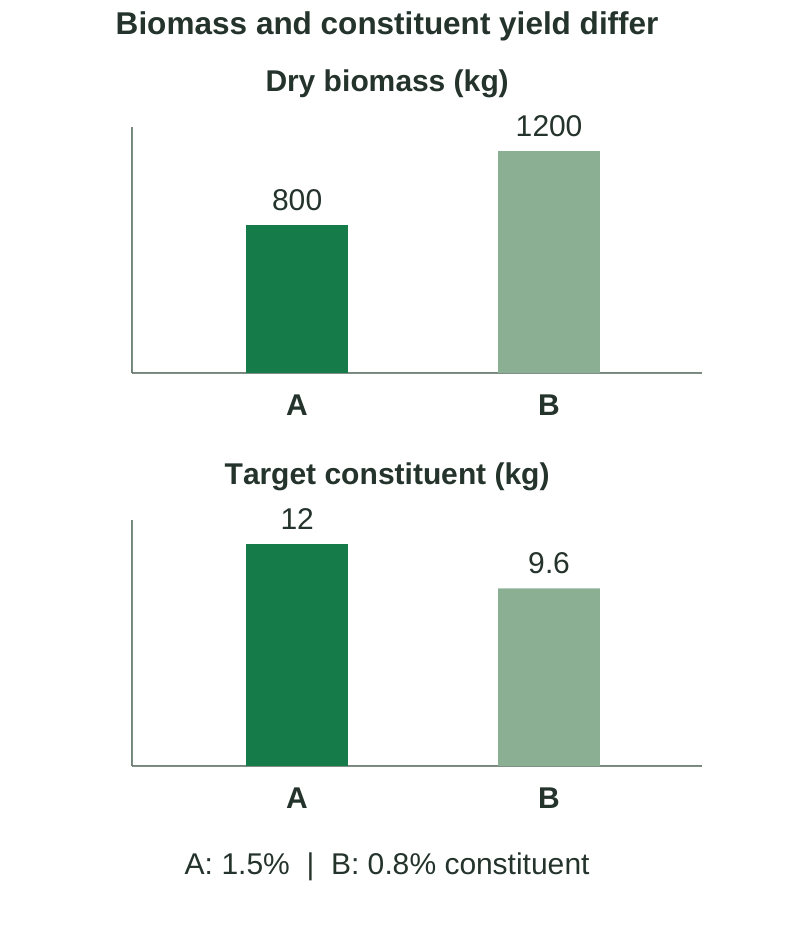
Diagram labels: Crop A: 800 kg dry biomass, 1.5% constituent, 12 kg target constituent. Crop B: 1,200 kg dry biomass, 0.8% constituent, 9.6 kg target constituent.
2.9 Collection and harvesting principles
Harvesting is removal of the intended material at a suitable developmental stage. Wild collection additionally requires habitat knowledge, population assessment and a regeneration plan.
Correct identification is essential before cutting; drying a wrongly identified plant does not correct the error.
Before harvest
Identify the species, intended organ and quality target. Inspect the crop or collection area for contamination, disease and foreign species. Confirm access and relevant permissions.
Prepare suitable containers and clean tools. Arrange prompt transfer to processing so that wet material is not left in compact heaps.
Choosing time and stage
The content of constituents can vary with season, age, flowering stage and time of day. Establish timing for the particular drug.
Dry-weather collection is often advantageous because wet surfaces increase handling and drying problems, but a rigid time-of-day rule is unsuitable for all species and constituents.
During harvest
Collect only the required part. Avoid soil contact, excessive bruising and mixing of species or lots. Exclude visibly damaged or unsuitable material according to the batch specification.
Keep leaves, roots and other material separate when their handling requirements differ. Transport in clean, ventilated containers where appropriate; overcrowding promotes heating and deterioration.
After harvest
Record the source, date, collectors and quantity. Move the batch promptly to sorting and appropriate processing. Protect freshly collected material from rain, dirt and unnecessary direct heat.
A documented maximum delay is useful when the material deteriorates rapidly.
Quality principle: Choose the harvest stage to obtain acceptable constituent content and organ quality. Choose the harvest method to protect both the material and the living resource.
2.10 Organ-specific harvesting and sustainable collection
| Medicinal part | General collection consideration |
|---|---|
| Leaves | Select suitable mature, healthy leaves at the justified stage; avoid unnecessary defoliation |
| Flowers or buds | Collect the required developmental form; unopened clove buds and open flowers are different material |
| Fruits and seeds | Select the maturity appropriate to the drug; avoid immature or contaminated mixtures |
| Roots and rhizomes | Lift carefully, remove soil appropriately and account for the destructive effect on the plant |
| Bark | Avoid complete ring-barking; removal that encircles the stem can kill the tree |
| Whole herb | Cut or collect the specified portion at the appropriate stage and retain regeneration stock |
Why the plant part matters
In root and rhizome drugs, collection may remove the organs needed for survival and regrowth. Bark removal can injure conducting tissues and expose wood to infection.
Leaf harvesting may permit recovery if adequate foliage and growing points remain, but repeated excessive removal can also weaken plants.
Sustainable wild harvest
Assess the local population before deciding whether harvest is acceptable. Leave reproductive individuals and enough propagules for recruitment. Avoid repeated collection from the same depleted site.
Rotate collection areas where suitable, monitor recovery and suspend harvest when regeneration is inadequate. A fixed harvest fraction cannot be applied safely to every species or habitat.
Bark-harvest error
Stripping a continuous ring interrupts the functional tissues around the stem. Sustainable methods must be species-specific and may still be unsuitable for vulnerable trees.
Cultivation, managed pruning or alternative validated supply routes may be preferable to bark removal from wild populations.
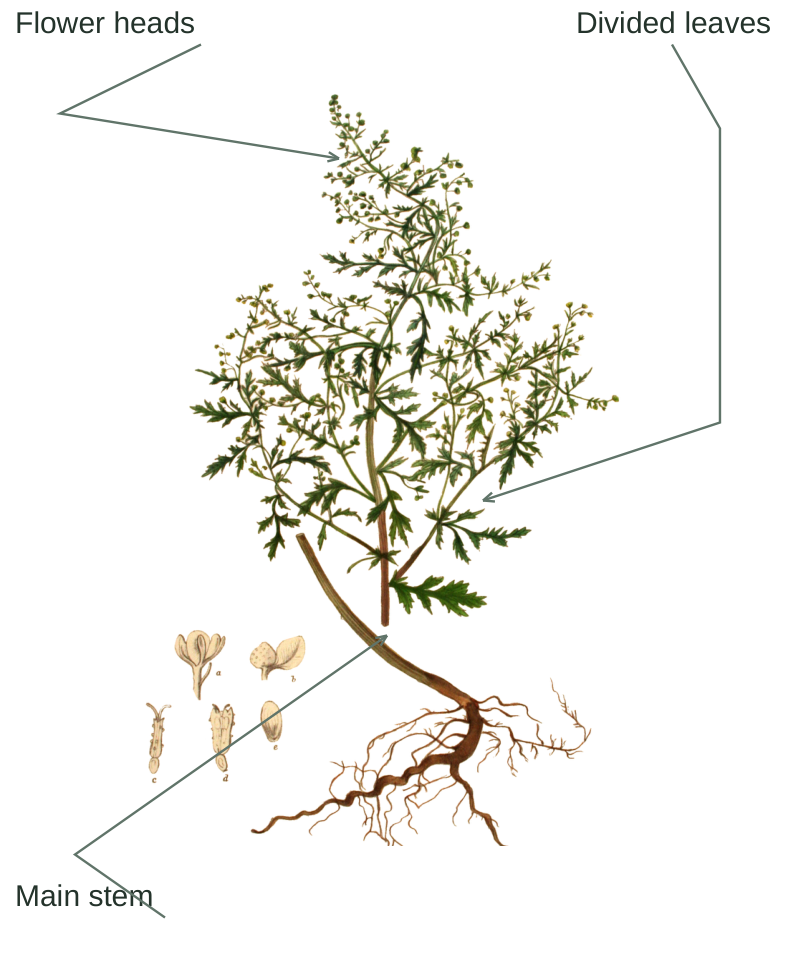
Diagram labels: Flower heads; divided leaves; main stem.
Link to conservation
The most profitable short-term collection method may destroy future supply. Include seed production, habitat condition and community livelihoods when evaluating collection practices.
A threatened population should not be treated as an unlimited raw-material store.
2.11 Primary processing and garbling
Primary processing prepares harvested medicinal material for storage or further manufacture. It may include sorting, cleaning, washing when appropriate, cutting, drying and packing.
The sequence depends on the plant part and product; every crude drug does not require every operation.
Stepwise handling
- Step 1: receive and segregate. Check identity and lot details, then separate suspect material.
- Step 2: sort and garble. Remove foreign plants, unwanted organs and unsuitable material.
- Step 3: clean appropriately. Remove attached soil or dust without damaging the drug.
- Step 4: reduce size when justified. Cut thick material uniformly to assist drying.
- Step 5: dry or stabilise. Select conditions that preserve relevant constituents.
- Step 6: cool, check and pack. Prevent moisture uptake and lot mixing.
Garbling versus adulteration
Garbling removes unwanted matter; it should not replace acceptable material with a cheaper substitute. Removing an intended medicinal organ because it is difficult to handle can change the identity of the drug.
Record substantial losses and retain clear acceptance criteria.
Washing and cutting
Washing is particularly relevant to soil-bearing underground organs, but it can leach water-soluble constituents or introduce excess moisture. Use suitable water, keep the operation controlled and dry promptly.
Fragile or water-sensitive material may need another cleaning approach. Clean cutting equipment and suitable piece size support uniform drying.
Special processing
Some drugs undergo validated operations such as curing, sweating or controlled fermentation to develop their intended properties. These are not universal recommendations.
Stabilisation may be used to limit unwanted enzymatic changes, but the method must suit the drug. Uncontrolled damp storage is deterioration, not controlled fermentation.
Powdering
Powdering increases exposed surface area and can accelerate oxidation, moisture uptake and contamination. It also makes macroscopic authentication harder.
Store whole or suitably cut material when practical, and powder under controlled conditions when required.
2.12 Drying: principles, methods and endpoints
Drying removes sufficient water to reduce deterioration and make the material suitable for storage. It can slow microbial growth and enzymatic reactions, but it is not automatically a sterilisation process.
Excessive heat can damage volatile or thermolabile constituents.
Methods
| Method | Useful feature and limitation |
|---|---|
| Shade or ambient-air drying | Avoids intense direct sunlight; needs ventilation and favourable conditions |
| Sun drying | Simple and inexpensive for suitable material; weather, dirt and light damage are concerns |
| Controlled tray drying | Permits management of air, loading and temperature; uneven loading can still cause uneven drying |
| Other specialised drying | Vacuum or freeze drying may suit selected products but require suitable equipment and economic justification |
Factors controlling drying
Air temperature, relative humidity, airflow, particle size and layer thickness affect the rate. Thick roots dry more slowly than thin leaves.
Spread material in suitable layers and avoid compact heaps. A high inlet-air temperature is not a universal recipe: product temperature and constituent stability also matter.
Two common errors
- Too slow: wet material remains vulnerable to mould, heating and enzymatic changes.
- Too harsh: excessive temperature or light causes loss of volatile oils, colour or unstable constituents.
The appropriate balance is established for the specific material.
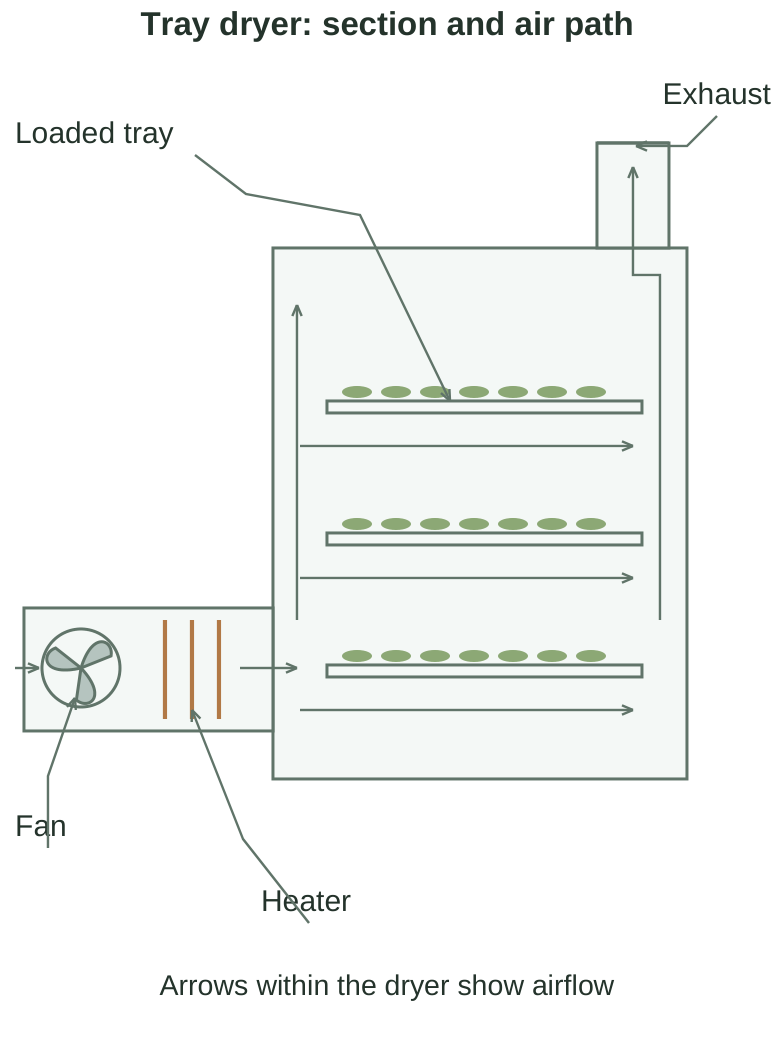
Diagram labels: Loaded tray; exhaust; fan; heater. Arrows within the dryer show airflow.
Drying endpoint
Use the relevant moisture or loss-on-drying specification and, when applicable, water-activity assessment. Surface dryness does not prove that a thick organ is dry internally.
Cooling before packing prevents condensation when warm material meets a cooler sealed environment. Protect cooled material from renewed moisture absorption.
Illustrative moisture calculation
If a 10 g sample weighs 9 g after a defined drying test:
- Mass loss = 1 g.
- Loss on drying = (1/10) × 100 = 10%.
The test conditions must be specified. Loss on drying may include volatile substances as well as water, so it should not always be described as a water-only measurement.
2.13 Packaging and storage
Storage preserves identity and quality between production and use. Major risks include moisture, insects, rodents, microorganisms, light, oxygen, unsuitable temperature and accidental mixing.
A warehouse cannot restore constituents already lost during poor drying.
Packaging choice
Select clean, suitable containers compatible with the material. Leaves, roots, powders and volatile-oil-rich drugs may need different protection.
Packaging should limit the relevant moisture, contamination and aroma-loss risks without trapping residual moisture. Reused containers must not introduce residues or odours.
Label information
Identify the scientific source, medicinal part, batch number, quantity, processing or packing date and relevant storage conditions. Preserve the link to origin and quality records.
A retest or expiry date should follow an established stability and quality policy; it should not be invented merely to complete a label.
Warehouse management
Keep stock off the floor and away from direct contact with damp walls. Maintain access for inspection and cleaning.
Segregate quarantined, approved and rejected materials and prevent mixing of similar-looking drugs. Monitor conditions appropriate to the material and maintain pest control.
Volatile or strongly aromatic materials need handling that prevents cross-odour contamination.
Stock rotation
FIFO means first in, first out.
FEFO means first expiry, first out, where justified expiry dates are assigned.
Rotation does not override quality status: a rejected old batch must not be supplied simply because it arrived first.
Inspection
Look for packaging damage, insects, unusual odour, colour changes, caking, condensation and mould. Investigate abnormalities and quarantine suspect lots.
Periodic quality checks are especially important when storage duration or environmental conditions change.
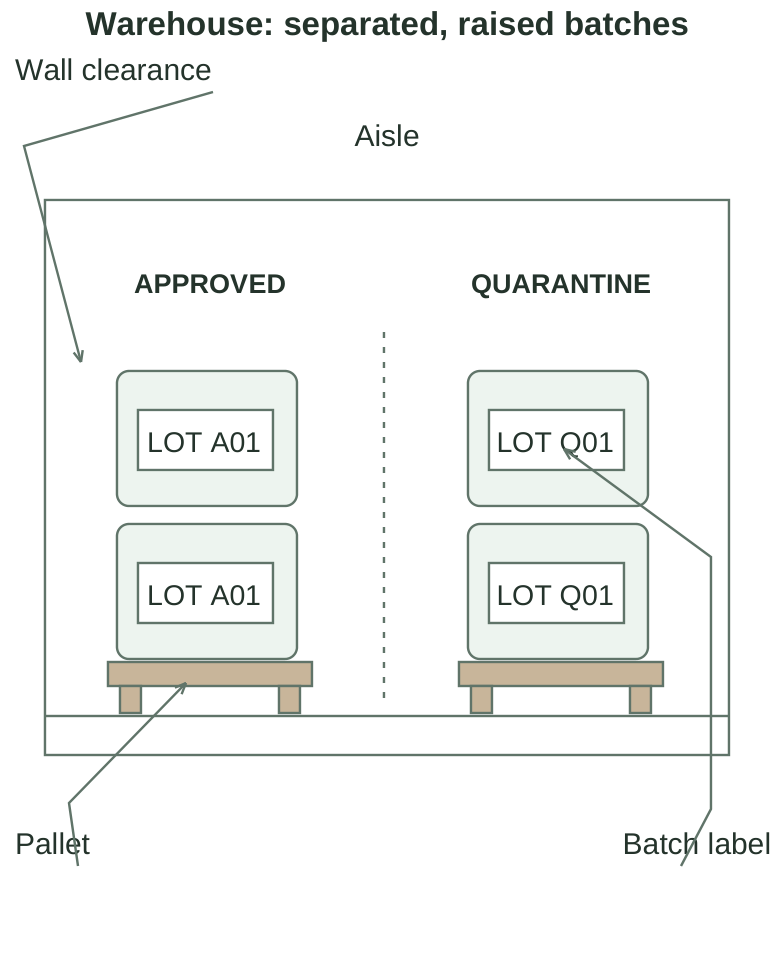
Diagram labels: Wall clearance; aisle; approved stock; quarantine stock; lot labels A01 and Q01; pallet; batch label.
2.14 Transport, deterioration and corrective action
Transport is part of the quality chain. Vehicles and containers should be clean, suitable and protected from weather.
Avoid loading medicinal material beside chemicals, fuels, dirty produce or strong odours. Maintain lot identification when sacks are moved or repacked.
Deterioration mechanisms
Moisture can permit microbial growth and hydrolytic changes. Oxygen can promote oxidation. Light can damage sensitive pigments and constituents. Heat may accelerate reactions and drive off volatile components. Insect attack causes loss and contamination.
These mechanisms can interact; damaged packaging may admit both humid air and pests.
Risk-based response
- Step 1: isolate the suspect batch.
- Step 2: identify the defect and affected quantity.
- Step 3: examine records, samples and storage conditions.
- Step 4: assess whether a validated corrective operation is appropriate.
- Step 5: document release, rejection or other disposition.
Drying mouldy material again does not necessarily remove toxins or other contamination.
Example: aromatic leaves
A bag of poorly sealed aromatic leaves loses odour during warm storage. Investigate closure integrity, exposure duration and constituent results.
Strong smell from the outside of the bag is not evidence that the material inside remains within specification. Prevention involves suitable packaging, controlled conditions and planned stock turnover.
Example: damp roots
Thick roots may seem dry externally yet retain internal moisture. If packed before drying is complete, they can develop mould or heat.
Investigate piece size, loading, airflow and endpoint testing. The corrective focus should be the drying process, not merely changing the warehouse label.
Memory chain: Identity → harvest stage → prompt handling → suitable drying → protective packing → monitored storage. Failure at one link can compromise the final drug.
2.15 Plant hormones: principles and auxins
Plant hormones are endogenous signalling substances that regulate growth and responses at low concentrations. Plant growth regulators include externally applied natural hormones and synthetic compounds with related effects.
Their action depends on concentration, tissue, developmental stage and interactions with other signals.
Auxins
Indole-3-acetic acid (IAA) is a major natural auxin. Indole-3-butyric acid (IBA) and naphthaleneacetic acid (NAA) are commonly used rooting regulators.
Auxins influence cell elongation, apical dominance, root initiation and vascular development. A response useful in one tissue may be inhibitory in another at the same dose.
Cultivation applications
Auxin treatment can improve adventitious-root formation in suitable cuttings. Use the correct regulator, formulation, exposure and species-specific protocol.
Excess treatment can damage the cutting or produce unsuitable tissue growth. In grafting and plant development, auxin signalling interacts with other factors; it is not a substitute for healthy stock and correct horticultural technique.
Tissue-culture role
Auxin and cytokinin conditions influence the balance between callus, root and shoot development.
The frequently taught rule is that relatively high auxin favours rooting and relatively high cytokinin favours shoot formation. This is a useful framework, not an exact recipe for every species, explant and regulator combination.
Medicinal-quality link
More roots may increase the harvestable mass of a root drug, but chemical quality must still be measured. A regulator-driven growth change does not prove increased concentration of the desired secondary metabolite.
Document regulator use and check whether the resulting material meets the intended specification.
2.16 Cytokinins, gibberellins, ethylene and ABA
Cytokinins
Cytokinins promote cell division and influence shoot development and leaf senescence. Zeatin is a natural example; benzyladenine (BA/BAP) and kinetin are used in plant culture.
Cytokinin-containing media can multiply shoots from suitable explants. Excessive stimulation may produce abnormal shoots, so usable plantlets and acclimatisation success matter more than shoot count alone.
Gibberellins
Gibberellins, including GA3, influence stem elongation, germination and development. A validated gibberellin treatment may help overcome some forms of physiological dormancy or alter flowering and growth.
Taller plants do not necessarily provide a better medicinal harvest; unwanted elongation can weaken stems or shift the desired developmental stage.
Ethylene
Ethylene is a gaseous hormone involved in ripening, senescence, abscission and stress responses. Ethylene-releasing regulators such as ethephon have agricultural uses under appropriate protocols.
In harvested material, accumulation of ethylene may affect tissues and quality. Handling should suit the organ and intended use; an arbitrary ripening treatment can make a crude drug unsuitable.
Abscisic acid
ABA participates in seed dormancy, stomatal closure and stress responses. It helps the plant regulate water loss, but water stress can still reduce yield.
ABA is important for understanding crop physiology; it should not be presented as a universal routine field treatment for medicinal plants.
| Regulator group | Main teaching application |
|---|---|
| Auxin | Root initiation in suitable cuttings |
| Cytokinin | Shoot multiplication in culture |
| Gibberellin | Selected germination and elongation responses |
| Ethylene | Ripening, abscission and senescence responses |
| ABA | Dormancy and water-stress regulation |
Relatively high auxin can favour roots; relatively high cytokinin can favour shoots. Actual response depends on the explant, regulator and protocol.
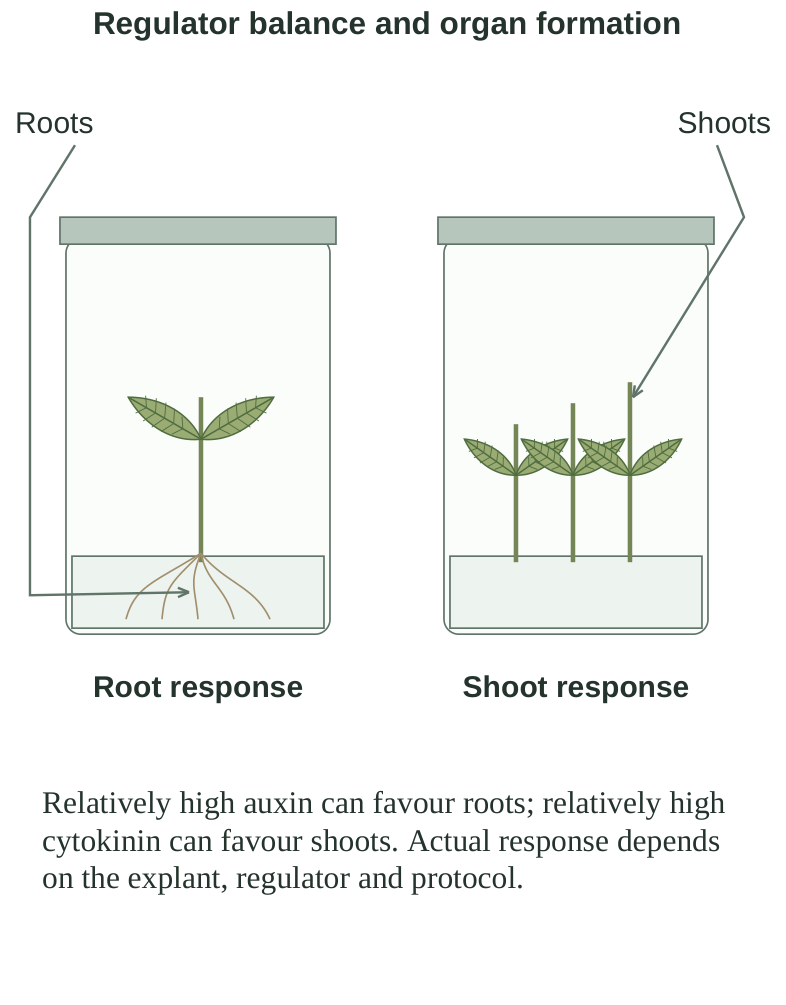
Diagram labels: Roots and root response; shoots and shoot response. Relatively high auxin can favour roots; relatively high cytokinin can favour shoots. Actual response depends on the explant, regulator and protocol.
Common examination error
Listing one hormone as responsible for all growth is incorrect. Responses arise from interacting signals, and concentration, timing and tissue sensitivity are decisive.
2.17 Hormones, elicitation and secondary metabolites
Secondary metabolites include alkaloids, terpenoids, phenolics and glycosides that have specialised ecological functions. Their synthesis depends on genetics, organ development and environmental signalling.
Plant growth and metabolite accumulation are related but are not interchangeable measurements.
Elicitation
An elicitor activates defence or stress-related responses that may alter specialised metabolism. Jasmonates and salicylic acid are signalling examples used in experimental production systems.
Biological or non-biological elicitors can be studied in controlled cultures. The useful response must be measured; excessive treatment may reduce viability or biomass.
Growth regulators versus elicitors
A rooting regulator is selected to establish a cutting. An elicitation treatment is selected to alter a metabolic response. Some signals affect both processes, but the aim and evaluation are different.
An experimental increase in a cultured tissue does not automatically establish a suitable field treatment.
Experimental plan
Keep authenticated material, culture age and growth conditions comparable. Include an untreated control and suitable replication.
Measure dry biomass, target-constituent concentration, total constituent yield and unwanted changes. Compare values on the same analytical basis. Document dose and exposure instead of describing a treatment only as high or low.
Worked comparison
Suppose an untreated culture produces 100 g dry biomass at 1% target constituent: yield is 1 g.
A treated culture produces 60 g at 1.5%: yield is 0.9 g.
Concentration increased, but total production decreased. The result illustrates why assays and biomass must be interpreted together.
Limitations
Response varies among species, genotypes and tissues. Stress can reduce growth, change unwanted compounds or produce inconsistent results.
Cultivation decisions must therefore account for quality, yield, practicality and environmental effects rather than assuming that any stress raises medicinal value.
2.18 Polyploidy and medicinal-plant improvement
Polyploidy is the presence of more than two complete chromosome sets. A diploid has two sets (2x); a tetraploid has four (4x). The symbol x denotes the basic chromosome number.
Chromosome number and DNA content should not be confused with the temporary DNA replication that occurs before ordinary cell division.
Types
Autopolyploids contain multiple sets derived from the same species.
Allopolyploids combine chromosome sets from different species, often following hybridisation and chromosome doubling.
Aneuploidy is gain or loss of individual chromosomes rather than complete sets.
Induction and confirmation
Antimitotic treatments such as colchicine or oryzalin can interfere with chromosome segregation and generate chromosome-doubled tissues.
Treatment may also cause death, mixed-ploidy tissues or other abnormalities. These are controlled research and breeding operations, not casual field instructions.
Confirm ploidy by suitable chromosome counting or DNA-content analysis, and select stable material.
Potential applications
Polyploidy can alter cell size, organ dimensions, growth and metabolite profiles. Selected lines may be useful when the medicinal organ or target constituent improves.
Outcomes are not uniformly positive: concentration or total yield can rise, remain unchanged or fall. Fertility, environmental adaptation and unwanted constituents also need evaluation.
Evaluation sequence
Induce or identify variants → confirm ploidy → remove unsuitable or unstable material → compare replicated growth and chemical performance → assess propagation and field stability.
Large leaves or stomata may suggest a change but do not alone prove the chromosome complement.
Exam distinction: Polyploidy changes complete chromosome-set number. Mutation is a broader category of heritable genetic change. Hybridisation combines parental genetic material; these concepts can overlap without being synonyms.
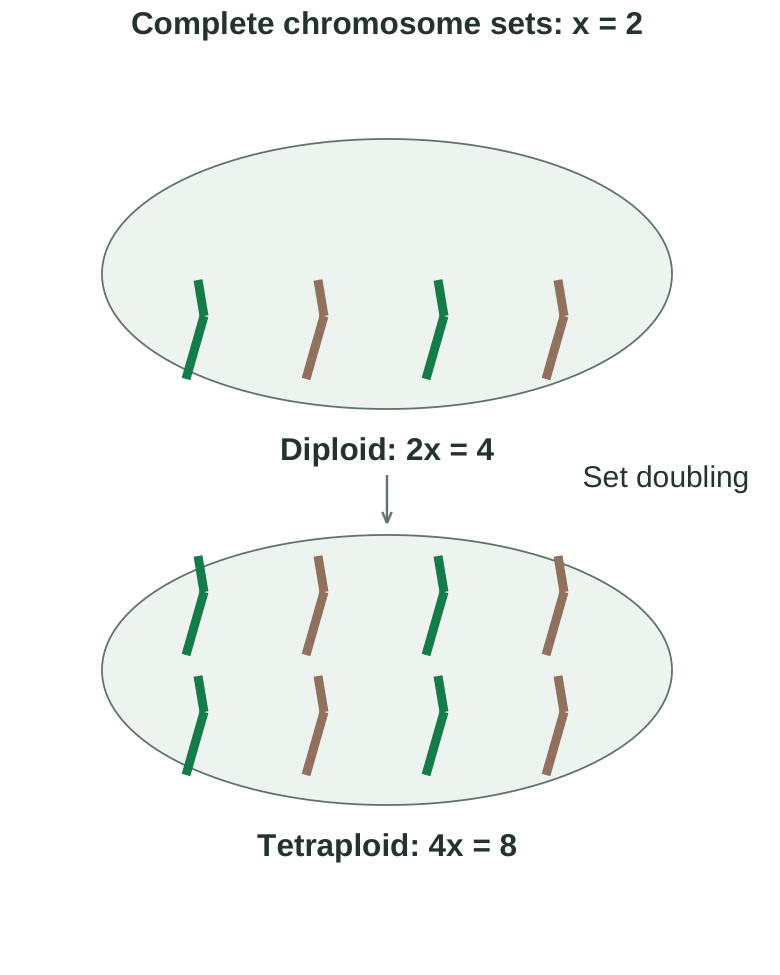
Diagram labels: Basic number x = 2; diploid: 2x = 4; set doubling; tetraploid: 4x = 8.
2.19 Mutation and selection
Mutation is a heritable change in genetic material. It may arise spontaneously or be induced. Changes can affect individual genes, chromosome structure or chromosome number.
Most induced variation is not automatically useful for medicinal production.
Mutation breeding
Physical mutagens such as ionising radiation and chemical mutagens can generate variation in controlled breeding programmes. Treated material is screened over suitable generations or clonal cycles.
The breeding objective may be improved yield, altered constituent profile, disease resistance or adaptation.
Stepwise approach
- Step 1: define the desired trait and authenticated starting material.
- Step 2: generate or obtain variation under an appropriate protocol.
- Step 3: grow and screen descendants or regenerants.
- Step 4: confirm the desired trait and remove harmful changes.
- Step 5: test stability and quality in replicated trials.
- Step 6: maintain selected material with traceable records.
Medicinal-quality evaluation
An altered colour, larger organ or unusual plant habit is not sufficient evidence of a valuable mutant. Determine the target constituent, possible undesirable compounds, biomass and usable organ quality.
A mutation that increases one constituent may also reduce fertility or resistance. The full product specification remains relevant.
Advantages and limitations
Mutation can introduce traits not easily found in the available stock. However, changes are generally not directed precisely to a single desired outcome, screening can be extensive and harmful variants are common.
A selected line needs stability assessment before cultivation recommendations.
Somaclonal variation
Variation arising during tissue culture can sometimes supply useful material for selection. In clonal multiplication it is often undesirable because the aim is fidelity to the selected stock.
The same variation can be a breeding opportunity in one project and a quality defect in another.
2.20 Hybridisation and combined improvement
Hybridisation is crossing genetically different parents to combine their traits. It may occur within a species or, where biologically possible, between species.
Select authenticated parents with complementary characteristics rather than choosing plants only by appearance.
Breeding sequence
Choose parents → carry out controlled pollination → identify the progeny → evaluate growth and chemistry → select promising plants → confirm stability and supply quality.
In controlled crossing, prevent unintended pollination and keep labels attached to the cross and seed lot.
Possible benefits
Crossing can combine high constituent potential with disease resistance, adaptation or greater biomass.
Heterosis is improved performance of a hybrid relative to the relevant parental comparison for a specified trait. It does not mean that every trait improves or that all later generations retain the same performance.
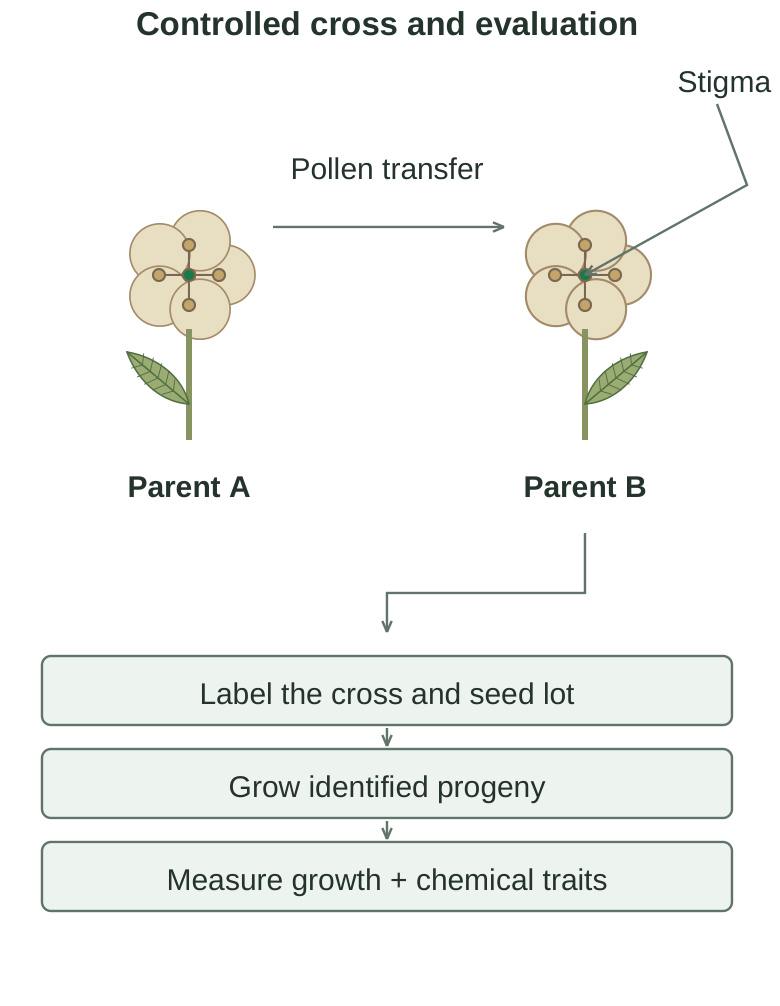
Diagram labels: Parent A; parent B; pollen transfer; stigma; label the cross and seed lot; grow identified progeny; measure growth and chemical traits.
Limitations
Parents may be incompatible, hybrids may be poorly fertile and progeny can segregate in later generations. A high-yielding plant can have an unacceptable chemical profile.
Interspecific hybrids must not be supplied under a species label that misrepresents their identity.
Comparison
| Approach | Main source of improvement |
|---|---|
| Selection | Choose useful existing variation |
| Hybridisation | Combine parental genetic material |
| Mutation breeding | Generate and screen new genetic variation |
| Polyploidy | Alter complete chromosome-set number |
Role of chemical analysis
Assess the intended medicinal organ at a comparable age and stage. Test replicated material across relevant environments. Use both concentration and total yield, and monitor unwanted compounds.
Clonal propagation may preserve a selected genotype, while seed production may require maintenance of parental lines and control of crossing.
Recall: Improvement means a stable, useful medicinal trait with acceptable quality. A dramatic-looking plant is not necessarily an improved drug source.
2.21 In-situ conservation
In-situ conservation protects species within their natural habitats. It maintains ecological relationships, local adaptation and ongoing evolutionary processes.
For medicinal plants, conserving the surrounding habitat can be as important as protecting individual plants.
Practical approaches
- Protect suitable habitats and important wild populations.
- Manage fire, grazing, invasive species and destructive land use.
- Restrict damaging collection and monitor recovery.
- Preserve reproductive individuals and regeneration sites.
- Involve local communities in management and sustainable livelihoods.
Advantages
Plants remain connected to their pollinators, dispersers, soil organisms and local climate. A sufficiently managed population can retain broad genetic diversity and continue natural regeneration.
Protection can benefit many associated species instead of a single planted accession.
Limitations
Habitat destruction, climate change, illegal collection and management failures can still threaten a protected population. Conservation requires monitoring and active management where needed.
A boundary or a legal label alone does not prove that seedlings are recruiting successfully.
Population assessment
Observe abundance, age structure, flowering, seed production and recruitment. A site containing many old plants but few juveniles may have poor future regeneration.
Record collection intensity and changes over time rather than relying on one visit.
Conservation versus preservation of supply
The objective is persistence of viable populations and ecosystems. Commercial supply should be planned around that objective.
When destructive harvest cannot be sustained, cultivation or other suitable supply routes become important instead of treating conservation as a restriction to bypass.
2.22 Ex-situ conservation
Ex-situ conservation maintains biological material outside its natural habitat. It provides backup collections, propagation stock and research material.
It complements in-situ conservation rather than replacing the habitat.
Methods
| Method | Purpose and key consideration |
|---|---|
| Seed bank | Conserve viable seed; storage behaviour and periodic viability matter |
| Field gene bank | Maintain living accessions; requires land and continued care |
| Botanical garden or nursery | Preserve, study and multiply authenticated living material |
| In-vitro collection | Maintain tissues under controlled conditions; monitor contamination and fidelity |
| Cryopreservation | Conserve suitable material at very low temperature under validated protocols |
Seed-storage biology
Orthodox seeds generally tolerate drying and low-temperature storage under suitable conditions.
Recalcitrant seeds are sensitive to desiccation and often cannot be managed by conventional dry seed-bank methods.
Intermediate behaviour also occurs. Storage strategy must follow the species rather than treating all seeds alike.
Maintaining diversity
Collect and record multiple representative accessions where appropriate. Identity, provenance, collection date and viability history should remain attached to each accession.
A hundred clones of one plant are not the same genetic resource as a hundred diverse individuals.
Maintain multiple authenticated accessions and their provenance. Select storage conditions according to seed biology; monitor viability.
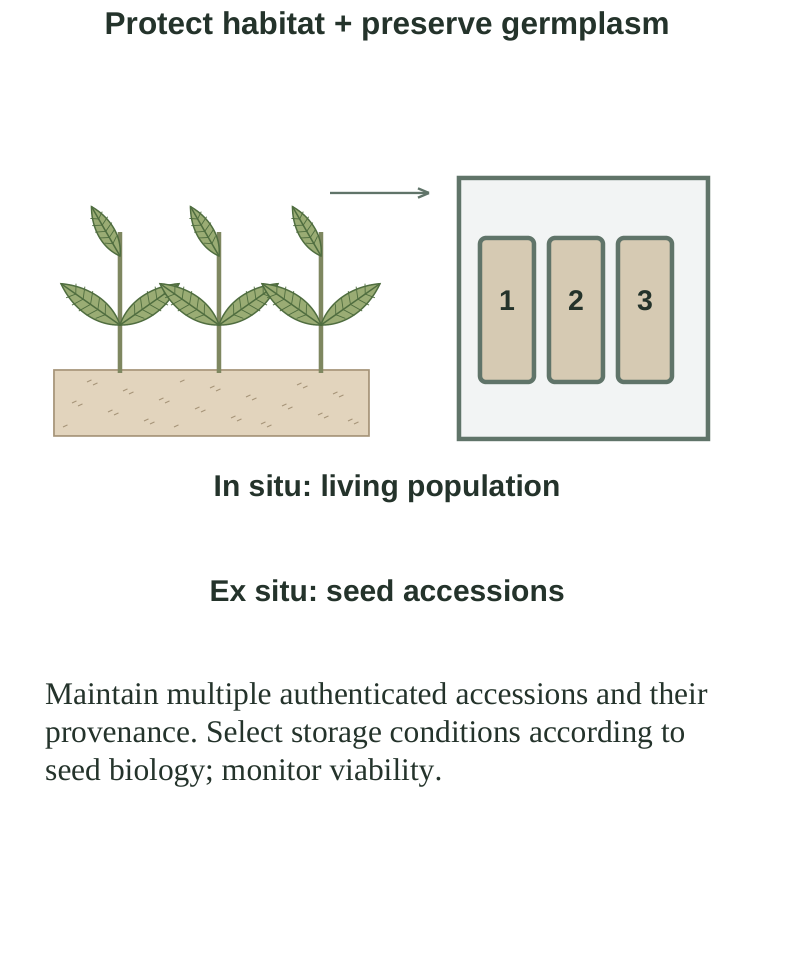
Diagram labels: In situ: living population. Ex situ: seed accessions. Maintain multiple authenticated accessions and their provenance; select storage conditions according to seed biology and monitor viability.
Reintroduction
Return plants to a suitable habitat only after considering provenance, health, genetic appropriateness and ecological conditions.
Planting alone does not establish conservation success: survival, reproduction and recruitment must be monitored. Introducing unsuitable stock can damage local adaptation or spread disease.
Combined strategy
Protect the wild habitat, preserve representative germplasm, develop appropriate propagation and maintain a sustainable supply route.
This provides several layers of protection against loss while supporting research and cultivation.
2.23 Value addition in medicinal plants
Value addition improves the quality, usefulness or economic value of a material through justified operations. It should preserve truthful identity and meet the requirements of the intended product.
A higher selling price alone does not prove improved medicinal quality.
Examples along the supply chain
- Authenticate and segregate the correct species and organ.
- Remove unwanted matter and supply a cleaner, consistent grade.
- Use appropriate cutting, drying, packaging and traceable labels.
- Standardise material against relevant quality specifications.
- Convert suitable material into controlled extracts or other products where manufacturing capability exists.
What value addition is not
Artificial colouring, undeclared substitution, mixing inferior material or making unsupported therapeutic claims do not create acceptable value.
Grinding can improve convenience but also obscure identity and accelerate deterioration. Extraction changes the product category and requires control of solvent, concentration and contaminants.
Farmer and community benefits
Local sorting, drying and grading can reduce losses and improve the quality of supplied material. Training, fair purchasing arrangements and dependable market information can make cultivated supply more viable.
Benefits should reach growers and collectors without encouraging destructive wild harvesting.
Calculations and decisions
Compare processing cost, recovery, quality and market demand. For example, cleaner material may produce less saleable mass after garbling but earn greater value because it meets a specification.
Retain yield records so that losses are understood rather than concealed.
Quality-linked supply
Contracts should clearly identify the species, plant part, grade and acceptance tests. A buyer expecting dried rhizomes should not receive an unidentified powder simply because it is easier to transport.
Transparent specifications support both student understanding and responsible production.
2.24 Eco-pharmacognosy and sustainable supply
Eco-pharmacognosy applies ecological thinking to the study and use of natural drug resources. It connects medicinal identity and quality with biodiversity, habitat protection, resource use and the effects of collection and production.
Main concerns
Evaluate how demand affects wild populations, how harvesting changes regeneration and how cultivation affects land, water and surrounding biodiversity.
Consider waste from processing, energy used in drying and the use of agricultural inputs. A natural-origin medicine still has an environmental footprint.
Practical actions
Use authenticated cultivated supply where it is suitable, manage wild collection according to population recovery and prevent habitat damage.
Improve drying and storage to reduce waste. Reuse or manage processing residues appropriately without introducing contamination. Preserve germplasm and support monitoring of vulnerable species.
Communities and traditional knowledge
Local knowledge can help identify habitats, harvesting seasons and resource changes. Conservation plans should include trained collectors, growers and community organisations.
Responsible arrangements should respect applicable access, knowledge and benefit-sharing requirements rather than treating local people only as a source of cheap labour.
A sustainable supply loop
Assess resource → establish quality requirements → cultivate or collect responsibly → process with minimum avoidable loss → monitor the population and batch quality → revise the management plan.
Monitoring supplies evidence for future decisions.
Key limitation
Cultivation does not automatically solve every conservation problem. It may fail economically, rely on wild planting stock or use unsuitable land.
Conversely, a carefully managed wild-collection system may remain appropriate for some resources. Compare the real ecological and quality outcomes instead of using slogans.
Recall: Drug quality, reliable supply and ecosystem health should be evaluated together. Sustainable production protects both the present batch and the next generation of the resource.
2.25 Kutki: conservation and cultivation example
Kutki is associated with Picrorhiza kurroa (also written Picrorhiza kurrooa in botanical and cultivation literature).
It is a Himalayan perennial herb valued for its underground medicinal material. The plant has a basal leaf system, flowering scapes and a rhizomatous axis.
Contemporary classification commonly places it in Plantaginaceae; older teaching material may use Scrophulariaceae.
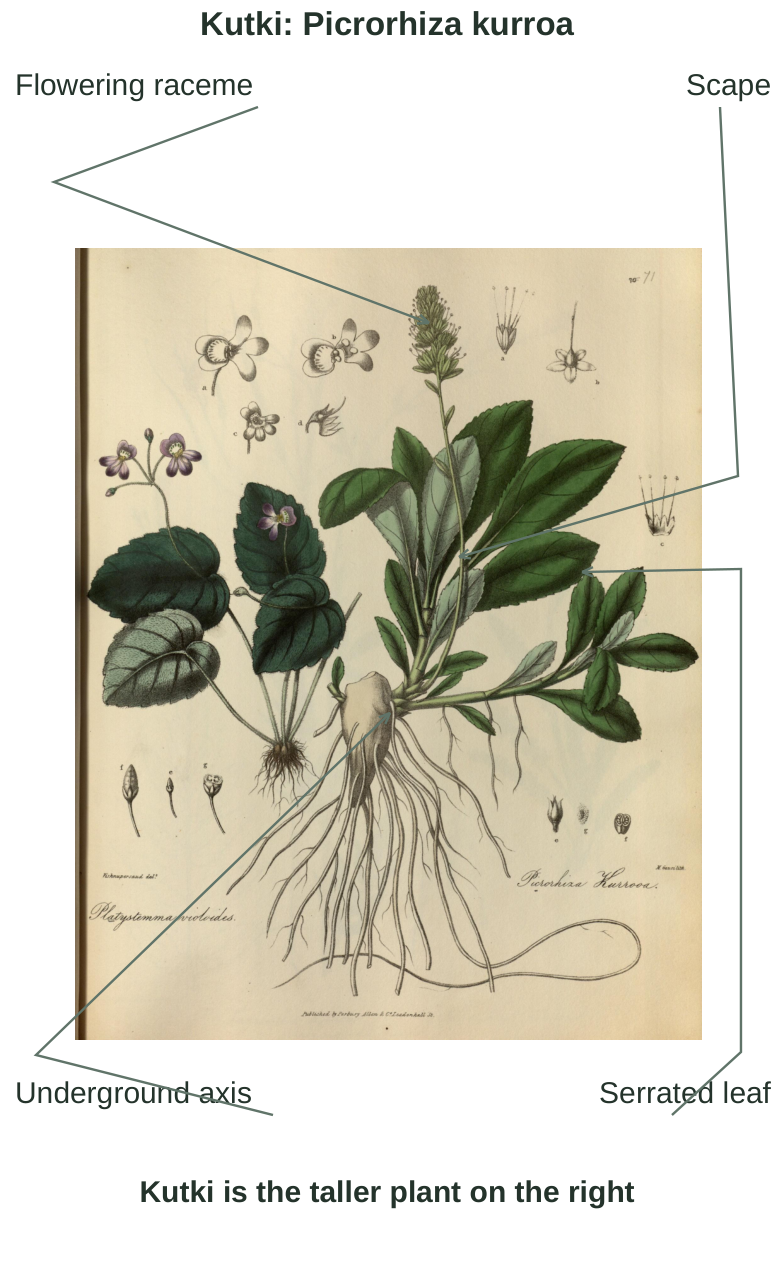
Diagram labels: Flowering raceme; scape; underground axis; serrated leaf. Kutki is the taller plant on the right.
Medicinal-material distinction
The rhizome is underground stem tissue; attached roots are separate organs. Iridoid glycosides, including picrosides, are relevant chemical markers.
These points explain identity and quality; this conservation example is not a treatment or dosage recommendation.
Why conservation is necessary
Harvest of underground parts can remove the organs needed for survival. Slow recovery, habitat disturbance and commercial pressure can make uncontrolled collection damaging.
Conservation status varies by assessment and region; the practical focus is protecting vulnerable populations and their regeneration.
Integrated strategy
Protect suitable cool mountain habitats, retain reproductive stock and monitor recruitment. Develop authenticated nursery material and cultivation suited to local conditions.
Vegetative propagation can use viable bud-bearing underground material under appropriate protocols; seed-based approaches help preserve diversity where feasible.
Avoid obtaining planting stock by depleting the very wild populations being conserved.
Processing and value addition
Keep the underground material separate from unrelated roots and substitutes. Clean soil appropriately, dry without deterioration and preserve lot identity.
Grade and supply authenticated material against the intended specification. Assay results do not replace botanical authentication.
Exam answer framework
Name the plant → identify the medicinal part → explain destructive-harvest risk → describe habitat protection and managed propagation → link cultivated supply, correct processing and quality records.
This structure connects the example with the whole unit.
2.26 Chirata: conservation and cultivation example
Chirata, commonly Swertia chirayita (often called Swertia chirata in older literature), is a bitter medicinal herb of Gentianaceae.
Its opposite leaves and branching flowering shoots help describe the plant. The whole-herb drug must be distinguished from unrelated bitter substitutes.
Medicinal and botanical identity
Secoiridoid constituents such as swertiamarin and amarogentin are relevant to its chemical character.
Taste alone cannot establish identity: many unrelated herbs are bitter. Correct source identification, the specified plant material and appropriate quality checks remain essential.
Harvest and regeneration
Whole-plant removal before reproduction can reduce seed return to a population. Conservation-oriented collection should consider the life cycle and retain enough reproductive plants and recruitment opportunities.
The actual harvest plan must also meet the medicinal-quality specification; a generic instruction to collect at any convenient stage is inadequate.
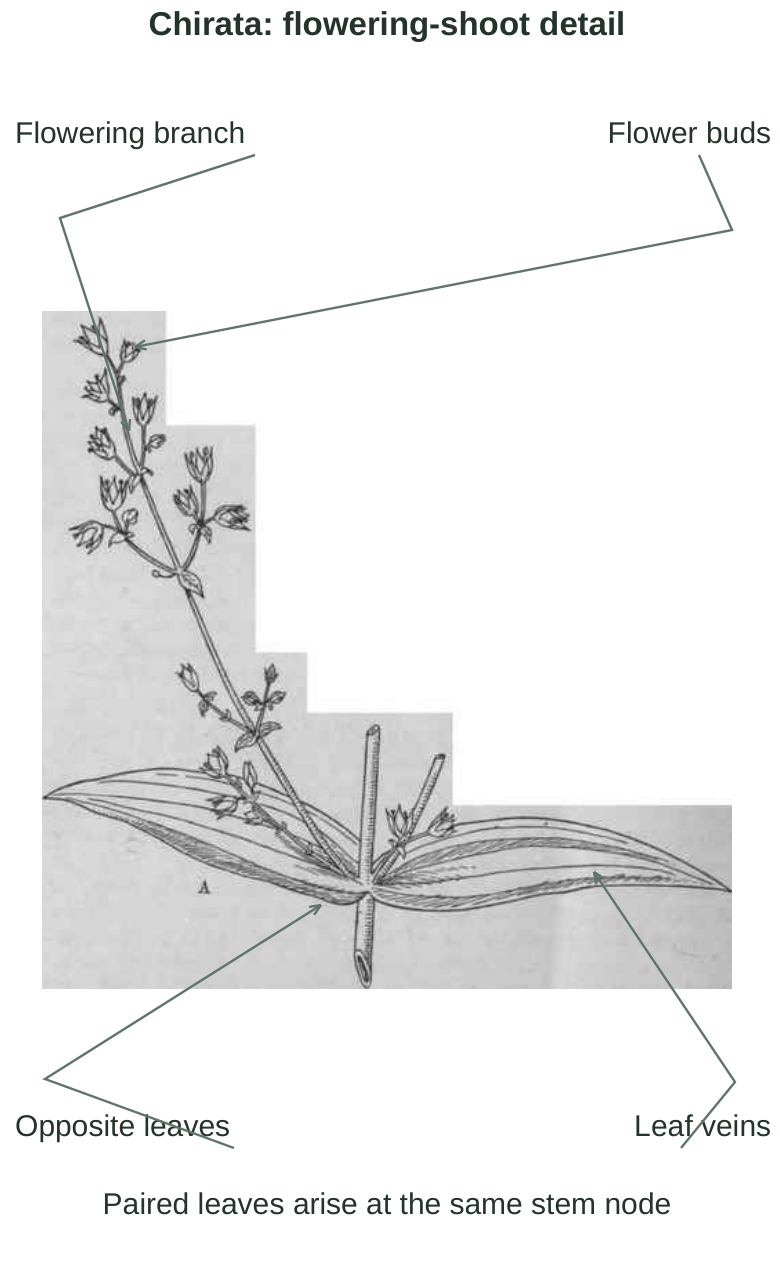
Diagram labels: Flowering branch; flower buds; opposite leaves; leaf veins. Paired leaves arise at the same stem node.
Cultivation and nursery role
Authenticated seed and appropriate nursery management can support cultivated supply. Small seeds require careful handling and suitable germination conditions.
Establish plants in locally appropriate conditions, maintain weed control and record provenance. Propagation success does not by itself confirm the final chemical quality.
Combined conservation plan
Protect wild habitats and seed-producing populations. Maintain representative germplasm and develop cultivation with trained growers.
Reduce substitution by improving authentication and transparent purchasing. Apply suitable drying, packaging and storage so that conservation effort is not wasted through post-harvest losses.
Kutki versus Chirata
Kutki / Chirata comparison
| Feature | Kutki | Chirata |
|---|---|---|
| Plant source | Picrorhiza kurroa | Swertia chirayita |
| Main teaching material | Underground parts | Whole-herb material |
| Harvest concern | Loss of surviving rhizome and roots | Loss of plants and seed return |
| Shared response | Habitat protection, authenticated propagation, managed supply and quality control | Habitat protection, authenticated propagation, managed supply and quality control |
Final connection: Conservation improves the chance of future supply. Authentication and controlled processing ensure that the supplied material is the intended medicinal drug.
2.27 Quick revision
The complete production chain
Authenticated source → suitable propagation → managed cultivation or collection → justified harvest → garbling and processing → controlled drying → protective packaging → monitored storage → quality-approved supply.
Ten high-yield facts
- Seed propagation creates variation; clonal propagation helps preserve a selected genotype.
- GACP joins agricultural and collection controls with traceable handling.
- Climate, soil, water, genotype and crop stage influence medicinal yield.
- Total constituent yield depends on dry biomass and concentration.
- Root, rhizome and bark harvesting may damage future regeneration.
- Drying conditions and endpoints must suit the particular drug.
- Packaging cannot compensate for incomplete drying.
- Hormone effects depend on dose, tissue, stage and interactions.
- Polyploidy and other breeding methods require confirmation and chemical evaluation.
- In-situ and ex-situ conservation are complementary.
Avoid these mistakes
| Incorrect statement | Correct idea |
|---|---|
| Larger crop means better drug | Assess organ quality, assay and total yield |
| All seeds suit dry seed banking | Seed-storage behaviour differs |
| Rhizome means root | A rhizome is an underground stem |
| All stress raises medicinal value | Stress may reduce usable yield or quality |
| Drying kills every microorganism | Drying is not automatic sterilisation |
| Bitter taste proves Chirata | Identity needs botanical and quality checks |
Short-answer practice
- Define cultivation, collection, garbling and germplasm.
- Differentiate sexual and vegetative propagation.
- State four factors affecting medicinal-plant cultivation.
- Explain GACP and the meaning of GCP in this unit.
- Give the role of auxins and cytokinins in propagation.
- Distinguish polyploidy, mutation and hybridisation.
- Compare in-situ and ex-situ conservation.
- Explain why drying warm material before packing requires an appropriate cooling step.
Long-answer practice
- Describe cultivation, collection and post-harvest handling of medicinal plants with quality controls.
- Discuss plant hormones and their applications in medicinal-plant production.
- Explain genetic improvement methods with their relevance and limitations for secondary metabolites.
- Discuss conservation, eco-pharmacognosy and value addition using Kutki and Chirata.
Numerical practice
A crop gives 500 kg dried material with 2% constituent. Calculate total constituent yield. Another gives 700 kg at 1.2%. Compare them.
Answer:
- First crop: 500 × 0.02 = 10 kg.
- Second crop: 700 × 0.012 = 8.4 kg.
The first gives more target constituent despite lower biomass.
Answer-writing checklist
Start with a definition. Present the method stepwise. Add a relevant labelled figure or comparison. Connect each practice with quality or conservation. End with limitations and the appropriate example.