
Indian Knowledge System Unit 3 Notes cover Engineering, Technology and Material Sciences. The unit examines how Indian communities transformed materials, organised settlements, constructed monuments, managed water and produced textiles.
These AAS104/AAS204 notes apply to AKTU B.Tech 1st Year, Semester I & II, common to CSE, EE, ECE, CE, ME, BT, CH, TX and AG streams.
Unit Overview
The unit connects archaeological evidence and craft knowledge with engineering questions about process, structure, performance and maintenance.
It explains Wootz steel, zinc distillation, the Delhi Iron Pillar, Harappan planning, Vastu and Shilpa traditions, stupa architecture, water systems and fibre-to-fabric production.
Both case studies—the Iron Pillar and stupa engineering—are included. Historical evidence, explanatory reconstructions and modern applications are distinguished throughout.
Topics Covered
| Topic | Source PDF pages |
|---|---|
| Overview, learning outcomes and vocabulary | 1 |
| Engineering evidence and materials thinking | 2–4 |
| Wootz steel: process, structure and properties | 5–7 |
| Zinc distillation and retort technology | 8–9 |
| Delhi Iron Pillar and materials case study | 10–12 |
| Harappan planning, drainage and construction | 13–14 |
| Vastu and Shilpa Shastra traditions | 15 |
| Stupa architecture and engineering case study | 16–18 |
| Water management, stepwells, tanks and irrigation | 19–22 |
| Textile engineering and finishing | 23–27 |
| Contemporary applications and stream connections | 28–29 |
| Solved questions, numericals and revision | 29–30 |
Learning Outcomes
- Distinguish materials, manufacturing processes and measured properties.
- Explain Wootz crucible steel and its difference from pattern welding.
- Trace zinc through reduction, vapour transport and condensation.
- Explain the Iron Pillar’s corrosion resistance with a qualified materials account.
- Identify Harappan planning, drainage and construction features.
- Describe Vastu and Shilpa traditions in context.
- Label stupa parts and discuss load transfer and deterioration.
- Compare water systems using a defined water balance.
- Explain fibre-to-fabric processing and loom motions.
Key Vocabulary
| Term | Meaning |
|---|---|
| Crucible | Heat-resistant vessel containing a charge |
| Retort | Vessel with a controlled path for reaction vapours |
| Refractory | Able to withstand relevant high-temperature conditions |
| Microstructure | Internal arrangement of phases and features |
| Patina | Altered surface layer formed over time |
| Carburisation | Increasing carbon in iron or steel |
| Warp | Lengthwise yarn system in weaving |
| Weft | Crosswise yarn system in weaving |
| Tex | Yarn mass in grams per 1,000 metres |
Core study method: Input → transformation → control → outcome.
3.1 Studying an Engineering Tradition
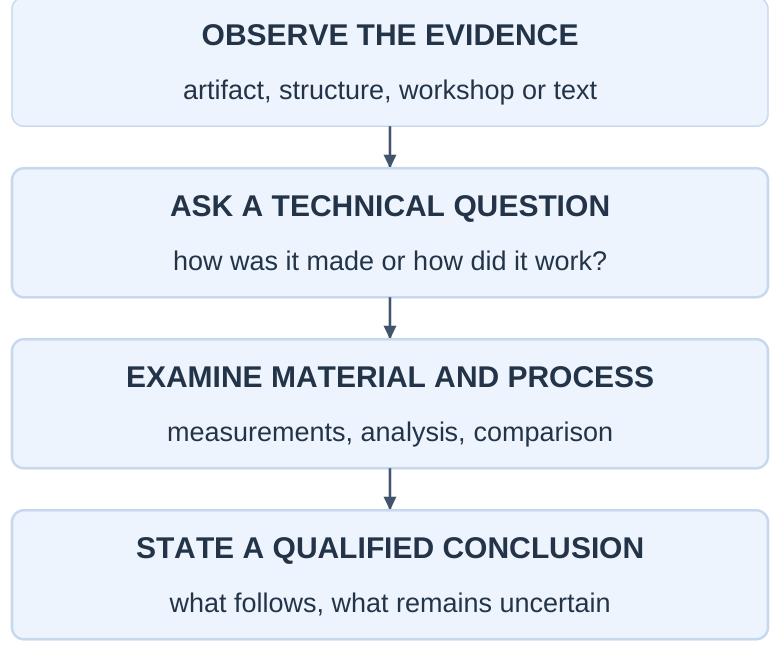
A technology combines materials, tools, energy, skill, organisation and purpose. Study the chain from raw inputs to use, maintenance and disposal.
| Evidence | Question it can help answer |
|---|---|
| Shape and dimensions | What could fit, join, move or be carried? |
| Composition | Which elements or material groups are present? |
| Microstructure | What phases and processing features exist? |
| Wear and corrosion | How was the object used and exposed? |
| Workshop remains | Which tools, vessels and residues occur together? |
| Text or inscription | What names, dates or procedures are recorded? |
A reconstruction is a testable model. Compare its residues, vessel damage and product with original evidence; revise the model if the results disagree.
Craftspeople may recognise adjustments through colour, sound, timing, tension or material feel. Document their knowledge with permission and attribution.
Useful questions: What enters? What changes? Which conditions matter? How is quality checked?
3.2 Process, Structure, Properties and Performance
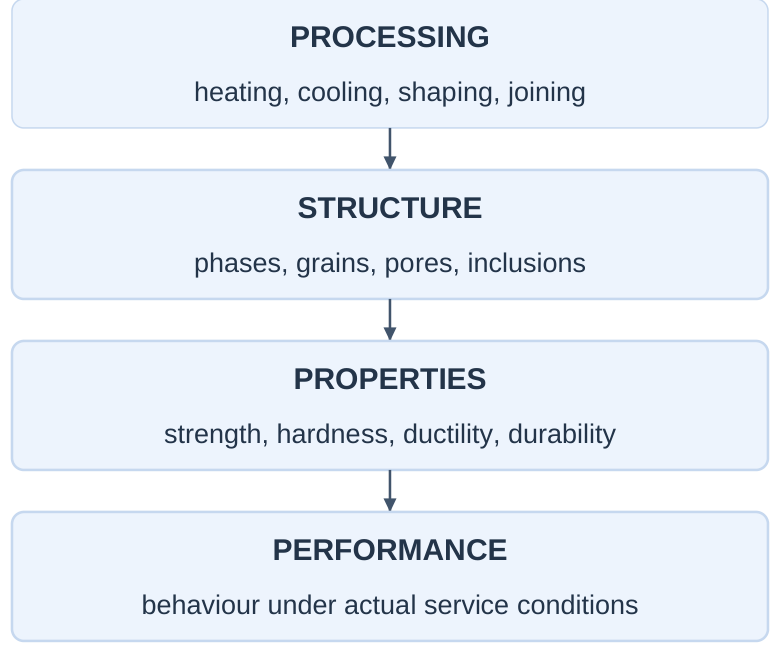
Heating, cooling, deformation and joining influence phases, grains, pores and inclusions. These affect properties and behaviour in actual service.
| Property | Meaning |
|---|---|
| Hardness | Resistance to local indentation or scratching |
| Strength | Resistance to a specified loading or failure criterion |
| Ductility | Plastic deformation before fracture |
| Toughness | Energy absorption before fracture |
A harder material is not automatically tougher. A treatment can improve one property while reducing another.
Metallurgical Operations
| Operation | Purpose |
|---|---|
| Ore preparation | Separate, concentrate or condition mineral material |
| Reduction/smelting | Chemically obtain metal from suitable compounds |
| Melting and casting | Liquefy metallic material and solidify it into a form |
| Forging | Shape metal by compressive deformation |
| Heat treatment | Change structure through thermal history |
| Joining | Connect pieces |
| Finishing | Control surface, dimensions or appearance |
Smelting differs from melting: Extracting metal from an oxide requires chemical reduction; melting changes the physical state of material already metallic.
Temperature alone is insufficient. Atmosphere, vessel walls, seals and gas routes also matter. Fuel and charge need not occupy the same space.
A corrosion-resistant surface in one atmosphere may behave differently in seawater. Performance requires specified conditions.
3.3 Wootz Steel: A Crucible Tradition
Wootz refers to a historical high-carbon crucible-steel tradition associated especially with parts of southern India. Small ingots or cakes were produced in refractory vessels and traded beyond production regions.
It is a technological tradition rather than one modern standard grade.
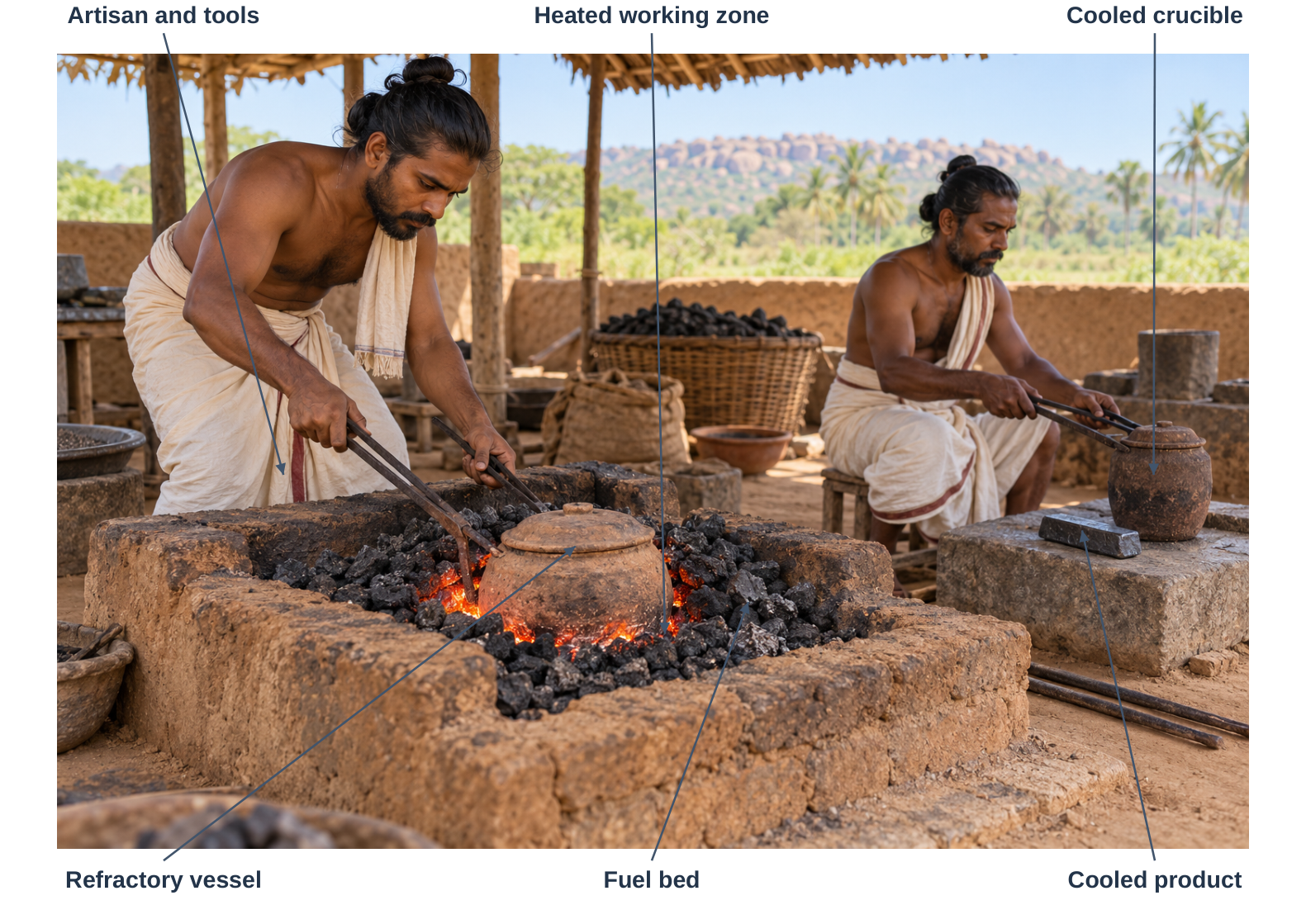
Steel is an iron–carbon alloy. Wootz was not a naturally occurring metal extracted ready-made from the ground.
The crucible contains the charge and helps control interaction with the furnace atmosphere. It must withstand heat, chemical attack and handling.
Crucible fragments, adhering metal, slag, furnace remains and product analysis help reconstruct the process.
3.4 Wootz Production and Thermal Control
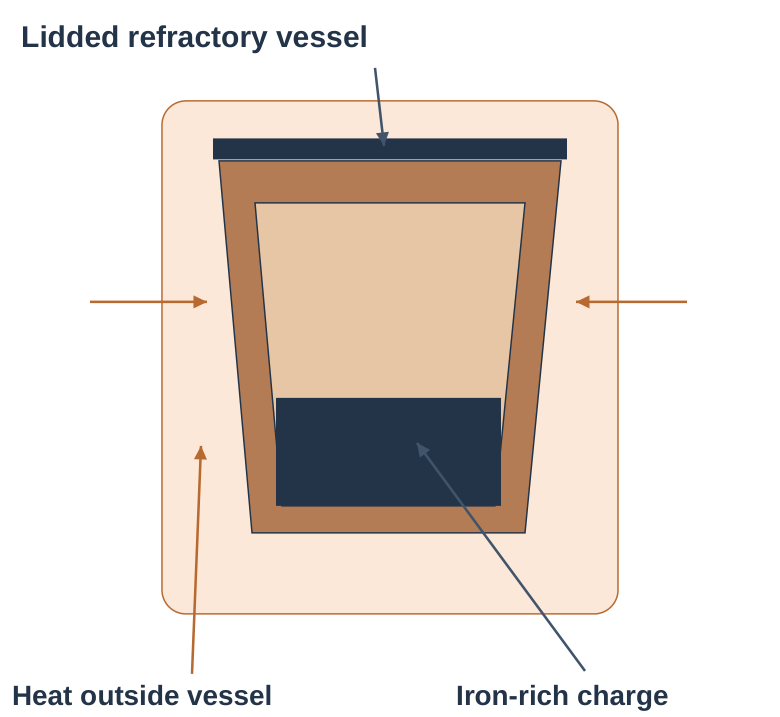
Historical routes varied. An introductory model places iron-rich material and a controlled carbon source in a heat-resistant vessel.
Heating promotes carbon transfer and, in relevant routes, melting and alloy formation. Composition, holding conditions, cooling and later working influence the result.
Carburisation increases carbon through interaction with a carbon-bearing source or environment. It is not simply applying a black coating.
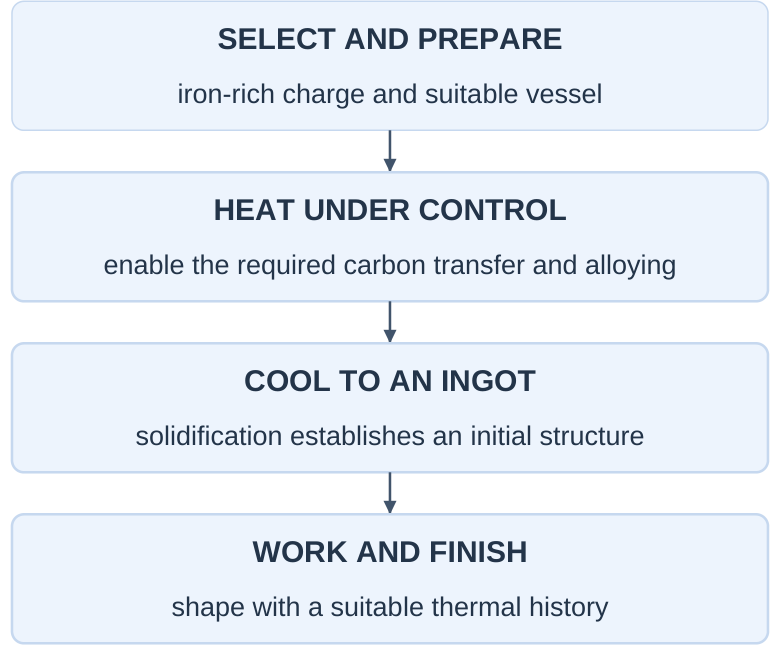
Ingot production and final shaping are separate stages. Later deformation or unsuitable heating can alter or damage the structure produced during solidification.
What to Measure
- Input and product masses.
- Metal composition.
- Vessel condition.
- Thermal history.
- Microstructure.
- Properties relevant to the intended use.
Keep input, process and product records together so that differences between batches can be investigated.
3.5 Wootz Microstructure and Performance
High-carbon crucible steel can contain carbide phases. Cementite is Fe₃C, an iron carbide.
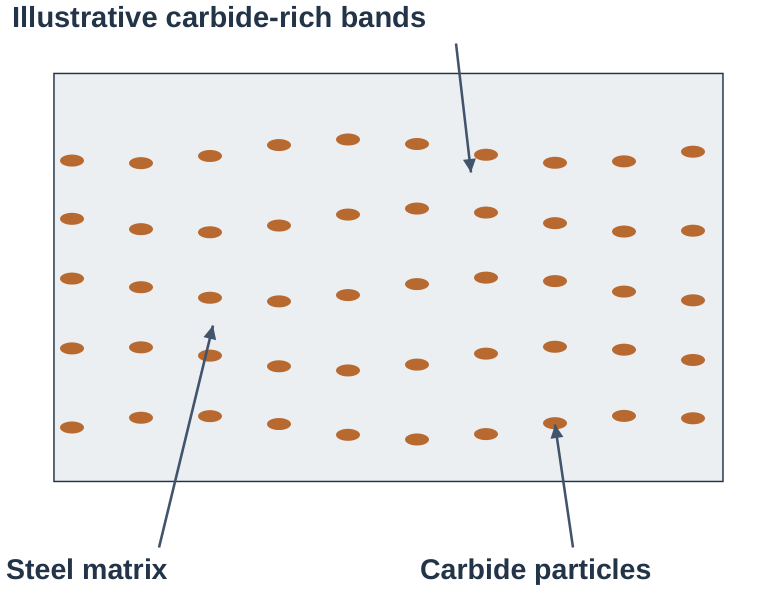
Some worked crucible-steel objects display a watered pattern related to internal structure and processing.
Wootz Versus Pattern Welding
| Crucible steel | Pattern-welded material |
|---|---|
| Develops through charge composition and thermal history | Develops through joining and working different pieces |
| Structure can produce characteristic surface patterns | Contrasting layers can produce surface patterns |
| Requires material and process investigation | Requires examination of layers and joining history |
Similar appearance does not establish an identical manufacturing route.
A visible pattern does not alone prove carbon content, phase distribution or toughness. High local hardness does not guarantee high toughness in every direction.
Constructed Carbon Calculation
A 500 g specimen contains 7.5 g carbon:
Carbon mass percentage = 7.5/500 × 100 = 1.5%.
This classroom value is not an assay of a historical artifact. It does not specify carbide size or fracture behaviour.
Engineering lesson: Control composition and process, examine structure, and test performance. More carbon is not universally better.
3.6 Zinc Distillation and Zawar
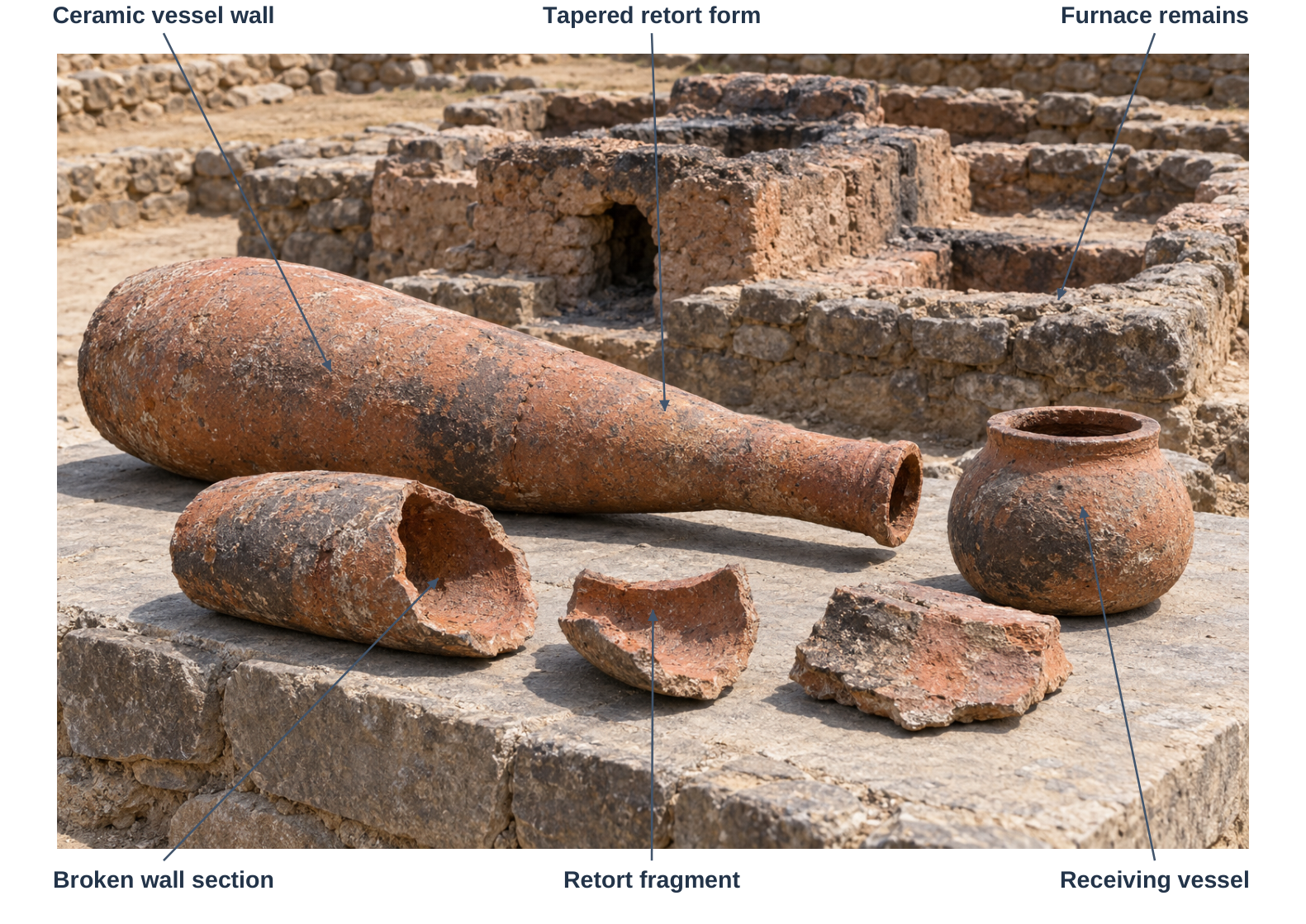
Pure zinc boils at about 907°C at one atmosphere. Under suitable high-temperature reduction conditions, it can emerge as vapour.
If the vapour meets oxygen under unsuitable conditions, it can re-oxidise. The system must therefore combine:
- A hot reaction region.
- A controlled vapour route.
- A cooler collection region.
Zawar in Rajasthan is an important archaeological centre for historical zinc production. Mining, metallic-zinc production and large-scale distillation are distinct stages; their dates should not be merged.
3.7 Downward Zinc Distillation
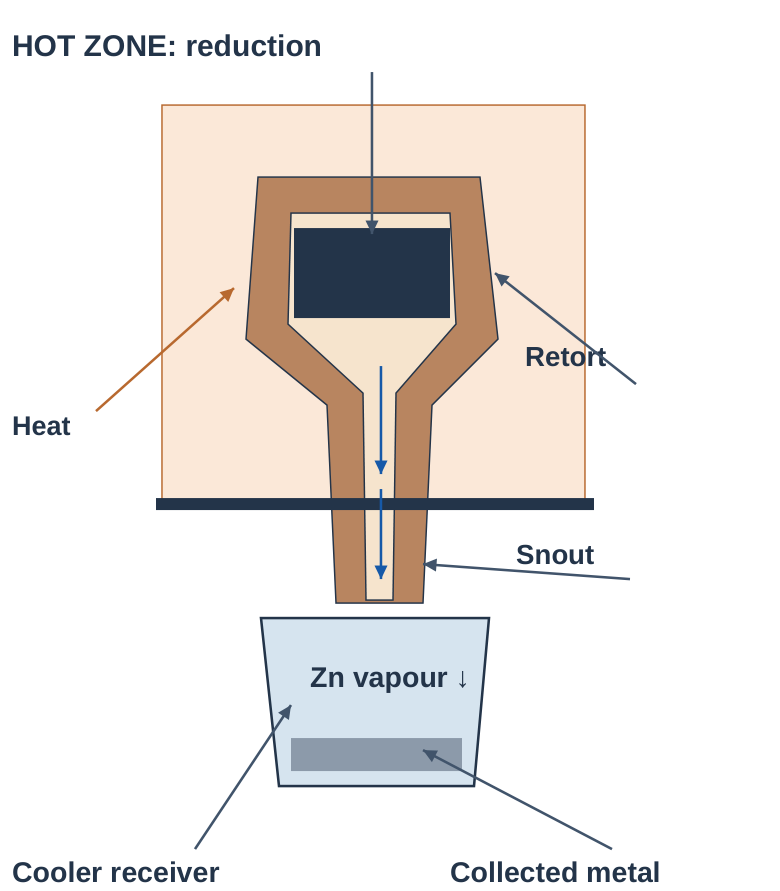
| Component | Function |
|---|---|
| Retort | Contains the reacting charge |
| Heating zone | Supplies thermal energy |
| Snout/vapour path | Directs product toward collection |
| Cooler receiver | Removes heat and retains condensed metal |
| Support | Holds vessels and separates thermal regions |
A simplified explanatory relation is:
ZnO + C → Zn(g) + CO.
Actual reactions depend on charge and furnace atmosphere. The relation is not a complete operating design.
Reduction produces metallic zinc; vaporisation and condensation are physical changes involving that metal.
The downward geometry connects hot and cool regions. Vapour should not be described as simply falling like a liquid before condensation.
Ceramics and seals must manage thermal stress, chemical attack, leakage and unwanted air entry.
Recovery Calculation
Recoverable zinc = 200 g; collected zinc = 150 g.
Recovery = 150/200 × 100 = 75%.
Recovery differs from ore grade. It does not mean that the entire ore was 75% zinc.
Recall: Volatility → reduction → controlled transport → cooling → collection.
3.8 The Delhi Iron Pillar
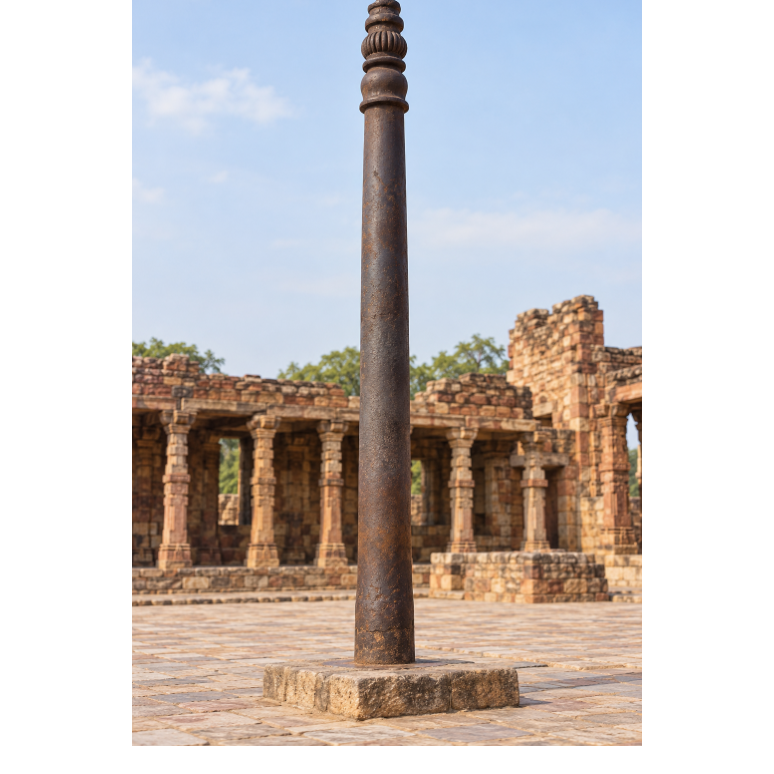
The pillar at the Qutb complex in Delhi demonstrates historical ironworking and long-term atmospheric exposure.
It is associated with wrought-iron production and joining worked iron masses, rather than a giant stainless-steel casting.
Its inscription belongs to a Gupta-period setting and refers to Chandra, commonly identified with Chandragupta II. Detailed origin and relocation questions require further evidence.
What Corrosion Resistance Means
The pillar has corrosion products. Its survival does not mean that its surface never reacted.
| Misstatement | Better explanation |
|---|---|
| It is stainless steel | It is historical iron with a distinctive manufacturing history |
| It has never rusted | Surface products exist; some layers help limit further attack |
| Age proves zero corrosion | Condition and change require measured evaluation |
| One element explains everything | Material, processing, film and environment interact |
3.9 Iron Pillar: Materials Explanation
Atmospheric corrosion involves iron oxidation coupled with reduction reactions in an electrolyte film. Moisture, oxygen, salts and local conditions affect the rate.
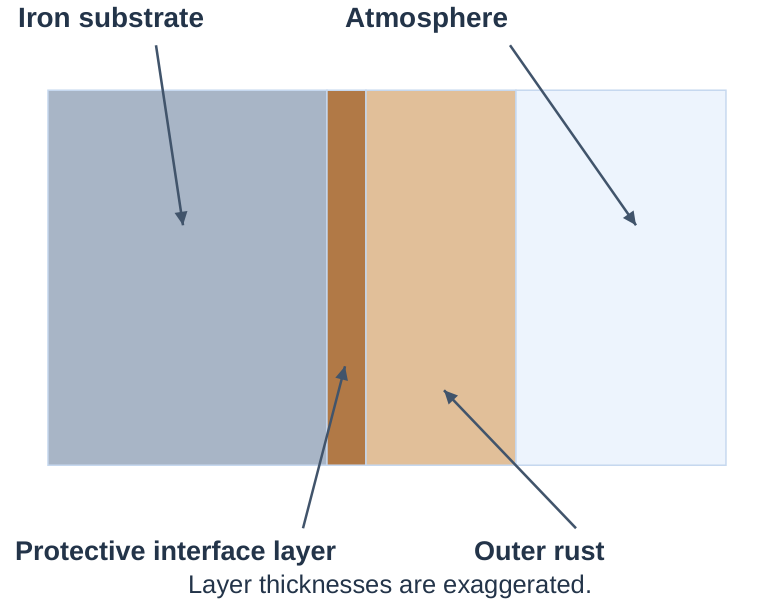
Studies discuss phosphate-containing surface products and a compact interfacial layer associated with phosphorus-bearing iron. A continuous, adherent layer can hinder further corrosion.
Loose or cracked products can behave differently by retaining moisture or permitting reactant access.
Structure and Exposure
- Slag inclusions and joined regions create heterogeneity.
- Inclusions are not automatically beneficial; their effects depend on distribution and chemistry.
- Wet–dry cycles affect film formation.
- Continuous salty wetness can produce different behaviour from atmospheric exposure.
Investigate composition, microstructure, surface phases, wetness, pollutants and condition over time.
Adding phosphorus to any steel is not a universal corrosion-resistance recipe. Other requirements include strength, ductility and weldability.
3.10 Case Study: Materials Analysis of the Pillar
Question: Which material and surface features help explain the observed atmospheric corrosion resistance?

Start with photographs, condition maps and published research. Sampling a protected monument requires authorisation; a student study can use existing evidence.
Observation and Inference
- Observed: Patinated surface and documented long-term survival.
- Analytically supported explanation: Material characteristics and surface products contribute to resistance.
Colour alone does not identify composition or phases.
Constructed Comparison
Under equal exposed area, duration and test conditions, specimens lose 0.30 g and 1.20 g.
0.30/1.20 = 1/4.
The first loses one quarter as much mass under that test. This does not establish permanent immunity.
When areas or durations differ, normalise the comparison appropriately. Include the cleaning and weighing method.
Model conclusion: The pillar illustrates interaction among historical iron, phosphorus-related film formation, internal heterogeneity and atmospheric exposure. Modern applications require testing for defined service conditions.
3.11 Harappan Town Planning
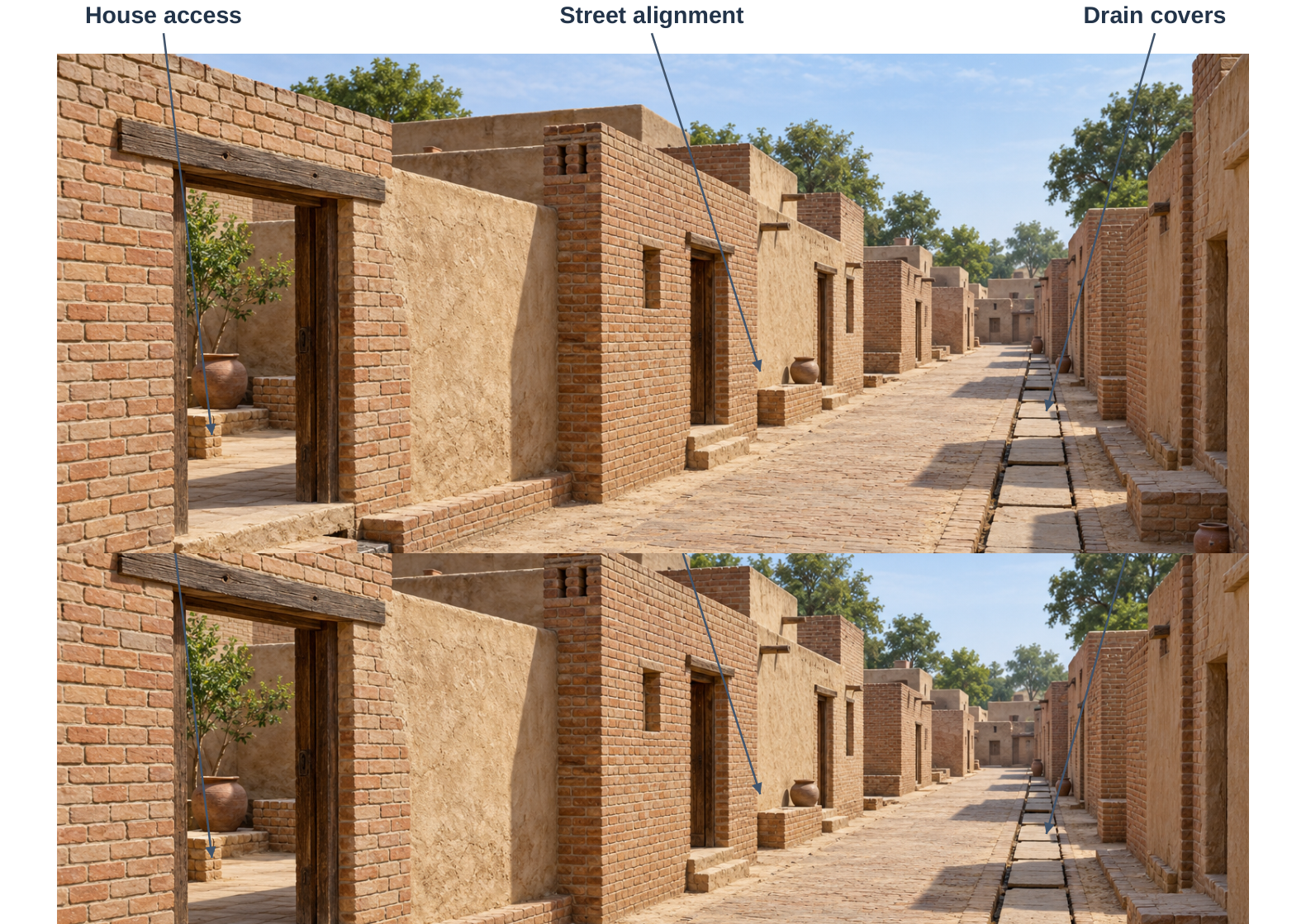
Planning links residential blocks, streets, water access and public or craft spaces. A house drain depends on a functioning receiving route and outlet.
Settlements varied in size, terrain, materials and organisation. They should not all be described as identical grids.
Recurring brick proportions supported dimensional coordination. Baked brick, mud brick and stone occurred in different settings. Dholavira’s substantial stone construction demonstrates this variation.
3.12 Harappan Drainage and Water-Retaining Structures
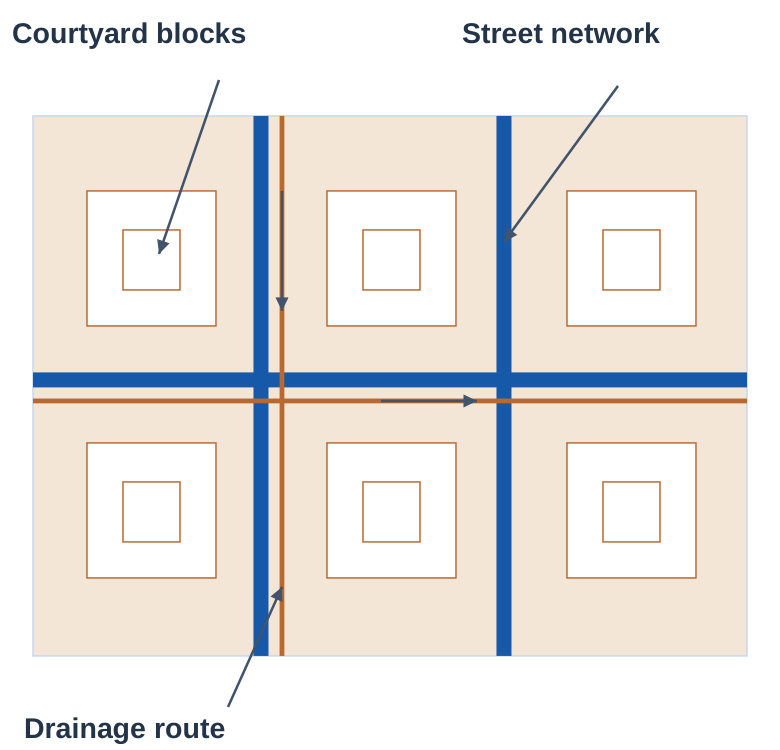
Drainage requires a continuous route, suitable gradient and outlet. Covers can support passage and protection; removable sections permit cleaning.
A covered drain is not automatically a pressurised sewer or modern treatment system.
Sediment and Maintenance
Settling points intercept some deposits but require emptying. Without maintenance, they can become blockages.
For a fall of 0.10 m over 20 m:
Gradient = 0.10/20 = 0.005 = 0.5%.
This is a constructed example, not a measured Harappan drain or universal design value.
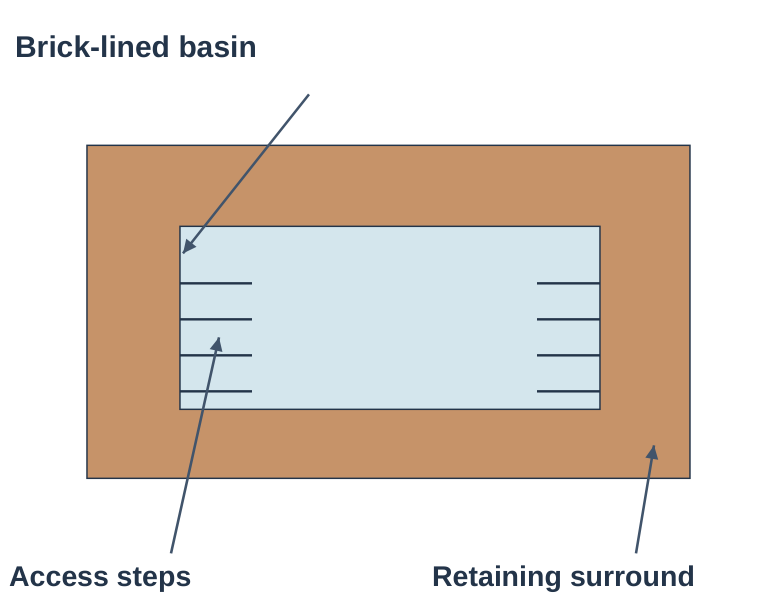
The Great Bath at Mohenjo-daro supports discussion of water retention, access, joints, floor–wall connections and surrounding spaces. Its precise social functions require archaeological interpretation.
Strong bricks do not guarantee a watertight basin; joints, backing, cracks and water pressure also matter.
Dholavira provides an important example of planning and reservoirs adapted to a dry setting. Capacity cannot be calculated from an unscaled image.
3.13 Vastu and Shilpa Shastra Traditions
Vastu concerns aspects of built space, site planning and architecture.
Shilpa concerns forms, making, proportion and craft, including architectural and sculptural work.
These are diverse traditions across texts, regions and periods.
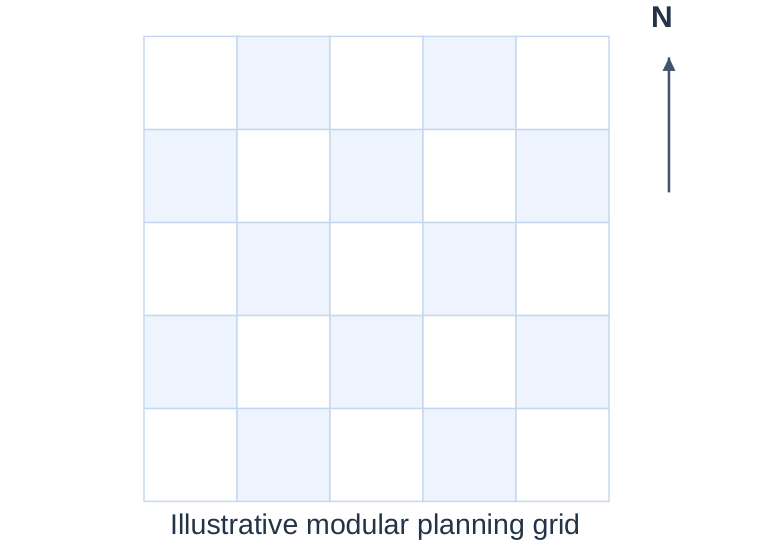
Proportion Example
For a 0.6 m module:
- Six-module width = 3.6 m.
- Nine-module length = 5.4 m.
- Area = 3.6 × 5.4 = 19.44 m².
The example demonstrates dimensional coordination, not guaranteed well-being.
Physical and Symbolic Claims
Daylight and airflow can be investigated through observation and building physics. Symbolic associations belong to cultural interpretation.
A modern design needs independent assessment of soil, climate, shading, wind, occupancy, structural behaviour, fire protection, accessibility and sanitation.
3.14 Stupa Architecture
A stupa is a Buddhist monument associated with relics, commemoration and devotional movement.
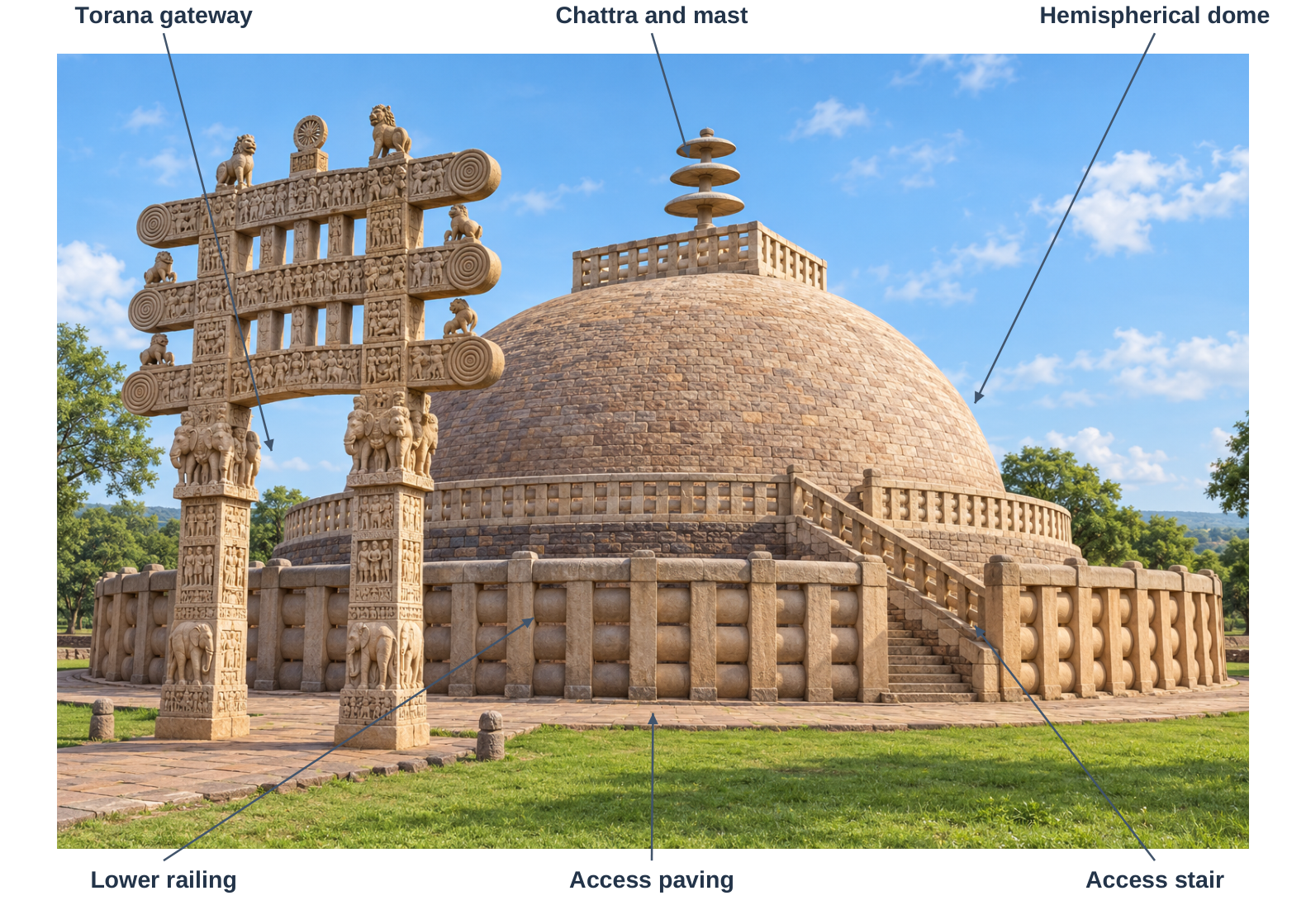
For the Sanchi-type example, a domical mass, supporting drum and pathways organise movement around the monument.
The dome is not an ordinary visitor hall. Relic deposits may be enclosed, while the principal movement is circumambulatory.
Sanchi’s present form developed through additions and changes over different periods.
3.15 Stupa Parts and Structural Reading
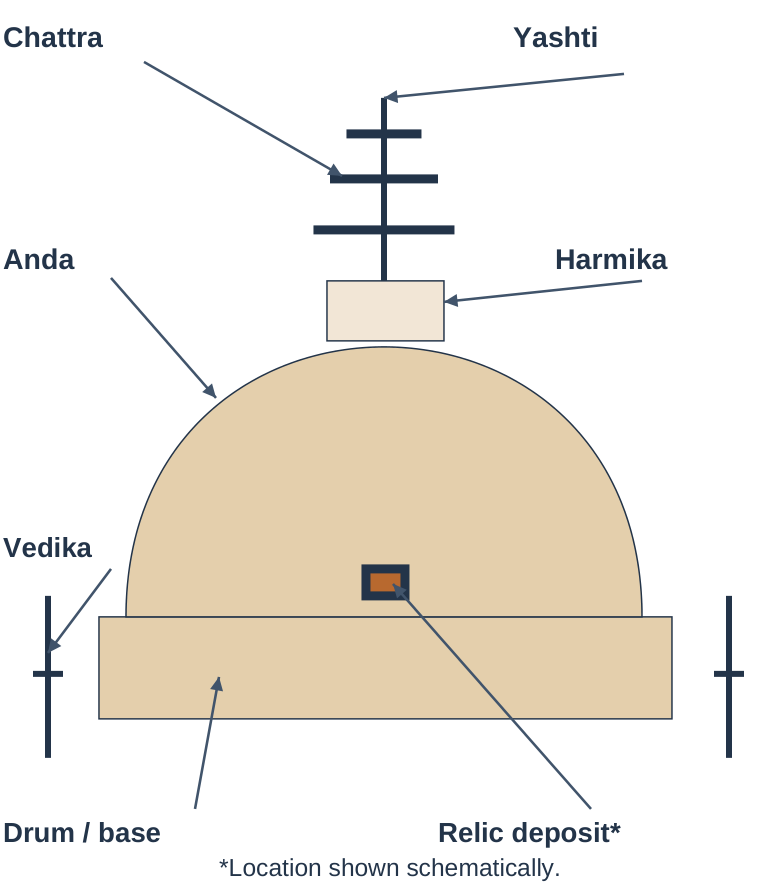
| Part | Meaning or role |
|---|---|
| Anda | Domical body or mound |
| Medhi/drum | Raised supporting base or terrace in relevant forms |
| Harmika | Square summit enclosure |
| Yashti | Central mast |
| Chattra | Umbrella elements |
| Vedika | Railing or enclosure |
| Torana | Gateway |
| Pradakshina path | Circumambulatory route |
The torana is outside the domical mass, not an opening through it.
Load Transfer and Condition
Masonry weight passes through the body and base into the ground. Masonry generally performs well in compression but is vulnerable to tension, joint separation and support movement.
Visible facing may conceal earlier cores, internal fill and later additions.
Check pathways, worn steps, railing continuity, water entry, displaced blocks, vegetation and settlement. Roots and retained moisture can worsen joint deterioration.
3.16 Case Study: Engineering of a Stupa
Question: How do geometry, material and support sustain a substantial masonry monument over time?
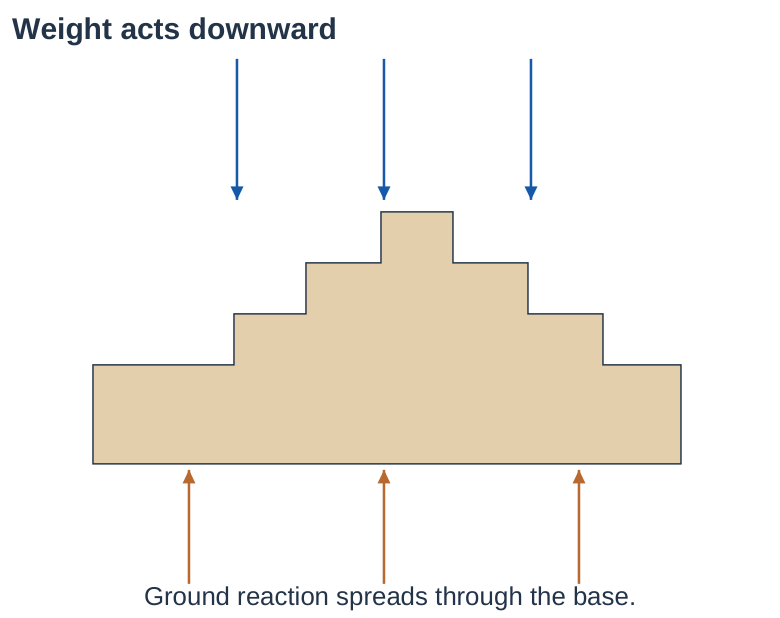
A first average check is:
p = W/A.
For W = 1,200 kN and A = 60 m²:
p = 20 kN/m² = 20 kPa.
This is not an estimate of Sanchi’s actual weight or ground pressure. Real contact pressure can vary.
Assessment Areas
| Area | Question |
|---|---|
| Geometry | How is mass distributed? |
| Masonry | What units, joints and fill exist? |
| Foundation | Is support continuous? |
| Drainage | Where does rainwater enter or leave? |
| Use | How are stairs and routes used? |
| Condition | Are changes active or long-standing? |
Diagnose a crack’s pattern and development before repair. Filling a gap can conceal evidence without resolving movement.
Conservation retains significant fabric. A replacement must be compatible in behaviour; greater hardness or strength is not automatically better.
Case-answer order: Monument type → labelled parts → load transfer → deterioration → evidence needed for a decision.
3.17 Water Management as a Connected System
Identify whether a structure collects rainfall, intercepts runoff, accesses groundwater or receives diverted flow.
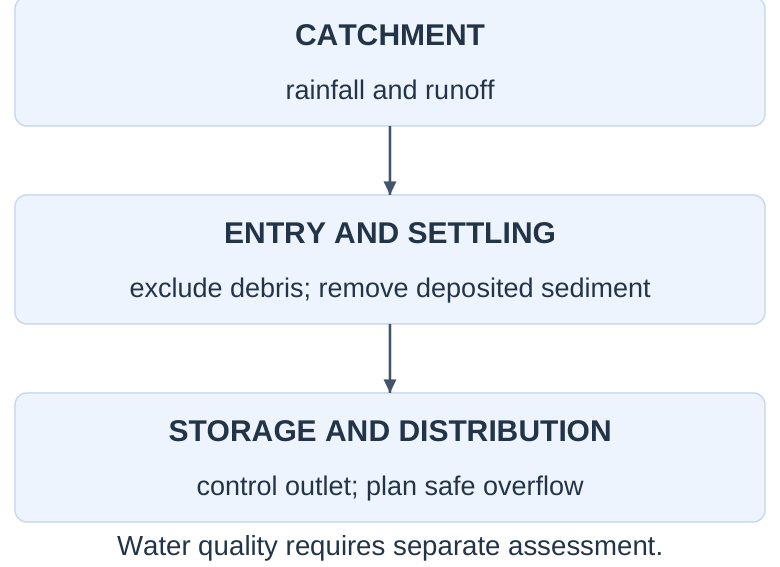
| System | Main question |
|---|---|
| Stepwell | How does access follow changing levels? |
| Tank/reservoir | How are storage, sediment, outlet and overflow managed? |
| Irrigation channel | How are flow and distribution controlled? |
| Diversion structure | How is part of a stream routed? |
| Well | How is groundwater accessed and protected? |
Storage and access are different functions. Reachable water is not automatically safe to drink.
Seasonal inflow, daily demand, losses, maintenance and allocation must be studied together.
Memory cue: Source → conveyance → storage → use → safe overflow.
3.18 Stepwells and Changing Water Levels
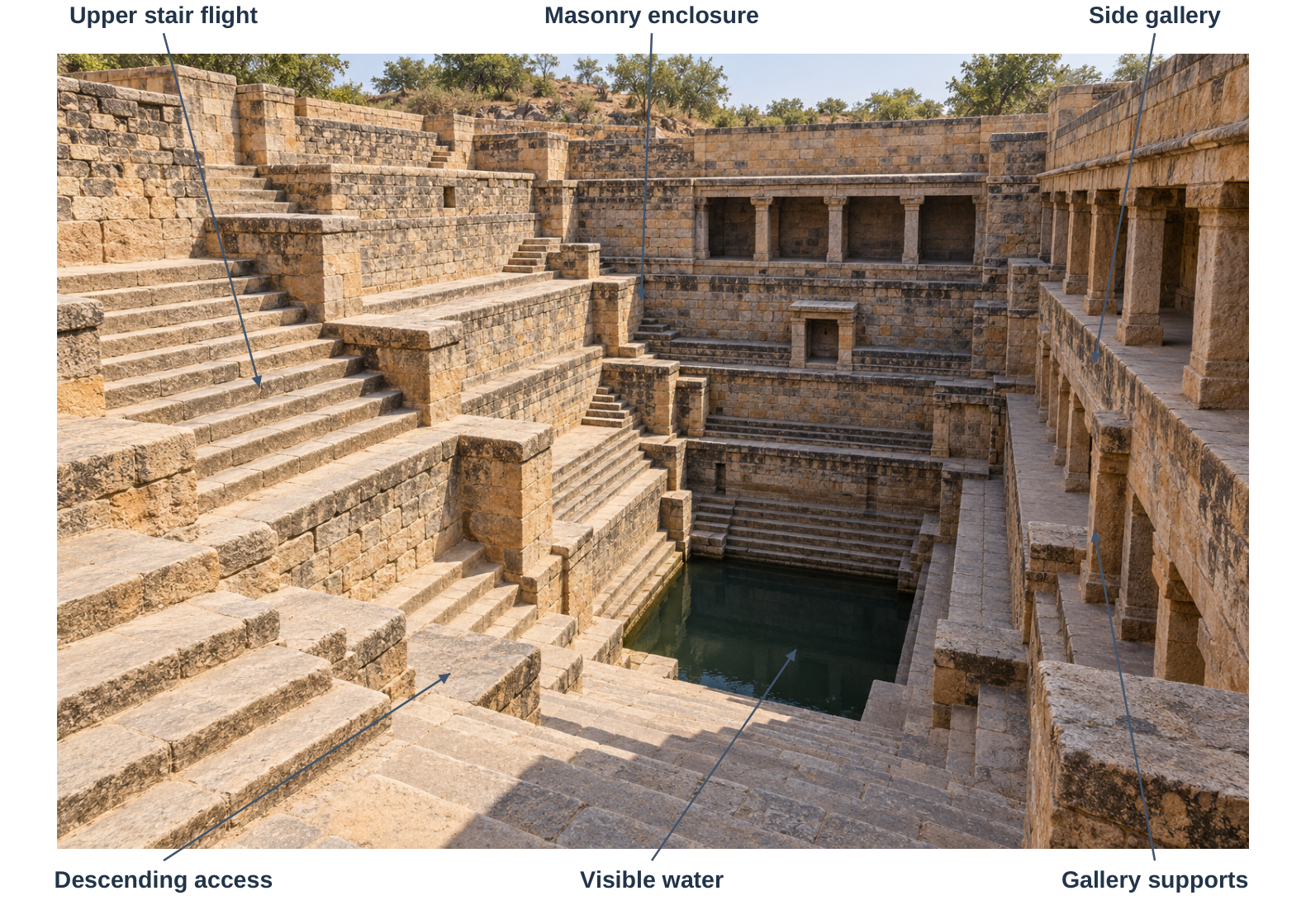
Steps allow access at changing levels. Supporting masonry must also accommodate self-weight, ground conditions and changing moisture.
A stepwell provides access to a well or deep water structure. A stepped tank is often a basin with stepped access. Local forms and names vary; use evidence to determine hydraulic function.
Inspect slippery surfaces, stairs, displaced blocks, vegetation and sediment. Heritage cleaning requires attention to stability, disposal and water assessment.
A useful modern principle might be level access or public-space integration. The exterior alone does not establish supply or structural suitability.
3.19 Tanks, Cascades and Irrigation
Tanks depend on catchment, inlet, sediment control, retaining boundary, outlet and overflow.
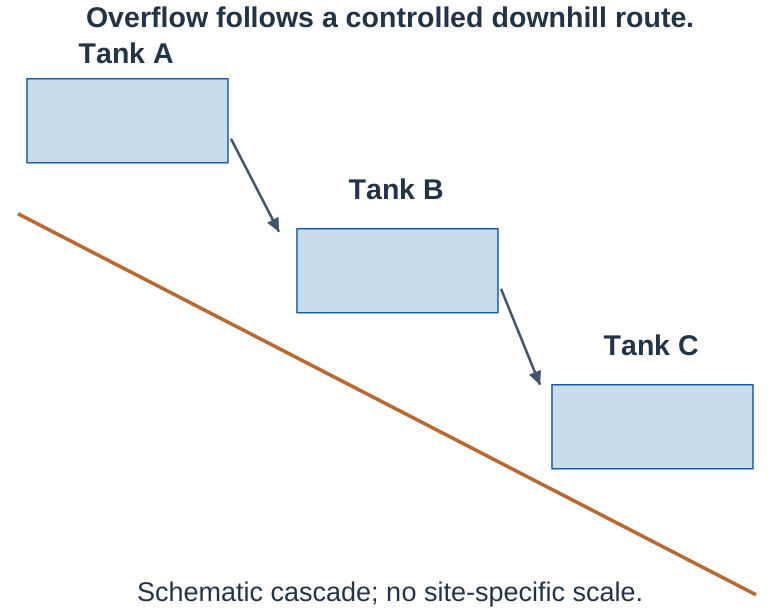
Avoid Double Counting
Tank A receives 100 m³, retains 60 m³ and passes 40 m³ downstream, neglecting losses.
Tank B receives that same 40 m³.
The original supply is 100 m³, not 140 m³.
Irrigation and Losses
Channels need appropriate gradients and controls. Insufficient velocity can allow deposition; excessive velocity can cause erosion, depending on conditions.
Seepage reduces delivery within a chosen system. It may contribute to groundwater elsewhere, but its destination and quality require evidence.
| Issue | Response to investigate |
|---|---|
| Sediment | Catchment management and accessible removal |
| Outlet blockage | Inspection and maintainable controls |
| Overflow | Defined protected route |
| Unequal delivery | Allocation rules and distribution structures |
| Uncertain supply | Time-based balance and realistic demand |
Management and repair arrangements are part of system design.
3.20 Water Balance and Capacity
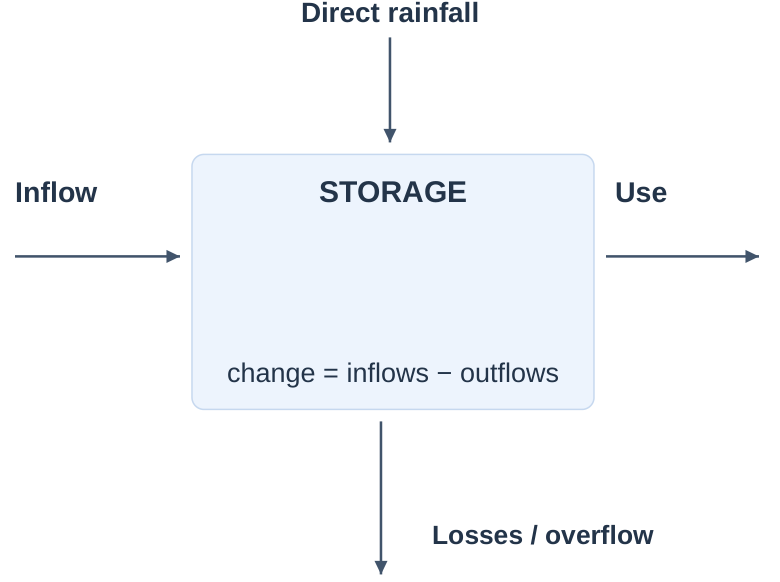
ΔStorage = inflows − outflows.
Inflows can include runoff, direct rainfall and known supply. Outflows can include use, evaporation, seepage and overflow.
Runoff Estimate
For area 500 m², rainfall 0.10 m and collection factor 0.70:
V = 500 × 0.10 × 0.70 = 35 m³ = 35,000 L.
A period’s inflow differs from storage capacity at one instant.
Basin and Sediment
For internal dimensions 8 m × 5 m × 1.5 m:
V = 60 m³.
If sediment occupies 6 m³, remaining volume = 54 m³, under this simplified geometry.
At withdrawal 3 m³/day, supply lasts 18 days, assuming no other flows. At total outflow 3.6 m³/day, it lasts 15 days.
Delivery Efficiency
If 40 m³ enters and 28 m³ reaches the stated field boundary:
Efficiency = 28/40 × 100 = 70%.
Water reaching a field is not necessarily water beneficially used by crops.
Unit checks: 1 mm = 0.001 m; 1 m³ = 1,000 L.
Volume calculations alone do not establish water quality or structural safety.
3.21 Textile Engineering: Fibre to Fabric
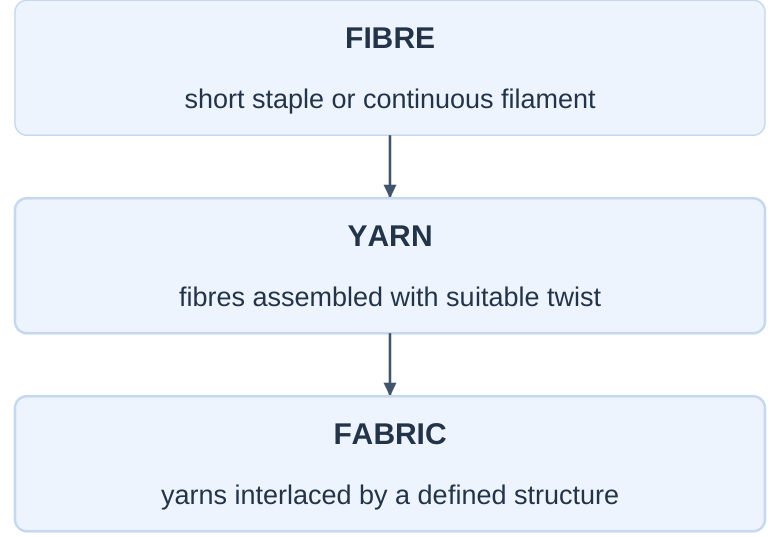
| Term | Meaning |
|---|---|
| Fibre | Fine material element |
| Staple | Fibre of finite length |
| Filament | Long continuous fibre |
| Yarn | Strand assembled for textile use |
| Fabric | Organised textile structure |
Cotton is made of staple fibres; reeled silk can provide long filaments. Cotton, silk and wool need different preparation and handling.
| Stage | Main engineering concern |
|---|---|
| Fibre selection | Length, fineness, strength and moisture response |
| Preparation | Cleanliness and alignment |
| Yarn formation | Evenness, continuity and twist |
| Weaving | Interlacement, tension, width and density |
| Colour/finishing | Fastness, feel and dimensional stability |
| Use and care | Abrasion, washing, repair and life |
Fibre identity alone cannot determine all fabric properties. Yarn size, density and interlacement affect drape, airflow and stability.
3.22 Yarn Preparation and Spinning
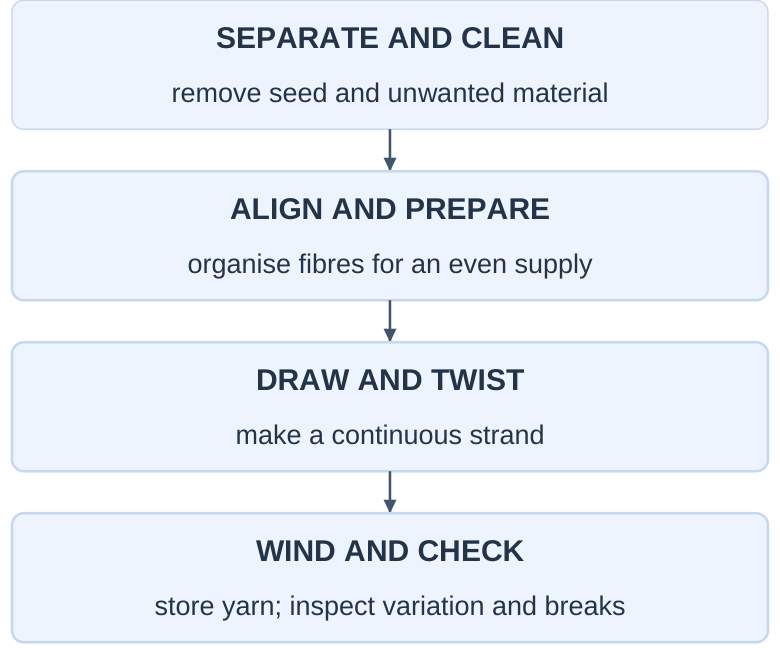
This cotton-based teaching route should not be applied unchanged to reeled silk.
Drawing controls fibre supply and strand thickness. Twist supports cohesion in many staple yarns. Too little can weaken a strand; excessive twist can affect handle and processing.
Warping and Sizing
Warping arranges the required number and length of warp ends with suitable order, spacing and tension.
Appropriate sizing can help some warp yarns resist abrasion. It is not mandatory for every textile, and later removal or finishing must be compatible.
Tex Calculation
Tex = mass in grams / length in metres × 1,000.
For 40 g over 2,000 m:
Tex = 40/2,000 × 1,000 = 20 tex.
In this direct system, a larger tex means more mass per length. Other count systems can use the opposite relationship; state the system.
Both 25 g per 1,000 m and 12.5 g per 500 m give 25 tex.
| Fault | Check |
|---|---|
| Frequent breaks | Tension, weak places and abrasion |
| Uneven thickness | Fibre supply, drawing and twist |
| Irregular spacing | Warping, threading and reed arrangement |
| Batch differences | Material, moisture and process records |
3.23 Handloom Structure and Motions
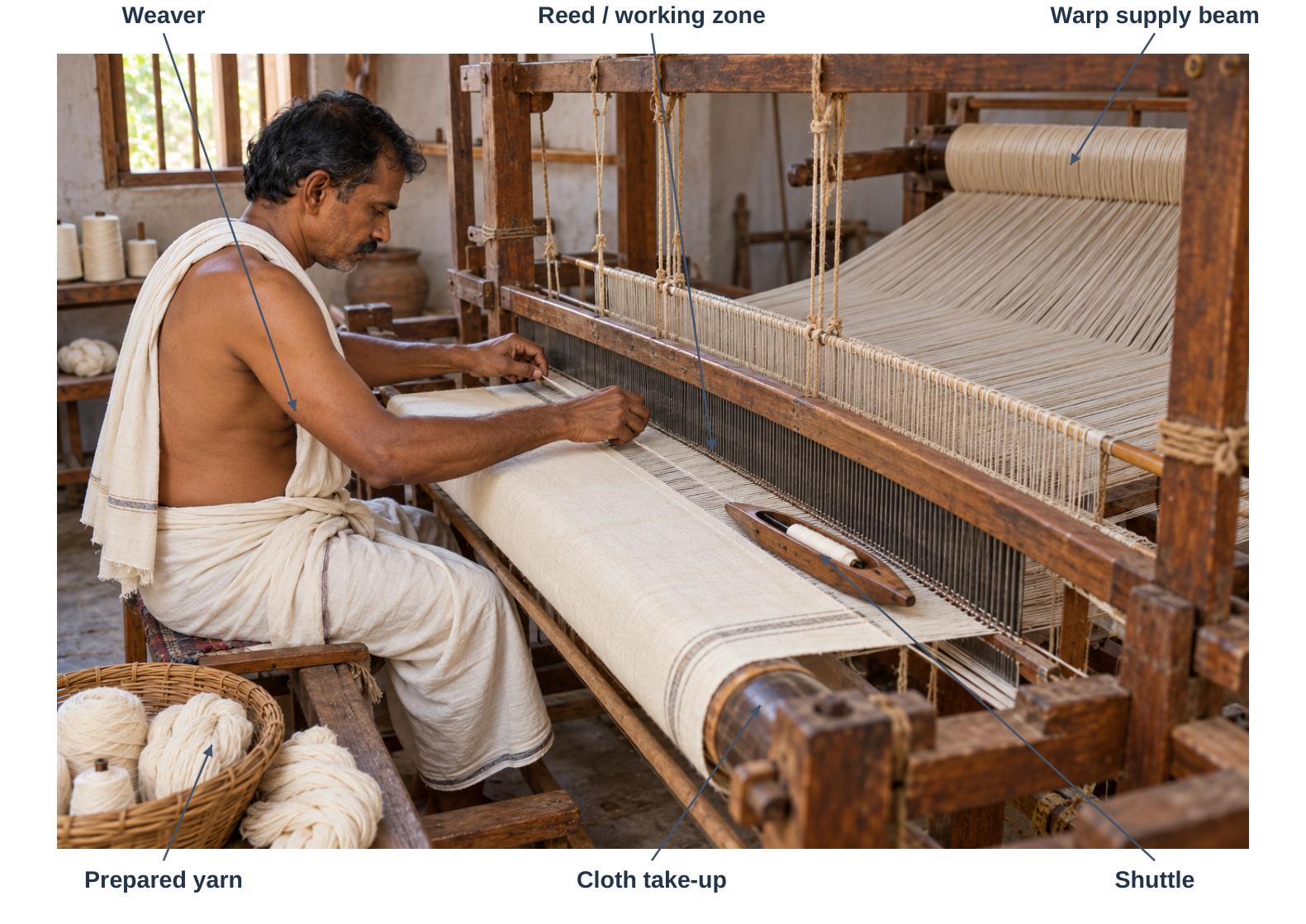
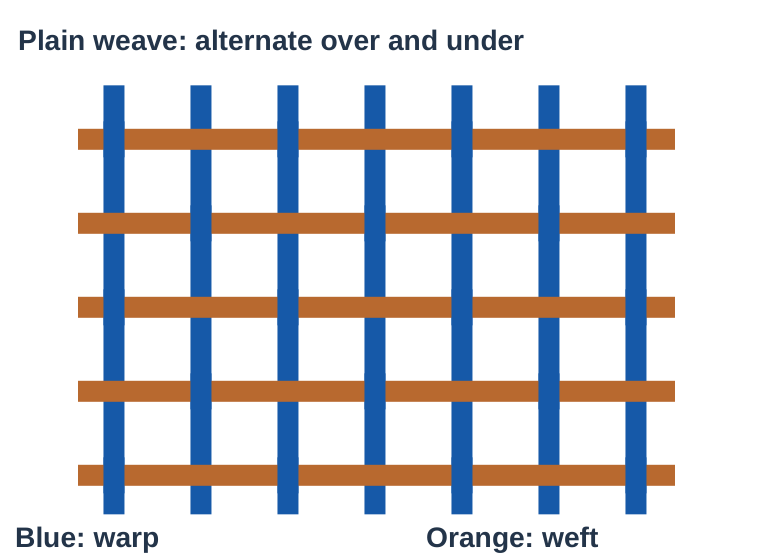
Warp runs along the woven length. Weft passes across it. Their roles are not determined by a photograph’s vertical and horizontal directions.
Primary Motions
- Shedding: Separate selected warp ends to open a path.
- Picking: Insert weft through the shed.
- Beating-up: Move inserted weft toward the growing fabric edge with the reed.
Secondary Motions
- Let-off: Release warp from supply.
- Take-up: Advance and store cloth.
Human skill regulates tension, rhythm, pattern and inspection. Mechanisation changes the drive system without removing yarn-control requirements.
3.24 Loom Layout, Weave and Fabric Quality
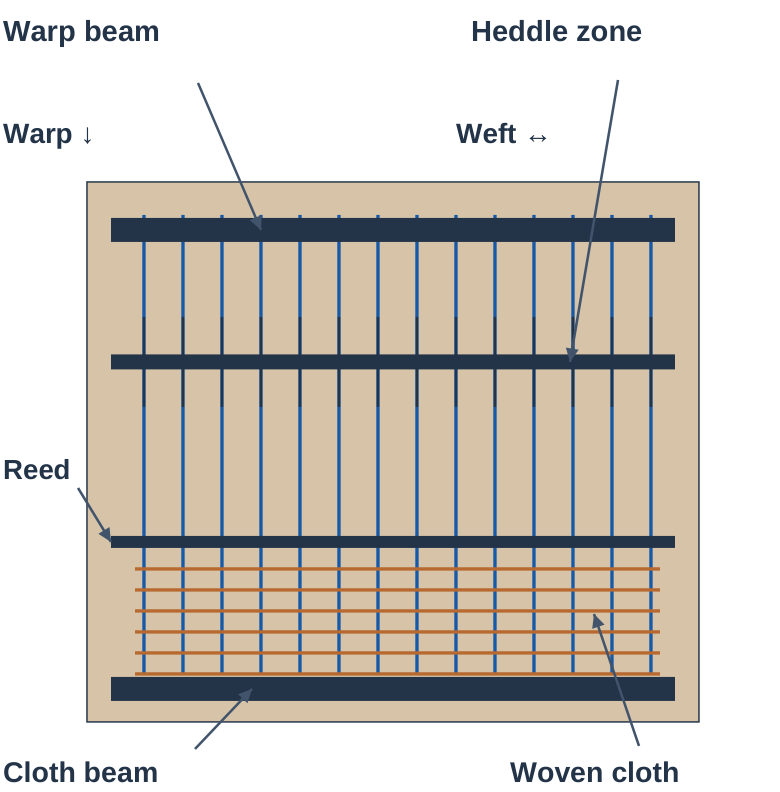
The fell is the growing edge of the cloth. Shedding, insertion, beating-up, let-off and take-up must remain coordinated.
Missing picks, uneven tension or incorrect threading can create defects. Inspecting emerging cloth provides early feedback.
Density Calculation
A 20 cm-wide sample contains 400 warp ends:
Warp density = 400/20 = 20 ends/cm.
A 10 cm length contains 180 weft picks:
Pick density = 180/10 = 18 picks/cm.
Finishing and Shrinkage
Finishing can change feel, dimensions and appearance. Assess shrinkage, strength and colour retention.
If 100 cm becomes 96 cm after a stated wash-and-dry method:
Shrinkage = (100−96)/100 × 100 = 4%.
State direction and test conditions; width and length shrinkage can differ.
3.25 Colouring, Printing and Quality
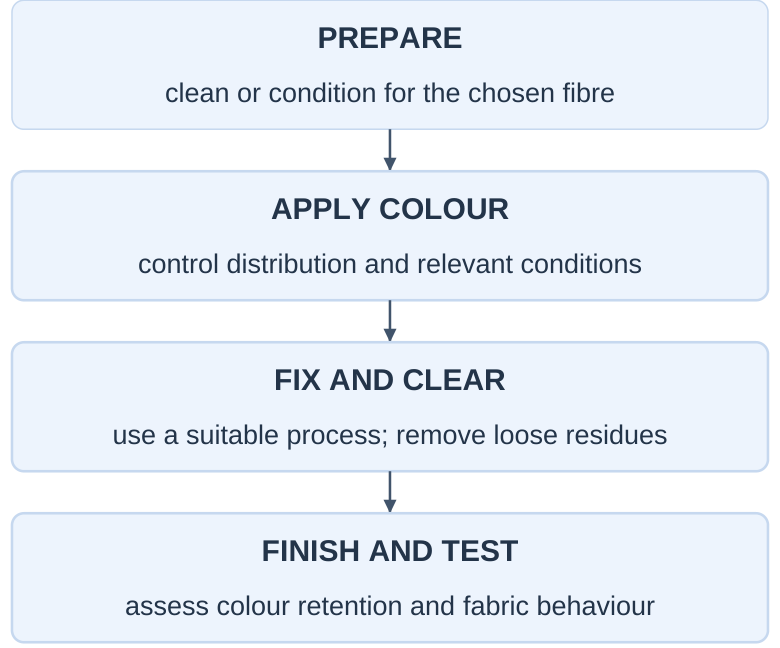
The fibre, colourant and process must be compatible.
- A dye requires an appropriate dye–fibre application route.
- A pigment generally needs a means of attaching particles to the surface.
- A mordant can assist some colouring systems but is neither universally required nor automatically harmless.
Colour fastness concerns resistance to stated influences such as washing, rubbing or light. A strong initial shade does not prove good fastness.
Block Printing
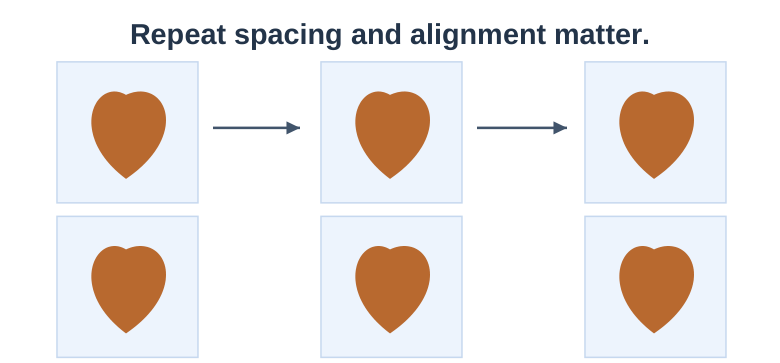
Control block placement, colour supply, contact and fabric support. Multiple colours need registration, or alignment between applications.
A printed motif, woven motif and embroidered motif can look similar while using different production methods.
For repeat length 12 cm over 180 cm:
Repeats = 180/12 = 15.
With total borders of 12 cm, usable length = 168 cm:
Repeats = 168/12 = 14.
Environmental Assessment
Natural, traditional and handmade do not automatically mean harmless. Consider water, energy, dyes, auxiliaries, effluent, durability and labour conditions.
Compare equivalent products over a defined life-cycle boundary.
3.26 Contemporary Relevance and Stream Connections

Useful principles include controlled atmospheres in extraction, inspectable drainage, distributed storage and tension feedback in weaving.
Compare systems delivering the same function. Energy per hour alone is insufficient when production rates or usable output differ; a suitable measure may be energy per usable fabric area or service life.
| Stream | Possible contribution |
|---|---|
| CSE | Artifact, process and condition records with metadata |
| EE | Energy, drives, monitoring and electrical safety |
| ECE | Reliable temperature, level and condition sensing |
| CE | Masonry, drainage, foundations and settlement systems |
| ME | Heat transfer, mechanisms, deformation and maintenance |
| BT | Biological materials and water-quality questions |
| CH | Reactions, corrosion, separation, dyes and effluent |
| TX | Fibre, yarn, loom, fabric and finishing |
| AG | Catchment, soil, irrigation and farm demand |
Include users and knowledge holders. Credit the observed practice and identify changes made in a modern redesign.
Small Project Example
Compare access for cleaning two sediment-trap layouts. State inputs, removal effort, downstream deposition and success criteria.
Avoid destructive sampling or changes to a protected structure as a student exercise.
Evaluation: Function, reliability, maintenance, resource use, user needs, evidence and conservation context.
3.27 Solved Questions and Numericals
Why Was Zinc Distillation Important?
Zinc can emerge as vapour during high-temperature reduction. Controlled transport and cooling collect the metal while limiting unwanted oxidation. An open melting pot does not provide the complete reaction-and-separation system.
Why Is “The Iron Pillar Never Rusts” Misleading?
Surface corrosion products exist. Resistance involves material characteristics, manufacturing history, protective films and exposure. Survival does not establish complete immunity.
Metal Recovery
Recoverable metal = 240 g; collected metal = 180 g.
Recovery = 180/240 × 100 = 75%.
Runoff Volume
Catchment = 800 m²; rainfall = 50 mm = 0.05 m; factor = 0.60.
V = 800 × 0.05 × 0.60 = 24 m³ = 24,000 L.
An empty 20 m³ tank cannot retain all 24 m³ simultaneously without outflow or overflow.
Average Support Pressure
p = 900 kN / 45 m² = 20 kPa.
This average does not replace structural or geotechnical assessment.
Yarn Linear Density
For 30 g over 1,500 m:
Tex = 30/1,500 × 1,000 = 20 tex.
A 750 m length of the same uniform yarn weighs 15 g.
Fabric Shrinkage
Original length 50 cm; final length 48.5 cm:
Shrinkage = (50−48.5)/50 × 100 = 3%.
Short Practice
| Problem | Answer |
|---|---|
| Channel fall 0.15 m over 30 m | Gradient 0.5% |
| Storage 18 m³, use 1.5 m³/day, no other flows | 12 days |
| 320 warp ends over 16 cm | 20 ends/cm |
| Yarn mass 45 g per 1,000 m | 45 tex |
| Constituent 50 g in 2,000 g specimen | 2.5% |
These are constructed classroom examples, not measurements of archaeological sites.
3.28 Quick Revision
| Topic | Main recall |
|---|---|
| Materials thinking | Process → structure → property → performance |
| Wootz | High-carbon crucible steel; charge and thermal control |
| Pattern welding | Different joining-based route |
| Zinc | Reduction, vapour transport and condensation |
| Iron Pillar | Material, protective surface products and environment |
| Harappan planning | Connected buildings, streets, drainage and water |
| Vastu/Shilpa | Diverse planning, proportion and craft traditions |
| Stupa | Dome, base, summit elements and circumambulatory route |
| Stepwell | Access to changing water levels |
| Tanks/irrigation | Storage, routing, allocation and maintenance |
| Textiles | Fibre → yarn → fabric → finishing |
| Primary loom motions | Shedding, picking, beating-up |
| Secondary motions | Let-off and take-up |
Formula Strip
- Mass percentage = constituent mass / specimen mass × 100.
- Recovery = collected / recoverable × 100%.
- Runoff volume = area × rainfall depth × collection factor.
- Change in storage = inflows − outflows.
- Average pressure = weight / area.
- Tex = grams / metres × 1,000.
- Shrinkage = (original − final) / original × 100%.
Short-Answer Questions
- Distinguish smelting and melting.
- Why must a crucible be refractory?
- Why is zinc difficult to collect from an open hot zone?
- Why is “the Iron Pillar never rusts” misleading?
- Name Harappan planning and drainage features.
- Distinguish harmika, yashti, chattra and torana.
- Compare stepwells and storage tanks.
- Define warp, weft and the three primary loom motions.
Long-Answer and Case-Study Questions
- Explain Wootz through the process–structure–property relationship.
- Draw and explain downward zinc distillation.
- Present a materials-science case study of the Delhi Iron Pillar.
- Explain Harappan planning with a labelled sketch.
- Describe stupa architecture, load transfer and deterioration.
- Explain a water system with a balance and maintenance plan.
- Describe fibre-to-fabric production and loom motions.
Diagram Answer Checks
- Zinc: hot zone, retort, vapour direction and cooler receiver.
- Stupa: principal parts and movement route.
- Water system: source, storage, outlet and safe overflow.
- Weaving: warp, weft, shedding, picking and beating-up.
Common Errors
- Merging crucible steel with pattern welding.
- Showing flames inside a closed charge without explanation.
- Calling the Iron Pillar stainless steel or completely rust-free.
- Treating all Harappan settlements as identical.
- Drawing the stupa dome as a normal occupied room.
- Labelling every stepped water structure a recharge system.
- Confusing inflow over time with storage capacity.
- Treating natural dyes and fibres as automatically harmless.
Frequently Asked Questions
What does Indian Knowledge System Unit 3 cover?
Engineering traditions, metallurgy, architecture, water management and textile production, with Iron Pillar and stupa case studies.
Is Wootz the same as pattern-welded steel?
No. Crucible steel and pattern welding involve different manufacturing routes, even when surface patterns resemble one another.
Why does zinc extraction require a receiver?
Zinc formed as vapour must enter a cooler region to condense and be collected while limiting unwanted oxidation.
Is the Delhi Iron Pillar completely rust-free?
No. Corrosion products exist; protective surface behaviour contributes to its resistance under particular conditions.
What is the harmika?
The square enclosure at the stupa summit, distinct from the yashti mast and chattra umbrellas.
Does a stepwell image prove groundwater recharge?
No. The source, inflow, subsurface conditions and actual water movement require evidence.
What are the three primary weaving motions?
Shedding, picking and beating-up.
What makes a modern application defensible?
A defined need, a clear mechanism, suitable measurements, repeatable performance and documented limitations.